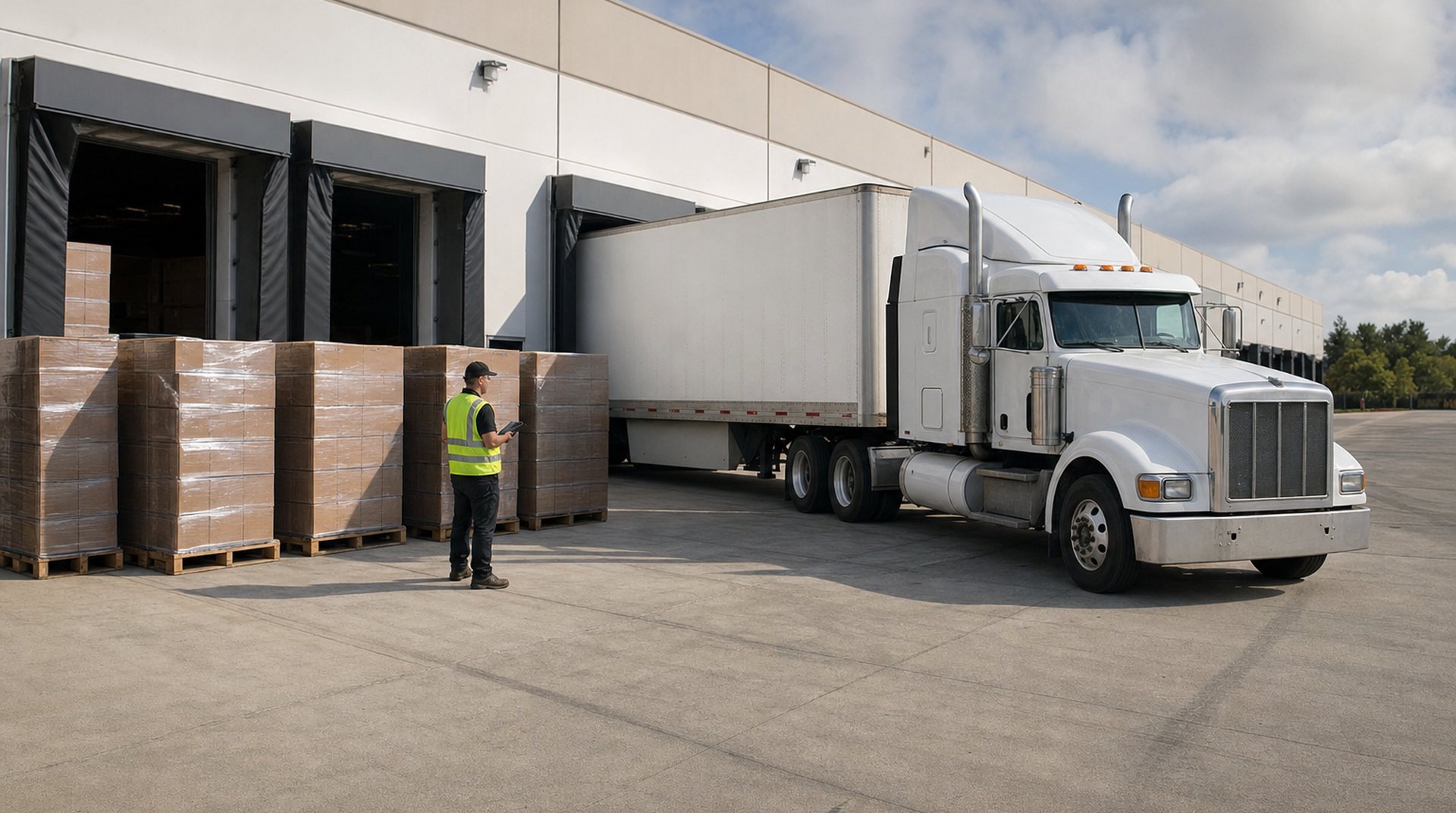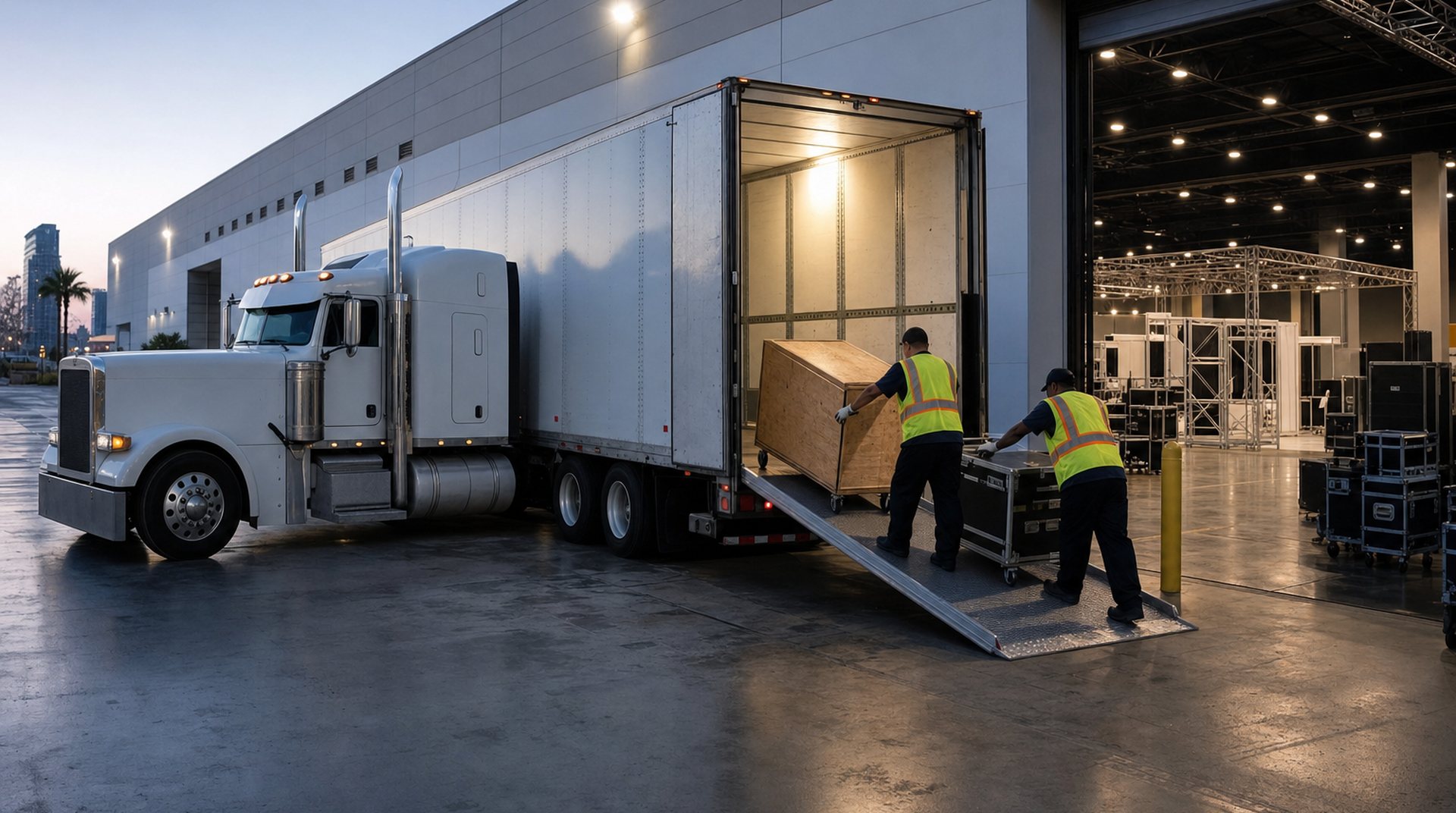
A booth, a lighting rig or a backline package that leaves the United States for a show in Frankfurt or a tour stop in Tokyo will cross customs at least twice: once going in and once coming home. Without the right document, each crossing can mean import duties and taxes on gear you never intended to sell, plus a cash deposit or bond posted at the border. The ATA Carnet exists to avoid that.
This guide is for the person who books the freight for an exhibitor or a touring production. It covers what a carnet covers, who issues it in the US, what it costs, how it travels with the shipment, and how the work splits between you, your customs broker and your forwarder. The fee and rule details below come from the US issuing body and from the federal customs regulations, and they can change, so confirm them with your carnet provider before you apply.
What an ATA Carnet is
An ATA Carnet is an international customs document for goods that leave a country temporarily and come back. According to the United States Council for International Business (USCIB), it allows duty-free and tax-free temporary imports for up to one year, and it is accepted by 81 countries plus additional customs territories. A single carnet can be used to bring goods into several countries during its period of validity.
US customs rules describe the document in one line: under 19 CFR Part 114, “The carnet serves simultaneously as a Customs entry document and as a Customs bond.” In practice that means the carnet replaces the temporary import paperwork and the security you would otherwise post in each country, as long as the goods come back out as listed.
What a carnet covers for trade show and tour freight
USCIB groups eligible goods into three categories, and trade show and tour freight usually falls into one or more of them:
- Professional equipment. “Tools of the trade” needed to perform work abroad. USCIB lists exhibition booths used at trade shows in this category, along with press, television and entertainment equipment.
- Commercial samples. Items temporarily imported for demonstration or to solicit orders.
- Exhibitions, fairs and cultural events. Goods for trade, industrial, agricultural or craft exhibitions, fairs and world events, and cultural or educational exhibitions.
The USCIB eligibility page is just as clear about what a carnet does not cover:
- Consumable or disposable goods, such as food or agricultural products
- Giveaways and postal traffic
- Goods intended for repair or processing
- Anything you plan to sell abroad, since carnet goods must be re-exported
For a booth this matters more than it seems. Brochures, branded giveaways and catering supplies that travel in the same crates are not carnet goods. They need a regular import, so plan to pack and document them separately from the booth structure, monitors and display product that are coming home.
Who issues carnets in the US and who files the application
USCIB describes itself as “the sole National Guaranteeing and Issuing Association (NGA) for ATA Carnets in the United States,” a role it has held since 1969 and that is authorized by US Customs and Border Protection. USCIB has appointed two independent carnet service providers, Roanoke Insurance Group and Boomerang Carnets, to issue carnets. According to USCIB, the document you receive is the same internationally recognized customs document at the same price whichever provider you use. Applications are made online through the USCIB carnet portal.
The holder is the company or individual on whose behalf the carnet is issued, and USCIB requires the holder to have a beneficial interest in the goods. For a show or tour that is usually the exhibitor or the production company. USCIB’s FAQ states that a customs broker or freight forwarder cannot be listed as the holder, even when acting for a client. A broker, forwarder or agent can prepare and submit the application, but if they do, a power of attorney from the holder must accompany it.
Two parts of the application stay with the holder however the work is split:
- The General List. This is the itemized list of everything traveling on the carnet. USCIB’s advice is “The more specific the better,” with serial numbers and model numbers wherever items have them. Customs officers compare the list to the crates, so a vague line such as “lighting equipment” invites questions at every border.
- The signature. According to USCIB, the person who signs the obligation section should have the authority to obligate the company to pay duties and taxes should they become due.
What an ATA Carnet costs
The cost has three parts: the issuing fee, any extra pages or sets, and the security that guarantees the carnet. USCIB publishes the basic fee by the total value of the goods on the General List:
| Value of goods on the General List | Basic fee |
|---|---|
| $1 to $9,999 | $255 |
| $10,000 to $49,999 | $300 |
| $50,000 to $149,999 | $365 |
| $150,000 to $399,999 | $425 |
| $400,000 to $999,999 | $480 |
| Over $1,000,000 | $545 |
Additional charges listed on the same page:
- Continuation sheets for a long General List: $12 per additional page
- Additional sets of counterfoils requested with the carnet: $25 per set; sets added after issue carry an $80 minimum
- A replacement carnet: $275 for the application and $175 for activation
The security is usually the larger number. USCIB requires a security deposit equal to 40% of the General List value, and 55% for India. Most holders cover it with a surety bond instead of cash, and USCIB states that bond premiums are typically 1% of the bond amount and are not refundable. On a booth and equipment package valued at $200,000, for example, the security would be $80,000, and a bond premium at that typical rate would be about $800 on top of the $425 basic fee. Your provider quotes the actual premium.
How the carnet travels with the freight
A paper carnet is a booklet of colored pages, and each page is a customs record for one crossing. USCIB’s guide to using a carnet describes the sequence:
- Green cover. The holder signs it before the first use.
- Yellow counterfoils. These record leaving and returning to the United States. US Customs validates the cover and the yellow exportation counterfoil before the goods depart. When the goods come home, the re-importation counterfoil must be validated too, and USCIB marks this step as the most important one.
- White counterfoils and vouchers. These record entry into and exit from each foreign country.
- Blue counterfoils. These record transit through a country without importing the goods there.
Two details matter for European tours. Customs in the European Union may not validate the carnet when goods move between member states, so USCIB advises insisting on validation when the goods make their final exit from the EU. And after the last trip, the original carnet goes back to the service provider, even if part of it was never used.
Shipments can also be split. USCIB’s FAQ states that split shipments are possible, which helps when the booth goes by ocean weeks ahead and the demo units follow by air. Depending on the time between the two shipments, USCIB notes that a second carnet may be advised, so raise the plan with your provider before you apply.
Rules that catch exhibitors and tours out
A carnet is closer to a fixed agreement with customs than a flexible permit. These limits come from 19 CFR Part 114 and the USCIB pages:
- Nothing can be added after issue. Under 19 CFR 114.24, items cannot be added to the General List once the carnet is issued, and USCIB states that listed goods cannot be substituted. If a new monitor joins the booth a week before the show, it needs a separate solution.
- The one-year limit is fixed. Under 19 CFR 114.23, a carnet with validity of more than one year from issue is not accepted, and “This period of validity cannot be extended.” Long tours need to plan for a replacement before expiry.
- No mail. 19 CFR 114.31 states that carnets shall not be accepted for importations by mail. USCIB adds that DHL accepts carnet shipments while FedEx and UPS small package services generally do not, so check with the carrier before sending a carnet crate by express.
- Selling costs more than duty. According to the USCIB FAQ, goods sold abroad owe the import duties plus a 10% penalty.
- Some countries set shorter limits. USCIB notes that India and China accept carnets only for exhibitions and fairs, typically for up to six months, and that some countries accept exhibition carnets for six months only, without noting it on the counterfoil.
- Other filings still apply. A carnet does not replace an export license where one is required. USCIB states that temporary carnet exports without a license are exempt from Electronic Export Information filing under 15 CFR 30.37(q), and that an Importer Security Filing is still required for ocean imports into the US even with a carnet.
The time pressure on trade show freight makes these rules easy to break. Our guides on essential tips for trade show exhibitors and ways to reduce trade show shipping costs cover the planning side, and the carnet application belongs in that same timeline.
The move to electronic carnets
The paper booklet is being replaced. According to USCIB, the global rollout of the electronic ATA Carnet began on June 1, 2026, with 30 countries in the EU, Norway, Switzerland and the UK going live first, and all member countries are expected to transition by December 31, 2027. USCIB states that US Customs plans to move to eATA carnets before the end of 2026 and will keep validating paper carnets until then. With an eATA carnet, an authorized representative such as a customs broker or freight forwarder can present the carnet for validation using a transaction code. Ask your provider which format your carnet will be issued in and how your broker will receive it.
What your forwarder handles and what stays with you
USCIB’s FAQ says freight forwarders are typically used but not required for carnet shipments, while cargo shipments generally require a customs broker to clear the goods. A workable split for a show or tour looks like this:
- You, as the holder: decide what goes on the carnet and what ships under a regular import, build the General List with serial numbers, sign the carnet, keep goods off the sales floor, and return the carnet after final use.
- Your carnet service provider: issues the carnet, can provide a surety bond with it, and handles additional sets or a replacement.
- Your customs broker: clears cargo shipments at each border and files the Importer Security Filing for ocean freight coming back into the US.
- Your forwarder: moves the freight on the schedule the show sets, keeps carnet goods packed and labeled to match the General List, makes sure the carnet is presented for validation at each departure and return, and coordinates the domestic legs to and from the airport, port and venue.
The handoffs are where things break. A forwarder who receives the General List before packing can match crate contents to it, and an air freight plan built around the show dates leaves time for validation at the US exit instead of a rush at the cargo terminal.
How LAX Freight supports trade show and tour freight
We do not issue carnets; that is done by the USCIB service providers. Our entertainment and trade show logistics service covers domestic and international exhibit shipping and transport of booths, stage gear and production assets, for national and international trade shows and expos as well as concerts, tours and festivals. For customs and international freight, the service includes full compliance, ATA Carnet support and documentation for global event transport, and we manage international documentation, including ATA Carnet and bonded storage. It also includes white-glove exhibit transport handling and custom crating, advance warehousing and booth staging, with storage solutions near key venues, and on-site event coordination, from venue liaison to load-in and load-out support.
Send us the show dates, the venues, your General List or packing list, and whether the carnet is already issued, and we will plan the freight around the validation steps.