The Gap Between Being Registered and Being Competitive
Getting registered to pursue government freight work is a few days of paperwork. Winning government freight contracts — and performing on them — is a different problem.
Brokers who enter the government freight market often complete registration and then discover it was the easy part. Government freight procurement doesn’t award to the broker who completed the forms. It awards to the broker who can demonstrate capacity, compliance infrastructure, and a track record on complex freight under contract requirements.
Most commercial freight brokers aren’t built for that. Here’s what actually matters.
SAM.gov: The Entry Requirement, Not the Competitive Advantage
SAM.gov registration — the System for Award Management — is a prerequisite for any government contract or subcontract work. Without an active SAM.gov registration, a broker cannot receive payment from a federal agency. This is non-negotiable and the process is free (beware of third-party services charging fees — the official registration at sam.gov is at no cost).
For freight brokers and transportation arrangement businesses, the correct NAICS code is 488510 (Freight Transportation Arrangement). This code needs to be in the SAM.gov registration and should align with the broker’s core business. Registration must be renewed annually to remain active.
SAM.gov registration makes a broker visible in federal procurement systems. It does not make them competitive. Federal contracting officers look at SAM.gov registration the same way a commercial shipper looks at an FMCSA MC number — it’s a baseline that has to be there, not a differentiator.
The GSA Multiple Award Schedule for Freight
The GSA Multiple Award Schedule (MAS) — formerly GSA Schedules or Federal Supply Schedules — is the pre-competed contract vehicle that allows federal agencies to purchase freight transportation and brokerage services without running a full competitive procurement for each shipment.
For freight brokers, the relevant MAS category is Transportation and Delivery Solutions (previously Schedule 78). A MAS contract means federal agencies can place orders directly against the pre-competed contract, significantly reducing administrative burden on both sides.
Qualifying requires demonstrating financial stability, relevant experience, and competitive pricing. The application involves a commercial price list, past performance documentation, and compliance with applicable federal acquisition regulations. GSA reviews applications and negotiates contract terms before award.
The practical advantage is access to the procurement mechanism that a large portion of civilian agency freight purchasing runs through. Without it, a broker competes for each opportunity in an open solicitation — slower, more resource-intensive, and less predictable.
A MAS contract does not guarantee agencies will use a particular broker. Contracting officers still evaluate which MAS holders best fit their requirements. Compliance capability, carrier network depth, and specialty freight experience remain the deciding factors.
Why Brokers Lose Government Freight Opportunities
The most common reasons freight brokers fail to win or retain government freight work cluster around three gaps:
No performance history in the government freight environment. Government contracting officers evaluate past performance as a primary award factor. A broker whose references are all commercial shippers — who has never delivered under a government contract with its specific documentation requirements and delivery standards — represents a performance risk. Government agencies aren’t looking to take that risk on complex or time-sensitive freight. Building a documented performance record on smaller, lower-risk shipments is the path. Brokers who skip this and pursue high-value government contracts without the history don’t win.
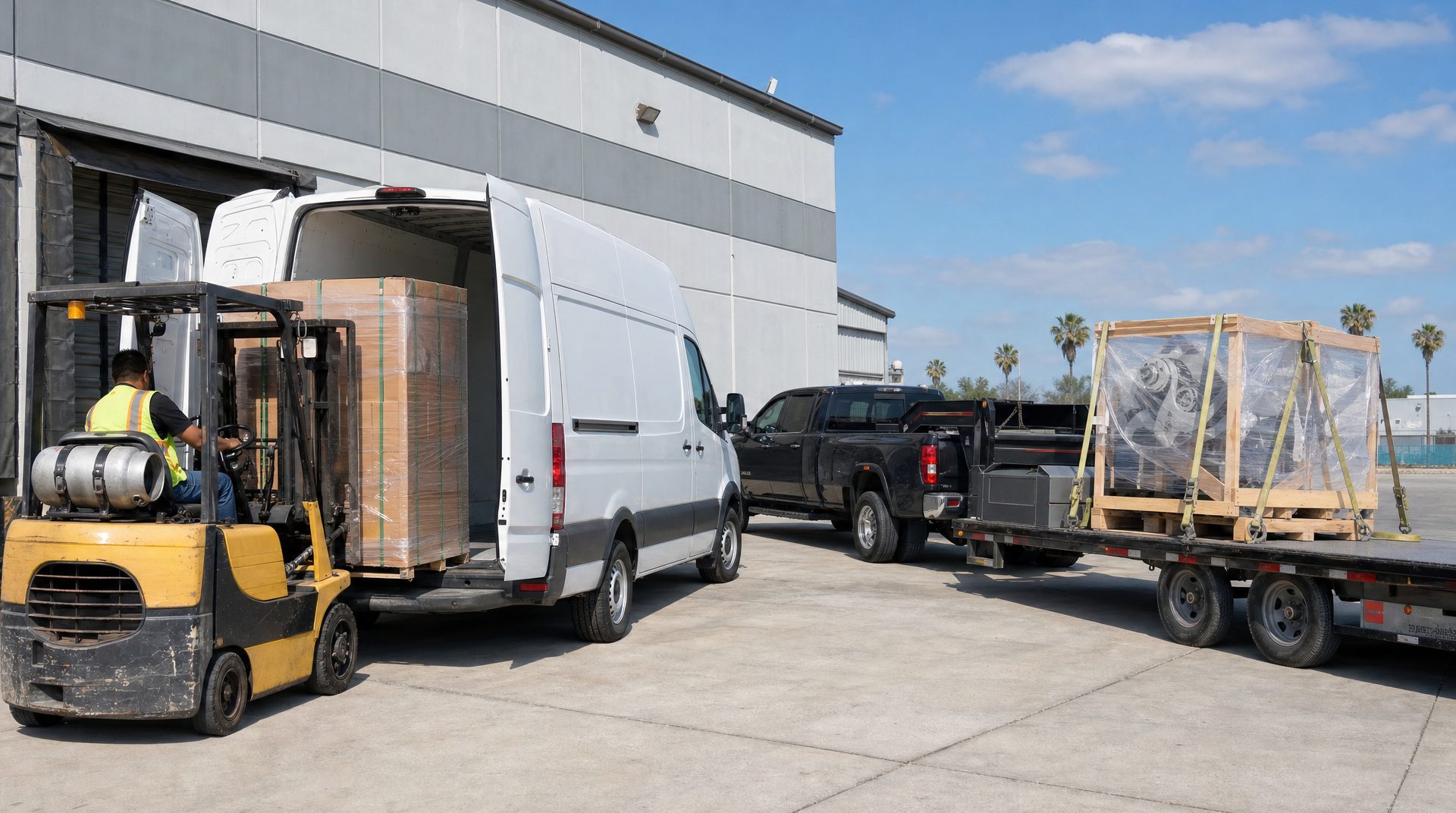
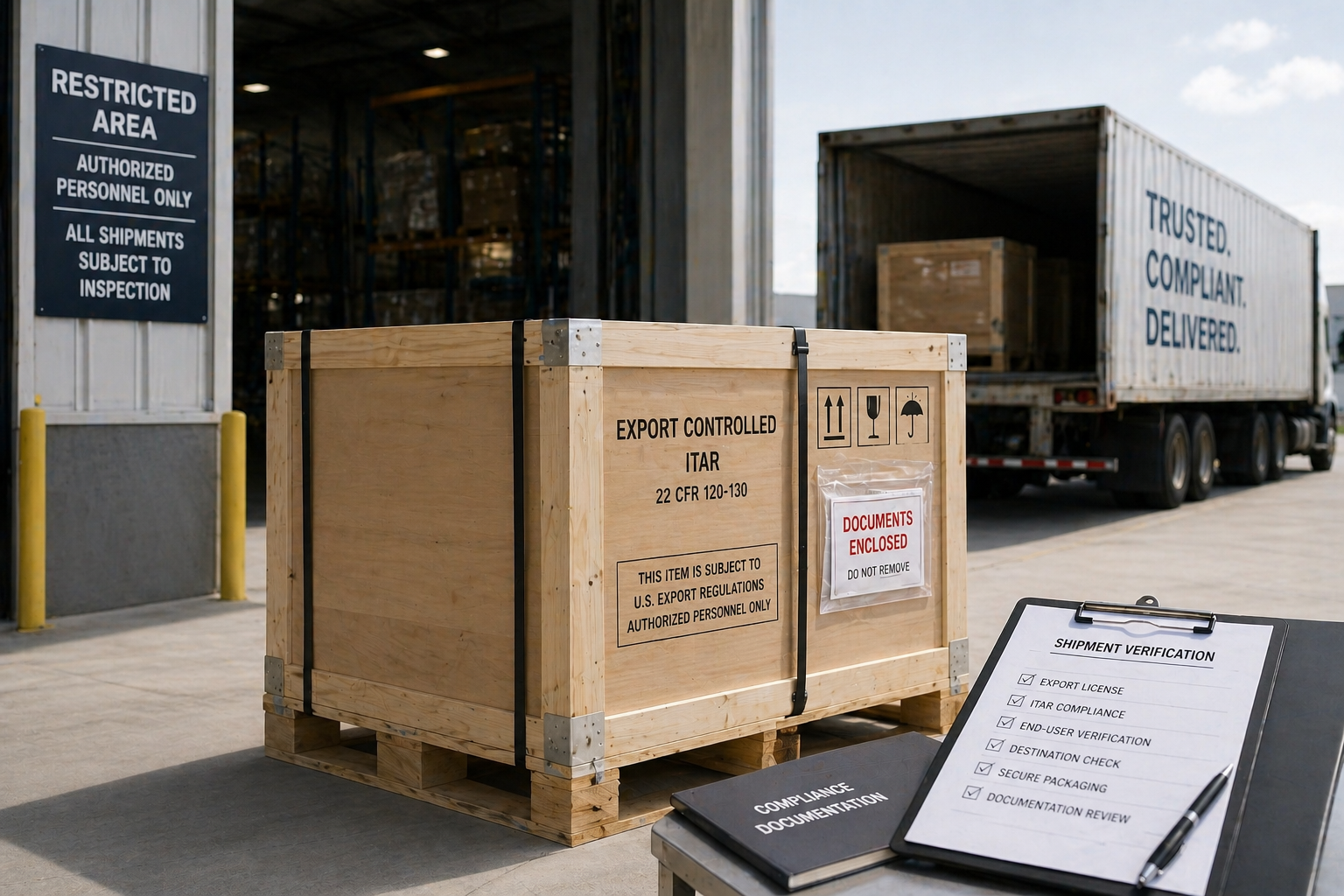
No compliance infrastructure for the loads that matter. Government freight with real margin — defense logistics, hazmat, sensitive cargo, base deliveries — requires compliance infrastructure most commercial brokers haven’t built: carrier vetting for DOD requirements, documentation management for ITAR-controlled cargo, GPS tracking capability, DD Form 1149 familiarity. Brokers who can handle a pallet of office supplies for a civilian agency aren’t equipped to handle the freight that government logistics offices actually struggle to source. The high-value opportunities go to brokers who can demonstrate that infrastructure.
Low-bid positioning that doesn’t survive contact with the work. Some government freight categories do prioritize price. But urgent defense freight, ITAR shipments, military base deliveries, and hazmat under strict regulatory oversight are not awarded to the lowest bid when it comes without a compliance track record. Brokers who compete solely on rate for specialty government freight are either losing to better-qualified providers or winning and then underperforming.
For contractors and agencies that need a freight partner capable of meeting government compliance requirements, LAX Freight’s government and defense freight capabilities are built around exactly this kind of work.
What Government Agencies Need That Most Brokers Can’t Provide
The government freight problem that drives agencies to seek specialty providers isn’t standard loads. Agencies can move standard LTL and FTL through GSA Advantage or basic broker arrangements without much difficulty.
The problem is freight that can’t be handled that way:
- A critical aircraft component that needs to move within 24 hours and has to clear a security checkpoint before it can be loaded.
- An ITAR-controlled shipment where carrier and driver need to meet specific personnel requirements.
- A delivery to a military installation requiring advance access authorization.
- A shipment of AA&E where DOD transportation security requirements govern who can carry it and how.
These loads sit unresolved when the go-to broker can’t handle it. Defense Logistics Agency supply chains stall. Contract deliveries miss their dates. And when airfreight is the fallback for urgent DOD cargo that ground freight couldn’t move, airport storage costs can reach $9,000 or more per day while the logistics problem gets worked.
The brokers who build government freight practices around solving these problems — not around volume and rate — are the ones who build durable government freight relationships.
Using LAX Freight as a Capacity Partner
When a broker has a government freight contract and faces a hazmat shipment with DOT and DOD requirements they’re not set up for, a military base delivery requiring access coordination they haven’t done, or an expedited ITAR-controlled shipment where carrier vetting is a compliance requirement — that’s where LAX Freight operates.
The arrangement is straightforward: the broker maintains the government relationship and the contract. LAX Freight provides the capacity, carrier network, compliance process, and operational execution for the specialty freight the broker’s standard carrier base can’t handle. The broker delivers on the contract. The end customer gets the freight moved correctly.
For brokers looking to establish their government freight credentials, the path runs through demonstrating the ability to handle what government agencies find difficult to source. That demonstration is easier to make when the capacity partner behind you has already built the compliance infrastructure, the carrier relationships, and the operational track record for government and defense freight.
For an overview of the full government and defense freight capabilities at LAX Freight, visit our government and defense shipping page.