The flight that landed at the wrong airport
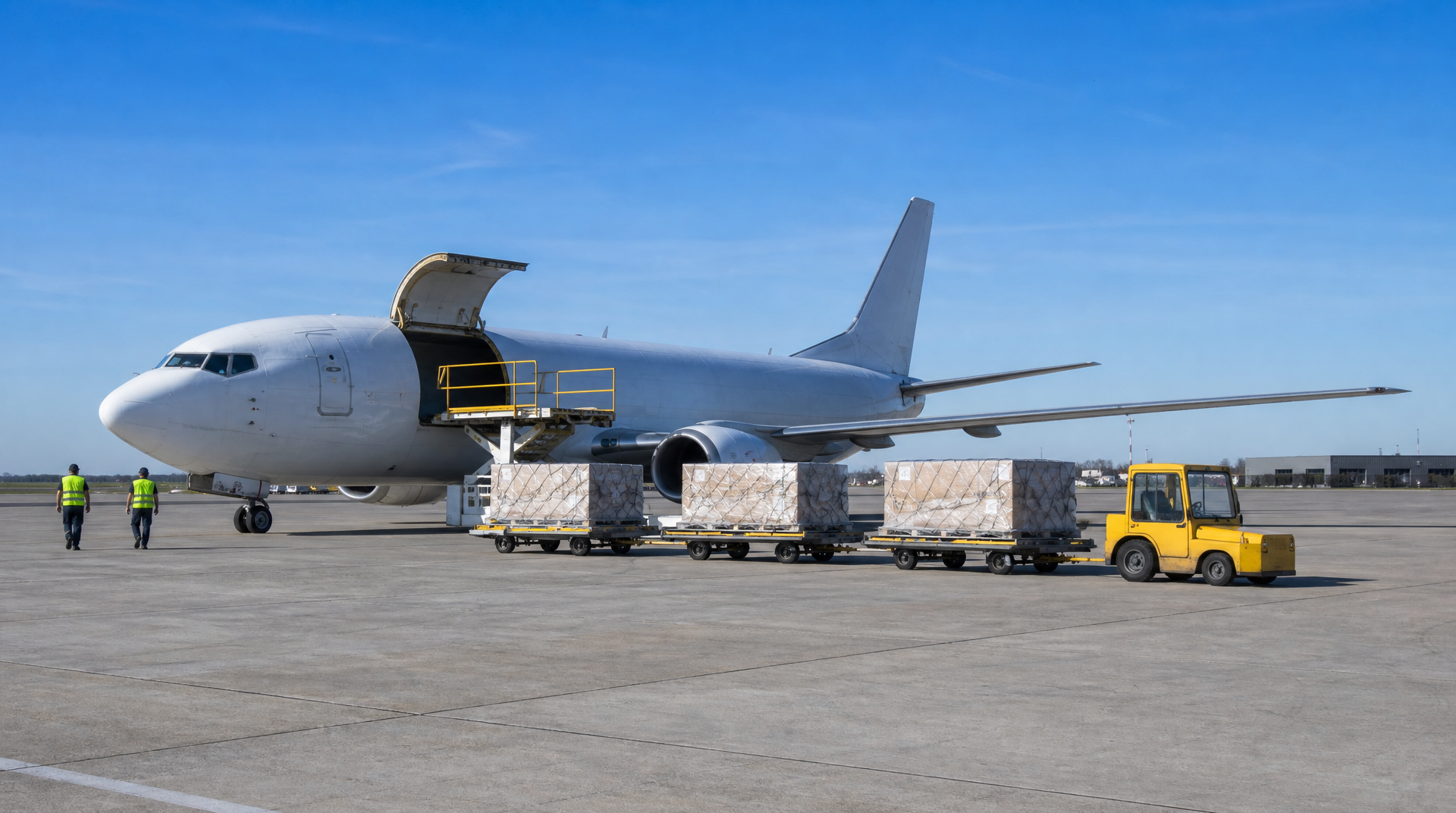
The shipment was booked on a Tuesday morning Chicago O’Hare arrival. Crosswinds at ORD pushed the flight onto a holding pattern, fuel margins tightened, and the air carrier diverted to Milwaukee Mitchell. The freight is on the ground 90 miles north of where the forwarder’s ground operation expected to recover it. The shipment tracking shows arrival at MKE at 9:47 AM. The consignee’s dock in suburban Chicago is expecting delivery by 2:00 PM.
The diversion itself is an air-side problem the forwarder didn’t choose. The recovery problem that lands on the forwarder’s desk at 10:15 AM is a ground-side problem with no clean solution: the operator’s pickup carrier at ORD has no authority at MKE, the rate structure for unfamiliar terminal pickups is volatile, and the routing back south has to be coordinated against an unfamiliar ground vendor in a market the forwarder doesn’t operate in regularly.
The weather story ends when the freight is on the ground. The recovery story is just starting.
What the ground network actually means
Forwarders build ground networks around the airports where their volume justifies dedicated relationships. For a Chicago-based forwarder, that means committed capacity at ORD and possibly MDW. The carriers in that network know the terminals, the dock assignments, the airline ground handlers, the badge protocols, and the document sets. Pickups at those airports happen on standard rates because the volume’s there to carry the overhead of the relationship.
Milwaukee, even at 90 miles distance, is outside that network. The Milwaukee airport has its own ground operators, its own terminal layout, its own union relationships, and its own preferred carriers. None of those relationships are pre-positioned for the Chicago forwarder calling at 10:15 AM about a shipment that nobody at MKE was expecting either. The forwarder has three operational options, each with a different cost structure and a different operational risk.
The three recoveries
Option one: deadhead a Chicago carrier to MKE for the pickup. This works if the forwarder’s network has a carrier with enough capacity to absorb the deadhead miles and enough familiarity with their own equipment to manage an unfamiliar terminal at the other end. The driver knows the operator, the operator knows the rate, and the documentation flow stays inside the existing relationship. The cost is the deadhead — typically 2.5 to 3 hours of paid empty miles plus the actual pickup time at MKE, plus the southbound move. The recovery is slow but the cost is predictable.
Option two: source a one-time pickup operator at MKE. Faster on the airport side because the operator is local, but the forwarder is buying in an unfamiliar market under time pressure. Rate negotiation is compressed. Insurance verification has to happen on a same-day basis. The driver showing up at the airline’s ground handler will be unknown to the counter staff, which adds time to documentation review even when the paperwork is correct. If the consignee’s dock at the destination has specific receiving requirements, the one-time operator may not know them.
Option three: reload the freight through air or ground transit back to ORD and recover under the existing network. Practical only if the air carrier has a return flight that day with capacity, or if the freight can move via line haul. Adds a full handoff cycle, multiple new documentation requirements, and the original time pressure compounds rather than resolves.
Most diversions resolve through option one or option two. The choice between them isn’t usually about cost in dollars — it’s about which kind of operational risk the forwarder is willing to absorb. Deadhead distance is a known cost. Sourcing in an unfamiliar market is an unknown cost.
What the consignee is doing while this happens
The consignee at the suburban Chicago dock is not aware of any of this until the forwarder calls. From their side, the freight was supposed to land by 2:00 PM. They have a receiving crew on shift, a dock door assigned, and a downstream handling sequence already in motion. The diversion call comes in at 11:00 AM with a revised arrival window of 5:00 PM at the earliest.
That conversation is operationally simple if the forwarder is calling with a recovery sequence already in motion: pickup carrier confirmed at MKE, departure window set, ETA calibrated against actual road conditions. It’s operationally hard if the forwarder is calling without that sequence yet — because the consignee has to make a call about whether to hold the receiving crew, reassign the dock, or treat the shipment as next-day delivery. The accuracy of the forwarder’s ETA at that moment is what allows the consignee to decide.
The forwarder who’s still negotiating with a one-time MKE operator at 11:00 AM doesn’t have an ETA yet. The forwarder who has a pre-arranged operator agreement covering second-tier airports across their service region has an ETA inside 15 minutes of the diversion notice.
The vendor sourcing problem at second-tier airports
Sourcing a pickup at MKE at 10:15 AM Tuesday for a same-day move isn’t usually difficult — there are carriers operating at every commercial airport, and most of them can take a one-time job. The difficulty is sourcing one whose operational profile matches what the freight requires. If the shipment is hazmat, the carrier needs hazmat authority and trained drivers. If it’s high-value, the carrier needs the insurance limits and the security protocols. If it’s temperature-controlled, the carrier needs the right equipment with current calibration. If it’s oversized, the carrier needs the right trailer.
The forwarder calling MKE for the first time has to verify all of that under time pressure with a vendor relationship that doesn’t exist yet. The verification step is what slows the recovery from the operator side. Most forwarders end up making three or four calls before landing on a carrier that can take the load and meet the operational requirements. Each of those calls is 8 to 15 minutes of conversation that the recovery clock is running through.
A recovery operator with an alt-airport network has those vendor profiles already verified, with current insurance certificates on file, hazmat endorsements documented, equipment lists current, and rate structures pre-negotiated. The vendor sourcing call that takes 90 minutes from cold takes closer to 15 from warm — but the freight characteristics still have to match the operator’s current vendor on file at MKE, and if the shipment requires equipment the local vendor doesn’t have today, the recovery still has to source outside the network. Pre-positioning narrows the search; it doesn’t always end it.
What pre-positioning at second-tier airports actually looks like
An alt-airport network isn’t a list of phone numbers. It’s a set of operating relationships at each airport in the network, refreshed on a regular cadence so that when a diversion happens, the operator at the receiving airport already has the forwarder’s account on file, knows the equipment requirements, and can dispatch on a single call. The relationship gets used periodically even in the absence of diversions — a small volume of regular pickups keeps the operator current and keeps the rate structure honest.
That infrastructure costs something to maintain. It’s also the difference between a 90-minute recovery and a 4-hour recovery on the day a diversion lands. The forwarders absorbing the worst diversion outcomes are usually the ones who built networks around their primary airports without paying for coverage at the alts they don’t use most weeks. The math works on a normal week. It breaks on the week the flight gets diverted.
The diversion that resolves quietly
Some diversions resolve cleanly. The forwarder gets the diversion notice, calls the alt-airport recovery operator, confirms a 12:00 PM pickup at MKE, sets an updated ETA at the consignee’s dock for 4:30 PM, and the receiving crew shifts to the new window. The pickup happens. The freight moves south. The consignee receives at 4:38 PM. The forwarder absorbs a small premium on the recovery rate and the day closes close to plan.
That outcome looks unremarkable from the consignee’s view. The diversion happened, the recovery moved, the freight arrived later than planned but the operation continued. From the forwarder’s view, the unremarkable outcome is the result of pre-positioned infrastructure that didn’t have to be assembled under time pressure. Airport recovery freight that holds together when the flight diverts is built before the diversion, not after.
Coverage at the airports the forwarder doesn’t route through
The diversion that resolves cleanly is rarely the result of fast vendor sourcing on the day. It’s the result of coverage decisions made months before, at airports the forwarder doesn’t usually route through. Which alt airports the recovery operator covers at all. What the committed time-to-truck looks like at each one. Whether the operator’s vendor profiles cover the equipment classes that actually ship. Whether the diversion rate structure is pre-negotiated or assembled under pressure when the call comes.
The freight is rarely on the ground for long. The recovery infrastructure that catches it is what determines whether the rest of the day stays manageable. Talk to a recovery desk with alt-airport coverage already in place, before the next diversion lands.