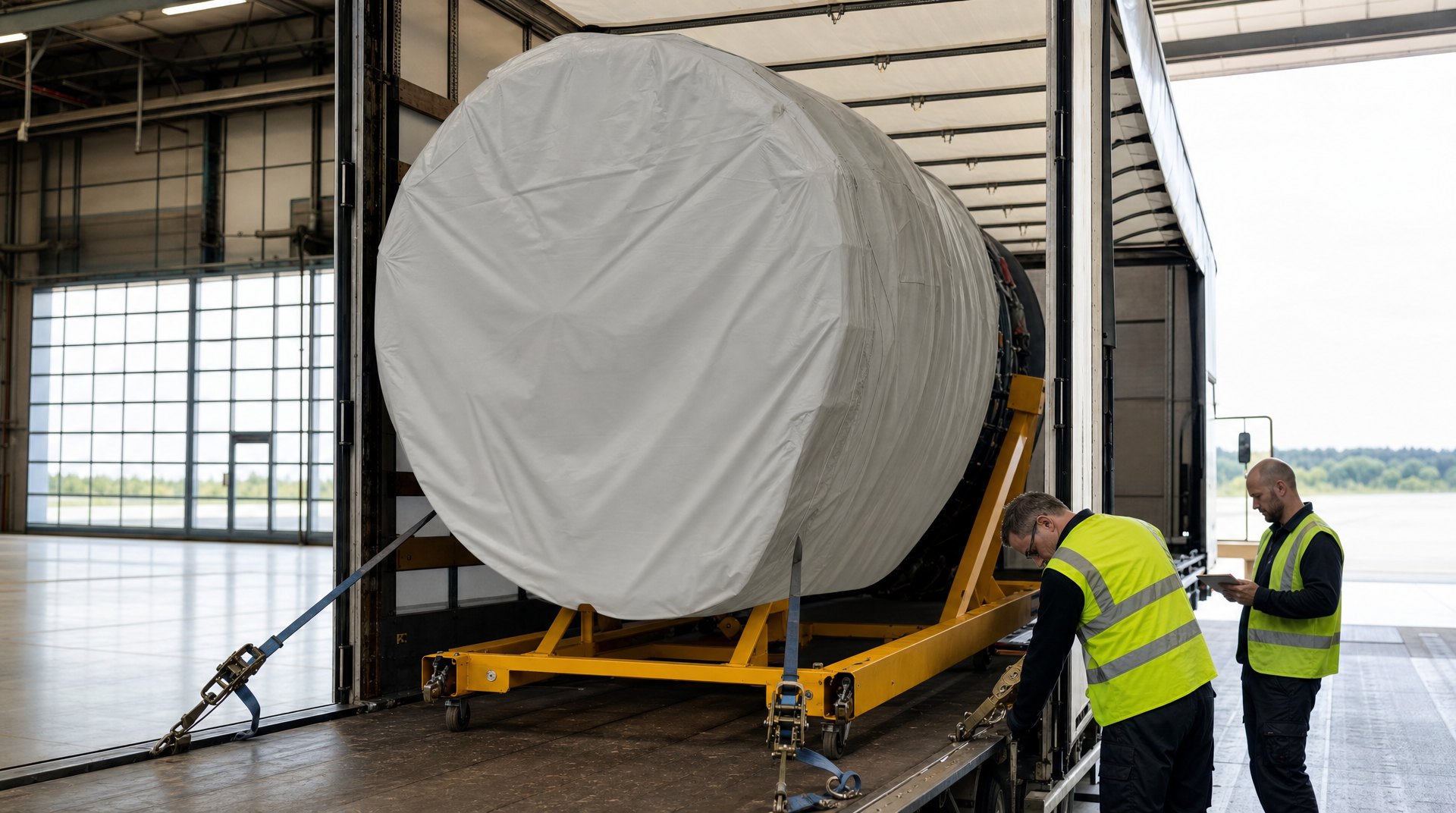
An aircraft engine is one of the most valuable single pieces of freight that moves by road. It travels between airlines, engine shops, lessors and manufacturers for overhaul, lease returns, exchanges and repairs, and many of those moves are urgent. The engine is heavy, awkward to lift and sensitive to rough handling, and the paperwork that travels with it matters as much as the engine itself.
This guide covers the equipment an engine move needs, how to prepare the engine before the truck arrives, and how to arrange transport when the deadline is tight.
Why an engine is not ordinary heavy freight
Plenty of freight is heavy. An engine is different in three ways. Its weight sits on a few mounting points rather than spread across a pallet, so it cannot simply be set on a deck and strapped down. Its internal parts can be damaged by repeated shock and vibration that leave no visible mark on the outside, so a rough trip may only show up later at inspection. And its value and its records are tied together: an engine that arrives without the right documents may not be usable until they are found.
Each of those points shapes the equipment, the preparation and the way the move is planned.
The transport stand comes first
Engines travel on a transport stand or cradle built for that engine type. The stand carries the engine at its designed mounting points, gives the crew a safe way to lift and secure it, and some designs include their own shock mounts. The stand usually belongs to the engine owner, the airline or the shop, not to the trucking company.
In practice the stand is often what holds an urgent move. Before you book, confirm that a stand for the right engine type is available at the pickup point, that it is serviceable, and who is responsible for getting the empty stand back afterward. Ask for the combined length, width, height and weight of the engine on its stand. Those numbers decide the trailer.
Choosing the trailer
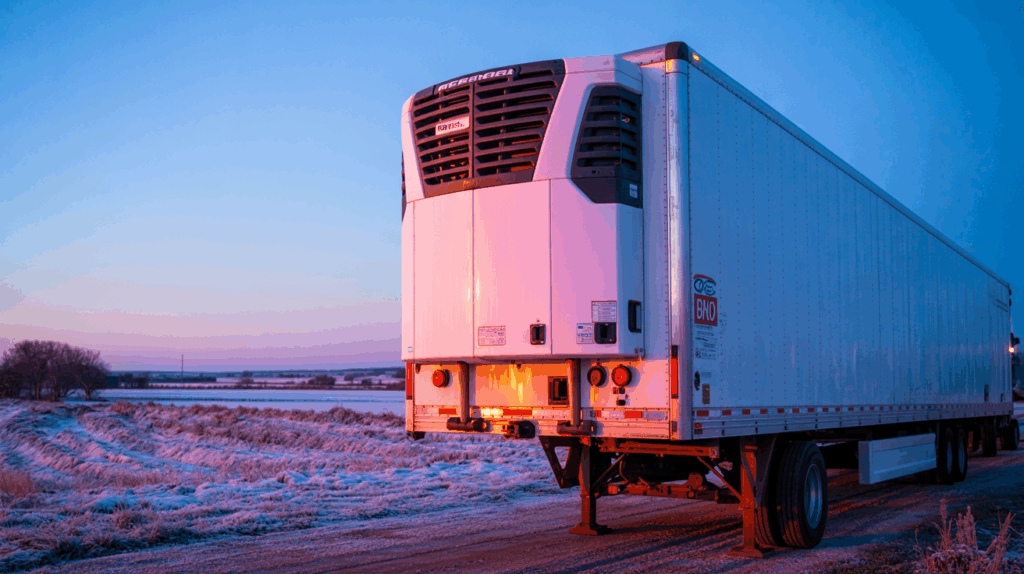
Air-ride suspension is the usual starting point for engine moves because it reduces the shock and vibration that reach the load compared with spring suspension. Beyond that, the choice depends on size and how much protection the engine needs from weather and view.
| Equipment | When it fits | What to check |
|---|---|---|
| Enclosed air-ride trailer | Engine on stand fits through the doors and within the trailer’s height | Door opening, floor rating, tie-down points, how the stand is loaded |
| Air-ride flatbed or step deck | Engine is too tall or wide for an enclosed trailer, or must be lifted on from above | Covering against weather and road spray, securement to the stand’s lashing points |
| Lowboy or removable gooseneck | Height on a standard deck would exceed legal limits | Permits, route survey, escort requirements |
| Air freighter or charter | Distance or deadline rules out road transport | Aircraft door and floor limits, airport lifting equipment |
Size is also a legal question. States may not set a width limit other than 102 inches for vehicles on the National Network, and they may grant special use permits for vehicles that exceed that width (23 CFR 658.15). A large engine on its stand can cross that line, which turns the move into an oversized load with permits and adds time to the plan.
Preparing the engine for shipment
The engine shop or owner does the technical preparation. The shipper’s job is to make sure it is finished before the truck arrives and that the carrier knows the result.
- Fuel. Under federal hazardous materials rules, an engine may be considered as not containing fuel only when the engine components and fuel lines have been completely drained, cleaned of residue and purged of vapors so that the engine will not release liquid fuel in any orientation (49 CFR 173.220). An engine that does not meet that standard is regulated, and the rules differ by mode, with air stricter than road. Tell your provider the fuel status when you ask for a quote.
- Preservation and covers. Follow the manufacturer’s instructions for preserving the engine and sealing intakes, exhaust and other openings. A fitted cover keeps out water, dust and debris during the trip.
- Loose items. Remove or secure anything that can move, and pack separately shipped accessories with a clear list.
- Documents. A serviceable engine or part usually travels with its release paperwork, in the United States the FAA Form 8130-3 Authorized Release Certificate. Agree who carries the documents and keep copies with the shipment and with the receiver.
- Condition record. Photograph the engine, the cover and the stand from every side at loading, and note any existing damage on the bill of lading.
Arranging urgent engine transport
Urgent engine moves usually come from an aircraft on the ground, a lease return date or a shop slot that will not wait. Speed comes from having the facts ready on the first call, not from calling more providers. Before you request transport, have these answers:
- Engine type, and the dimensions and weight on the stand.
- Pickup and delivery addresses, with the hours each site can load and receive.
- Lifting equipment at both ends. Someone needs a crane or a forklift rated for the engine and stand, and a crew that has lifted that stand before.
- Fuel status and whether documents travel with the engine.
- The time the engine must be on site, and what happens if it is late.
With those facts, the routing decision is usually quick. Within a long day’s drive, a dedicated truck that goes straight from pickup to delivery is often the fastest door-to-door option, and expedited service with team drivers keeps it moving through the night. Beyond that range, air becomes the realistic choice, and an engine is one of the parts that often needs a freighter or a charter rather than space on a scheduled flight. Our guide to AOG parts delivery routes compares the options, and our article on what AOG part recovery requires covers the paperwork and dangerous goods checks that hold urgent parts back.
Questions to ask your transport provider
- What trailer will you send, and does it have air-ride suspension?
- Has the driver secured an engine on a transport stand before, and to which points will it be strapped?
- Will the engine ride alone, straight from pickup to delivery?
- Does the load need permits or escorts at these dimensions, and how long will they take?
- How is the engine protected from weather if the trailer is open?
- What tracking and photos will I get during the move?
- Who handles the return of the empty stand?
How LAX Freight handles aircraft engine transport
LAX Freight supports MRO providers, engine shops, airlines and OEMs through its aerospace and AOG logistics service. We transport aircraft engines and landing gear with specialized trailers, secure mounts, climate-controlled handling and shock protection. For grounded aircraft, our team offers 24/7 dispatch with charter, courier and customs documentation, and air charter or an on-board courier when a part has to arrive the same day.
Shipments can be followed in a geo-fenced tracking portal with photo documentation and milestone alerts. When an engine on its stand goes over legal size, we manage state permits and escort vehicles as part of the move.