An aircraft on the ground is a stopped line with a tail number
An aircraft goes unserviceable at an outstation at 4 PM. The part that will fix it sits in a stores facility eight hundred miles away, and until it arrives the airframe occupies a stand and cancels a schedule. It is a stopped production line: one item missing, the asset idle until it is replaced, every hour priced far above the freight.
What differs is how the part moves. An aircraft-on-ground shipment carries requirements ordinary expedited freight never encounters, and the ones that catch people out are not about speed. They are about paperwork, about what is legally allowed on an aircraft, and about where the delivery address actually is.
A part without its certificate is not a part
The first thing separating AOG work from everything else is that the component and its documentation are inseparable. A serviceable unit arrives with an authorised release certificate, and without it the maintenance organisation cannot fit the part, however genuine and serviceable it plainly is. That discipline runs through airworthiness rules the Federal Aviation Administration maintains, and no operational pressure makes it negotiable.
The practical failure is not that the certificate does not exist. It travels separately, gets emailed instead of packed, arrives with an empty signature block, or references a serial that does not match the unit in the box. Each turns a delivered part into an undelivered one, discovered at the aircraft, at the worst moment, with the shipment already closed out as successful.
So the check belongs at origin: is the certificate in the box, does its serial match the unit, and is it complete. Two minutes at the stores counter, and the highest-value verification in the move.
It is also a check almost nobody on the freight side makes, because from a transport perspective the paperwork that matters is the air waybill and the invoice, both of which will be perfect. The document that stops the repair is one the carrier has no obligation toward. If the freight side does not ask, the only person who notices is an engineer at an aircraft at three in the morning.
Aircraft parts are frequently dangerous goods
A surprising proportion of what an aircraft needs is restricted for air transport, and the person requesting it rarely thinks of it that way. Avionics and emergency equipment contain lithium batteries. Evacuation slides contain compressed gas or pyrotechnics. Chemical oxygen generators are among the most tightly controlled items in the system. Removed components often retain residual hydraulic fluid or fuel, which changes their classification entirely.
The consequential detail is that the serviceable unit going out and the unserviceable unit coming back are often not classified the same way. The outbound part may be clean; the inbound one, drained imperfectly and packed in a hurry at 2 AM, may not be. AOG returns are where dangerous goods problems concentrate, and they get the least planning attention because the aircraft is flying again.
That has to be established before booking rather than at the counter, in the same way a classification mismatch on restricted freight has to be caught at origin. A part refused at acceptance costs the entire flight cycle.
The delivery address is a stand, not a warehouse
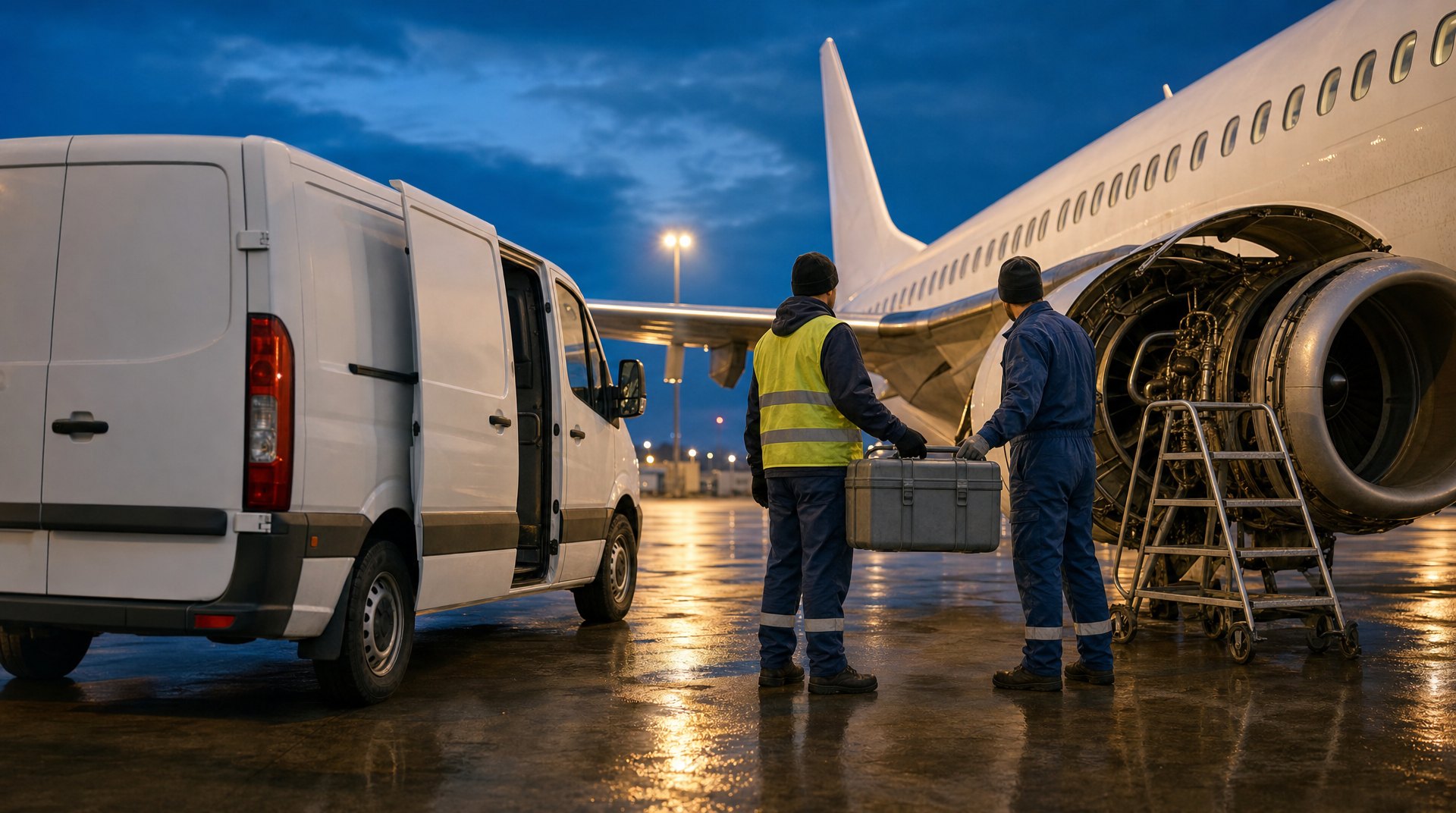
The third difference is at the destination. A part needed for a line maintenance task is needed at the aircraft, and the aircraft is airside. Getting freight to it means a driver with the right access, an escort, or a handover to someone who has both, and knowing which gate and who signs. A courier delivering to the terminal’s landside address has completed the job and not solved the problem.
Where the station has an on-airport stores facility this is straightforward and should be confirmed. Otherwise the last leg needs arranging explicitly, and the people who can do it are usually the handling agent or the operator’s station staff rather than anyone the freight side controls. Ask at booking who takes custody airside and name them on the delivery order.
When the part will not fit in a hold
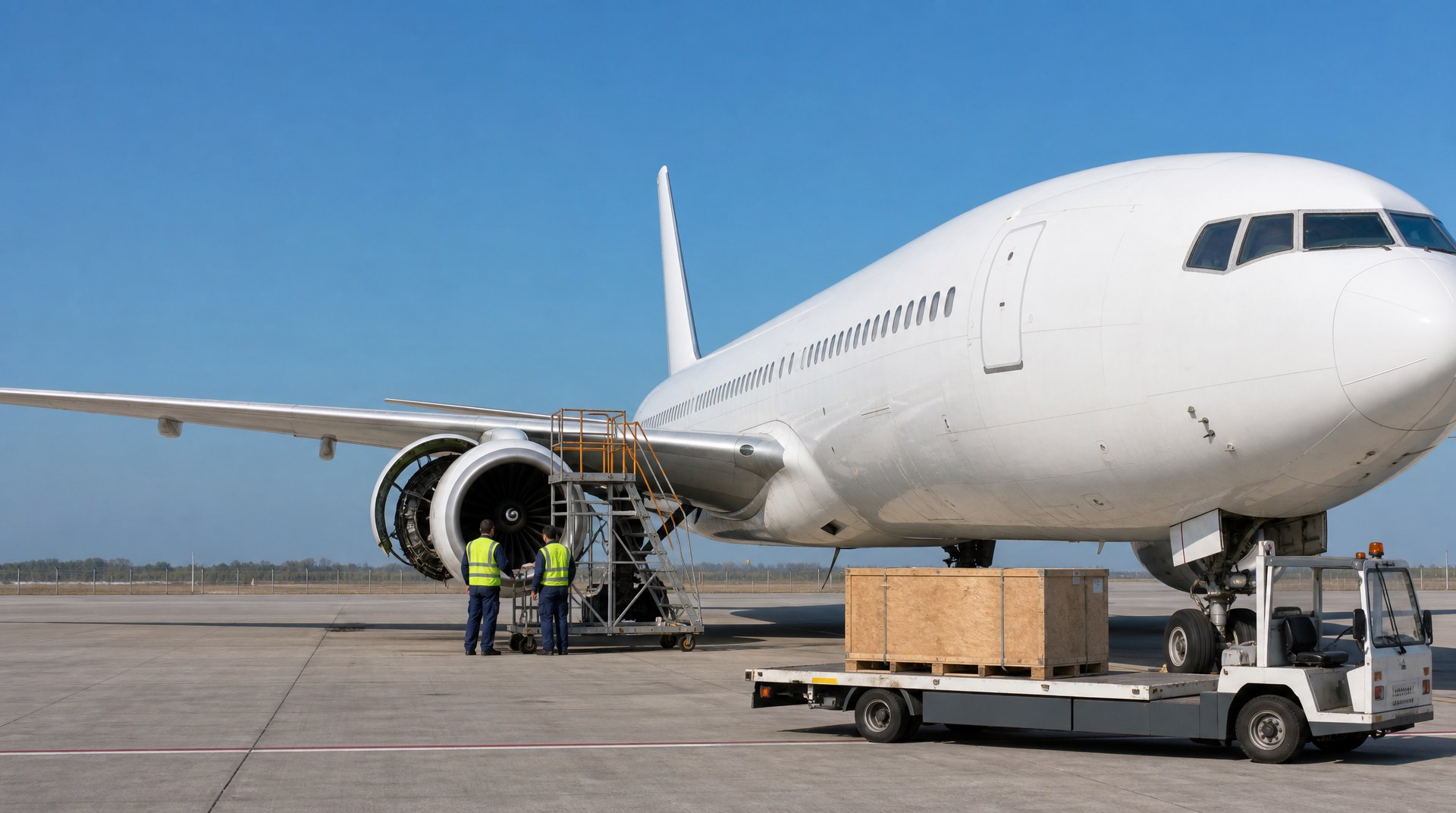
Some AOG items are too large for scheduled cargo capacity. Engines, landing gear, flight control surfaces and large structural components need a freighter with the right loading capability or a dedicated aircraft, and availability is a function of the hour and the airport rather than of willingness to pay. Decide early, because alternative routings collapse as the day goes on. The reasoning is the same as for any move where the freight requires a charter rather than a booking, with the added factor that the destination may have limited handling equipment for an outsized piece.
It is also worth being realistic about what pressure achieves. On an AOG the temptation is to escalate in every direction, and escalation applied to a routing problem does nothing about a certificate sitting in an inbox. A desk running an urgent air freight move should work the routing and the paperwork in parallel, because either one alone will hold the aircraft.
Three checks before the part leaves stores
Three questions decide whether an AOG move ends with an aircraft flying or a part sitting next to it. Is the release certificate physically in the box, complete, with a serial matching the unit. Is the item restricted for air transport, outbound and on the return leg, and is that established before it is tendered. And who takes custody at the destination, airside, at the hour it arrives. The freight side of an AOG is rarely the hard part; the requirements around it are, and all are knowable before anything moves.