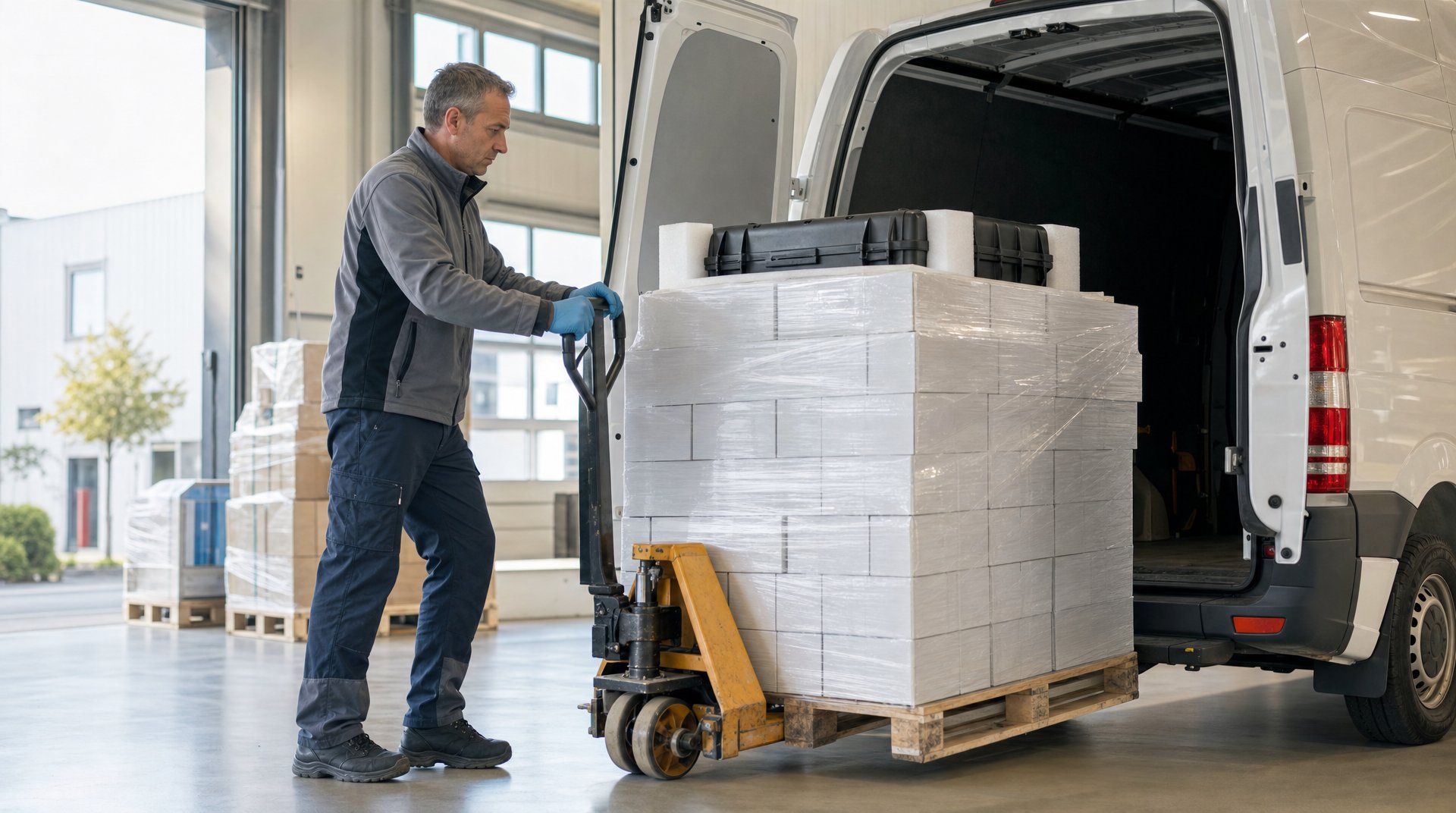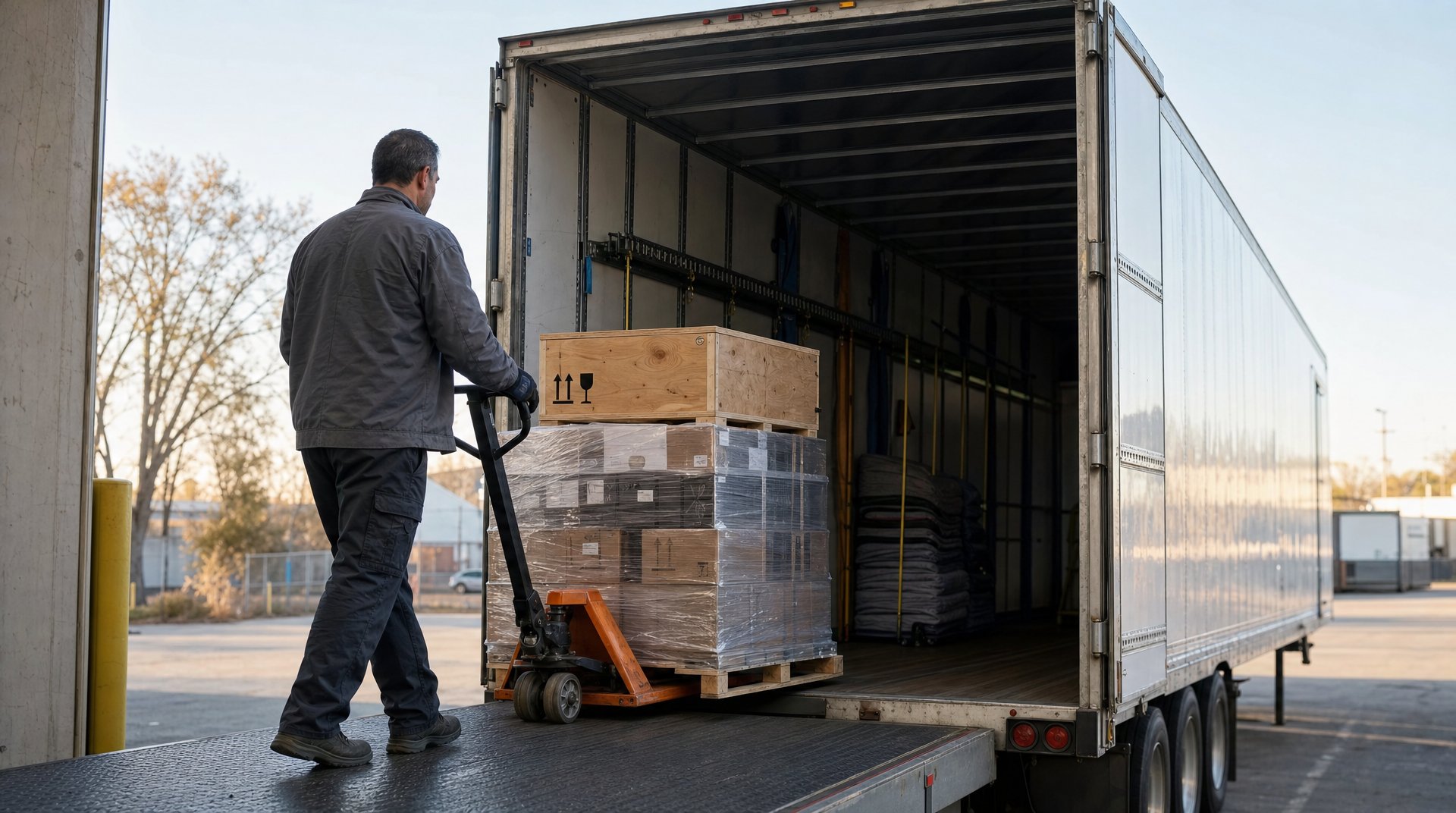
High-value freight is any shipment where a loss would hurt far more than the freight bill. A pallet of servers, a crate of aircraft parts, a lot of finished electronics, or a single piece of test equipment can be worth many times what it costs to move. The truck and the route may look ordinary. What changes is how much you need to know before you book: who will actually haul the load, how it is protected from pickup to delivery, and what happens financially if something goes wrong.
This guide walks through those decisions in the order you face them, and ends with a list of questions to ask before you sign a rate confirmation.
What makes freight high-value
There is no single dollar threshold. A shipment usually belongs in this category when one or more of these is true:
- The declared value is high relative to weight, so a small, easy-to-move load carries most of the risk.
- The goods are easy to resell, which makes them a target for theft. Electronics, pharmaceuticals and branded consumer goods fall here.
- The item is hard to replace quickly, so a loss also means downtime, a missed installation date or a grounded aircraft.
- The shipment is sensitive for reasons other than price, such as serial-tracked equipment or freight for a government program.
If any of these applies, treat the booking as a risk decision rather than a rate comparison.
Exclusive use or a shared trailer
The first choice is whether your freight rides alone. Every time freight is unloaded, sorted and reloaded, someone new handles it and it sits on a dock for a while. Less-than-truckload service is efficient precisely because it consolidates freight through terminals. For high-value goods, that efficiency comes with more touches and more people with access.
| Question | Shared trailer (LTL) | Exclusive use (dedicated truck) |
|---|---|---|
| Who else is on the trailer | Other shippers’ freight | Only your shipment |
| Handling between pickup and delivery | Transfers at one or more terminals | Loaded once, unloaded once |
| Seal | Trailer is opened at each stop | Seal can stay intact from dock to dock |
| Route and stops | Set by the network | Agreed for your load |
| Best fit | Lower-value or well-packed, low-theft-risk goods | High-value, sensitive or time-critical goods |
For urgent high-value freight, team drivers can keep the truck moving with fewer stops, which reduces both transit time and the hours a loaded trailer sits parked. For the most urgent cases, an air charter or on-board courier removes the road leg altogether.
Check who will actually haul it
The company you book with is not always the company that moves the freight. Federal rules define a broker as a person who, for compensation, arranges or offers to arrange transportation of property by an authorized motor carrier (49 CFR 371.2). Using a broker or a logistics provider that works through a carrier network is common and often the right call. The point is to know which arrangement you have, because it affects who you talk to during transit and who you file a claim against.
Before pickup, ask for the name and operating authority number of the carrier assigned to the load. Then make sure the same company name appears on the rate confirmation, the bill of lading and the truck that shows up. A last-minute change of carrier, or a driver who cannot match the paperwork, is a reason to stop the pickup and call your provider.
Security from dock to dock
Most of the protection for a high-value load comes from procedure, not equipment. A practical checklist:
- Driver identity. Share the expected driver name and truck details with your dock in advance, and check them at pickup.
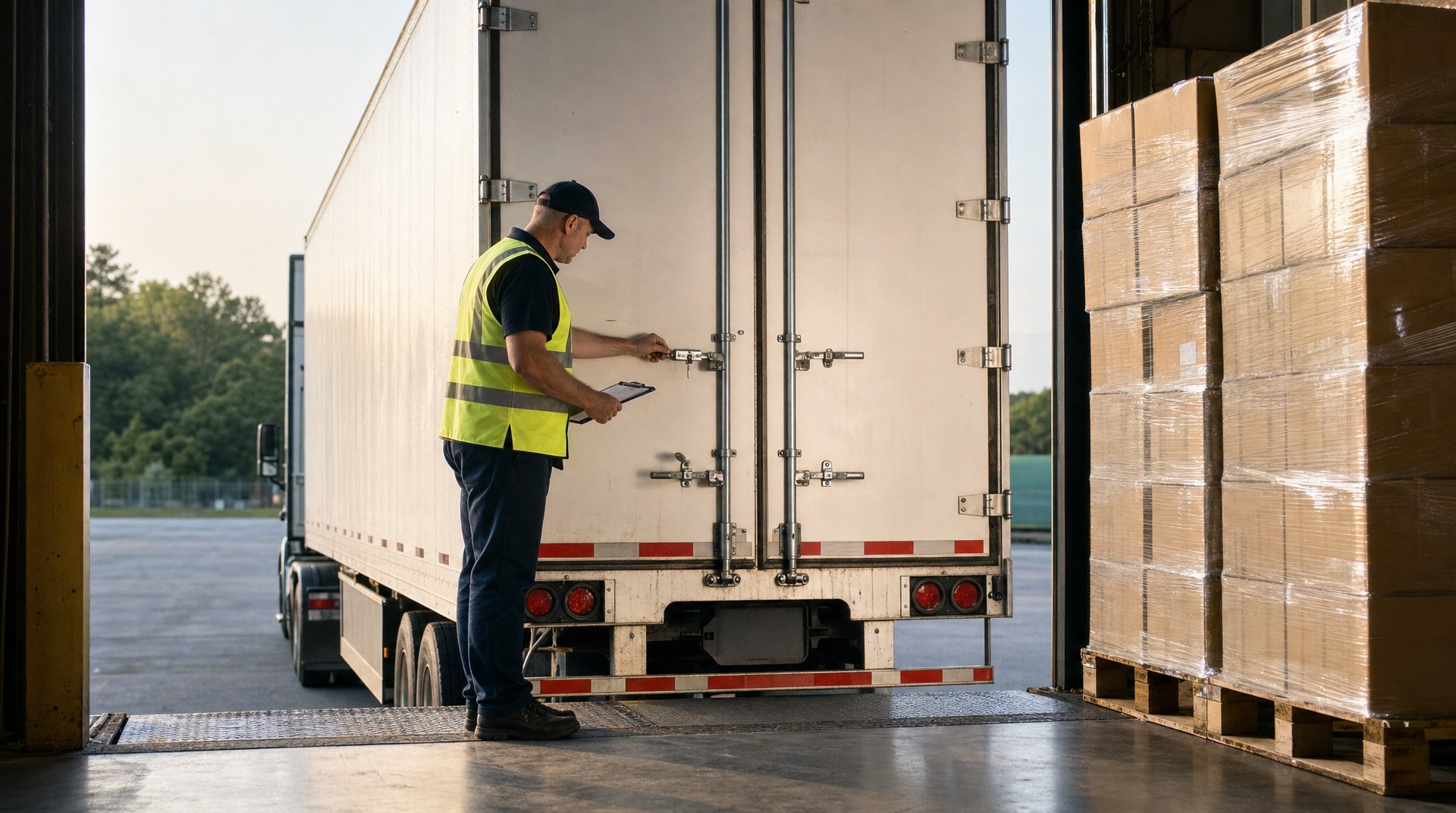
- Seal. Apply a numbered seal after loading and write the number on the bill of lading. The receiver checks the same number before breaking it.
- Enclosed equipment. A closed, sealed trailer keeps goods out of sight and away from weather. Avoid open equipment unless the freight requires it.
- Stops. Agree in advance where the driver may stop, and avoid leaving a loaded trailer unattended.
- Tracking. Ask what you will see during transit: live location, alerts if the truck leaves a planned area, and photos at pickup and delivery.
- Receiver. Name the person who will sign at delivery and make sure they know to inspect before signing.
Packaging belongs on the same list. Do not label cartons with brand names or contents that advertise what is inside. Our guide to preventing cargo theft covers more of the common schemes and how to spot them.
Carrier liability and cargo insurance are not the same thing
Under federal law, an interstate motor carrier is liable for the actual loss or injury to property it transports under a receipt or bill of lading (49 U.S.C. 14706). The same section lets a carrier set rates under which its liability is limited to a value declared by the shipper or agreed in writing, as long as that value is reasonable under the circumstances. A limited value set for ordinary freight can be far below what high-value goods are worth. Read the bill of lading and the carrier’s terms, and if you need full value, declare it and confirm in writing what that changes.
A carrier’s federal insurance filing is a different matter. The minimum financial responsibility rules for general freight carriers set levels of public liability coverage, which protects the public from harm caused by the truck (49 CFR 387.9). The federal cargo liability minimums in the same part apply to household goods carriers (49 CFR 387.303). So a carrier being properly registered tells you little about how much cargo coverage it holds.
For a high-value load, ask for a current certificate of insurance and read three things on it: the cargo limit, the deductible, and any exclusions. Look in particular for exclusions that name your type of goods or limit theft coverage, for example when a vehicle is left unattended. If the carrier’s coverage is lower than the value of your shipment, add your own cargo insurance. Our overview of cargo insurance types and coverage explains the options.
If something goes wrong: claims
Inspect at delivery, before the receiver signs. Note any visible damage, shortage or broken seal on the delivery receipt. That note matters, but on its own it is not a claim: federal rules say damage notations on delivery receipts and similar documents do not meet the minimum filing requirements (49 CFR 370.3).
A claim is a written communication to the carrier that identifies the shipment, asserts liability for the loss or damage, and asks for a specified or determinable amount of money (49 CFR 370.3). Once the carrier receives it, the carrier must acknowledge it in writing within 30 days unless it pays or declines it in that time (49 CFR 370.5), and it must pay, decline or make a firm settlement offer within 120 days, or explain the delay in writing (49 CFR 370.9).
Deadlines run against you too. A carrier may not set less than 9 months for filing a claim or less than 2 years for bringing a lawsuit after it disallows a claim (49 U.S.C. 14706). Your bill of lading sets the actual periods, so check it rather than assuming. Keep the commercial invoice, packing list, photos at loading and the seal number together so a claim can be filed quickly.
Questions to ask before booking
- Will my freight move on an exclusive-use truck, or will it share a trailer?
- Which carrier will haul it, and will you confirm the carrier and driver before pickup?
- How many times will the freight be handled between my dock and the receiver?
- What is the carrier’s liability under the bill of lading for this shipment, and what do I need to do to declare a higher value?
- Can you send a current certificate of insurance showing the cargo limit, deductible and exclusions?
- Where will the driver stop, and will the trailer ever be left unattended?
- What tracking will I see, and who do I call during transit?
- How do you handle a claim, and who files it?
What to send for a quote
A fast, accurate quote needs the pickup and delivery addresses with dock hours, the number of pieces with dimensions and weight, how the freight is packed, the declared value, any handling requirements such as liftgate, inside delivery or temperature, and the date the freight must arrive. If the goods are serial-tracked or need a named receiver, say so up front.
How LAX Freight moves high-value freight
LAX Freight arranges secure transport for high-value and sensitive shipments through its vetted carrier network and asset-based partners. Our secure, high-value transport service uses exclusive-use vehicles, team drivers for nonstop transit, 24/7 live tracking with proactive updates, and a dedicated operations team on every load.
For electronics, servers and IT infrastructure, we add serial-level accountability and a tracking portal with geo-fencing, alerts and photo logs. When the deadline is tight, our expedited shipping uses dedicated trucks, team drivers and direct routes with fewer handling points, and air charter is available for the most urgent high-value freight.