When CBP selects your container for an exam at the Ports of Los Angeles or Long Beach, the box stops being yours to move for a while. Who trucks it to the exam station and when the freight is released are set by the exam process, not by your delivery plan. What stays in your hands is the paperwork, the free time clock and the plan for the day the freight is released.
This guide is for the importer who has just heard from their customs broker that a container is on exam. It covers the exam types brokers talk about, who moves the container to the exam station at LA and Long Beach, what the regulations say about timing and cost, what happens to demurrage and per diem in the meantime, and how to set up the delivery once the freight is released. Customs entry and the exam itself are your broker’s side; this is about the container and the trucking around it.
Which exam was the container selected for?
Ask your broker first, because the type of exam decides most of what follows. The trade usually describes three levels:
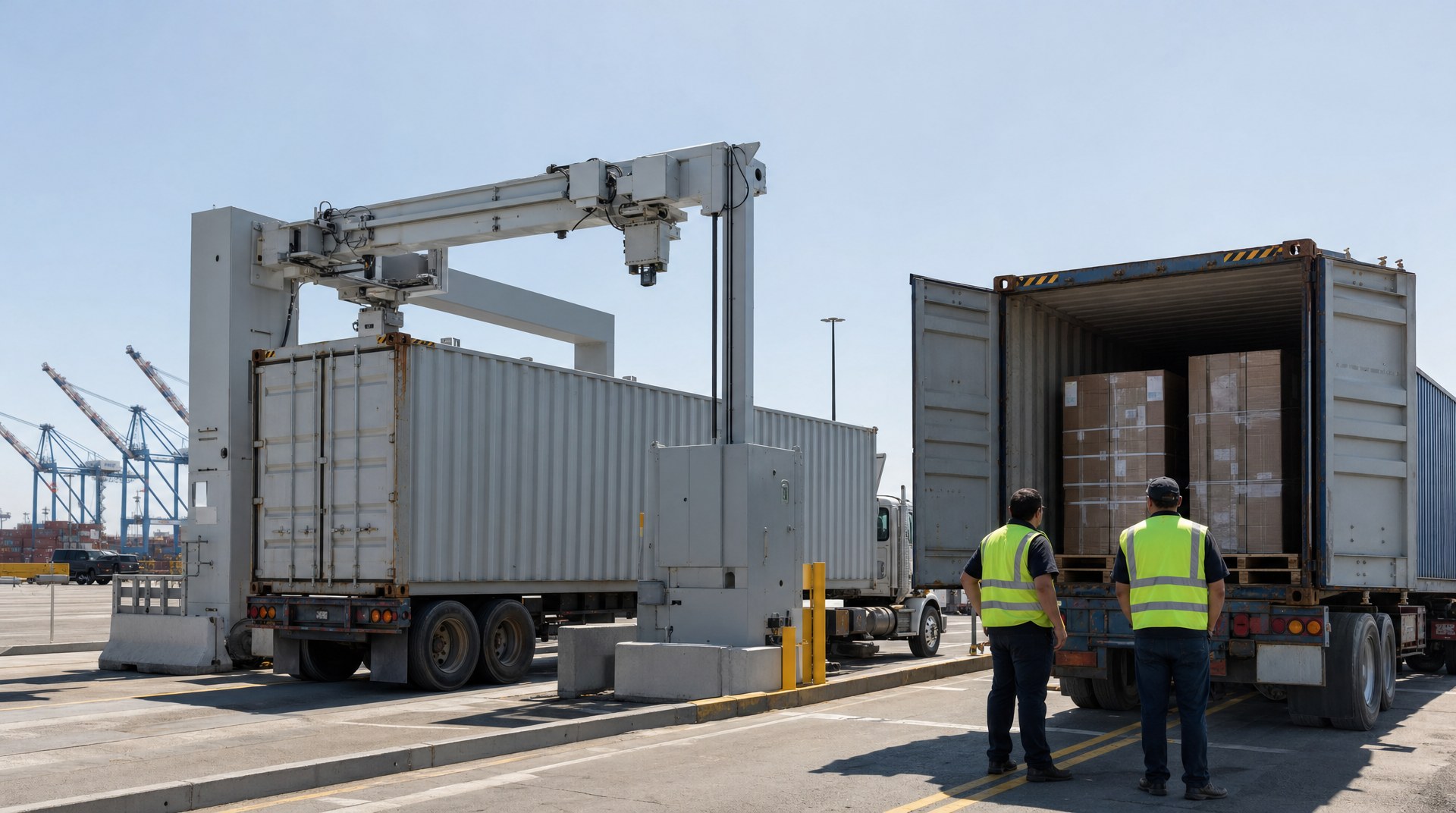
- Non-intrusive inspection, often called a VACIS or X-ray exam. The container is scanned and usually stays sealed. If the image raises no questions, the container goes back into the normal flow.
- Tailgate exam. The doors are opened and officers look at the cargo near the doors, sometimes pulling a few pieces.
- Intensive exam. The container is moved to a Centralized Examination Station (CES), unloaded in part or in full, examined, and loaded again.
These are trade terms rather than regulatory definitions, and a scan can lead to a closer look. The rest of this guide is mostly about the container that goes to a CES, because that is where the trucking changes.
Who moves the container to the exam station at LA and Long Beach
A CES is defined in the regulations as “a privately operated facility, not in the charge of a Customs officer, at which merchandise is made available to Customs officers for physical examination” (19 CFR 118.1). Your broker names the CES on the entry, and merchandise may only be transferred to it under bond (19 CFR 151.15).
At LA and Long Beach, the move from the terminal to the CES is no longer something you can book with your own trucker for most full containers. A CBP notice to the trade at the LA/Long Beach seaport (TIN 65914055, August 2025) says that from August 25, 2025, brokers and importers with full-container-load shipments selected for Merchandise Enforcement Team or agriculture exams “will no longer have the option to select their own trucker to transfer the container from the terminal to the Centralized Examination Station (CES).” The move is made by a “CES trucker”, a motor carrier affiliated with or contracted by the CES operator. The notice also says:
- Brokers and importers can still designate their preferred CES at the time of entry.
- For less-than-container-load shipments selected for those exams, you can still use your own trucker to deliver the cargo to a CES from a container freight station.
- If CBP orders full-container cargo re-exported, the CES operator coordinates the move from the CES back to the terminal.
The notice rests on 19 CFR 151.15(d), which lets the port director direct the type of bonded movement to a CES and designate the CES. In practice, it means one thing for your trucking: do not dispatch your drayage carrier to the terminal for a container that is on hold for one of these exams. The truck will not get the box, and a dry run is a charge of its own (see our line-by-line guide to drayage cost at LA and Long Beach).
What happens at the exam station
The CES operator must serve containers on a “first come-first served” basis (19 CFR 118.4), so your container waits its turn behind the others already there. The station unloads what the officers need to see, the officers examine it, and the cargo is loaded back. The regulations put the work of preparing the merchandise on the importer: the importer “shall bear any expense involved in preparing the merchandise for Customs examination and in the closing of packages” (19 CFR 151.6).
How long CBP has to decide
The clock in the regulations starts when the merchandise, not the container, is presented for examination. Under 19 CFR 151.16:
- “Within five business days from the date on which merchandise is presented for CBP examination, CBP will decide whether to release or detain merchandise.”
- “Mere presentation to the examining officer of a cargo van, container, or instrument of international traffic in which the merchandise to be examined is contained will not be considered to be presentation of merchandise for CBP examination.” The clock does not start just because the container has reached the examining officer.
- If CBP detains the merchandise, or does not release it within those five business days, it issues a notice of detention within five business days, with the reason and the anticipated length of the detention.
- A final decision on admissibility of detained merchandise is due within 30 days from presentation. If none is made, the regulation treats it as a decision to exclude the merchandise, and that deemed exclusion can be protested.
So the regulation sets deadlines for CBP’s decision, not for the whole trip from the terminal to your dock. The transfer to the station and the wait in line come before that clock starts.
Who pays for the exam
The importer does. “Except when merchandise is examined at the public stores, the importer must pay all costs relating to the preparation and transportation of merchandise for CBP examination” (19 CFR 151.16(b)). The costs usually come from different places:
- The CES. The operator charges from the fee schedule in its approved application and must “bill users directly for services rendered” (19 CFR 118.4). Ask your broker for the station’s schedule.
- The moves to and from the station. For full containers on the exams covered by the August 2025 notice, the terminal to CES move is made by the CES trucker, not by your own drayage carrier. Ask your broker how that trip is billed.
- Time on the container. Demurrage at the terminal, per diem on the carrier’s equipment and chassis days can keep running while the exam runs.
Demurrage and per diem while the container is on exam
The CBP rules above say nothing about free time; that comes from the terminal and ocean carrier tariffs. What an exam can change is your footing when the bill arrives. The Federal Maritime Commission’s rule on reasonable demurrage and detention practices has a paragraph on exactly this case: “In assessing the reasonableness of demurrage and detention practices in the context of government inspections, the Commission may consider the extent to which demurrage and detention are serving their intended purposes and may also consider any extenuating circumstances” (46 CFR 545.5). The same rule treats per diem as part of detention.
The FMC’s billing rules (46 CFR part 541) give you more to work with:
- An invoice must be issued within 30 calendar days from the date the charge was last incurred. If it is not, you are not required to pay the charge.
- The invoice must carry minimum information, including the bill of lading and container numbers, the allowed free time with its start and end dates, and the dates charged. Missing required information “eliminates any obligation of the billed party to pay the applicable charge.”
- You have at least 30 calendar days from the invoice date to request mitigation, refund or waiver, and the billing party must attempt to resolve the request within 30 calendar days.
Keep the exam paper trail: the date your broker learned of the hold, the date the container moved to the CES, the release date. That is the evidence for a mitigation request. If you need the difference between the two charges first, read demurrage vs detention at LA and Long Beach.
What to do while the container is on exam
- Ask your broker for the exam type and the CES named on the entry.
- Tell your drayage carrier the container is on hold, with the container number, so nobody is sent to the terminal for it.
- Ask your broker how the container will be released after the exam, where it can be picked up and whether there are cutoff times at the station.
- Hold the receiving plan loosely. Give your warehouse a window instead of a fixed appointment until the release is in hand.
- Note the last free day at the terminal and the per diem free days, and keep the dates of each step for the invoices that follow.
- If your warehouse cannot take the container when it is released, plan a yard hold or a transload instead of letting the equipment sit (see transloading near the port or inland).
How LAX Freight handles drayage after a CBP exam
Our drayage team covers the Ports of Los Angeles, Long Beach, Oakland and other California terminals, as well as intermodal rail hubs, with container pickup and delivery for 20ft, 40ft and specialty containers. We provide same-day drayage services when containers are cleared and appointments are scheduled, and when the warehouse is not ready we have chassis pool access, live unload and drop and pick options, transloading and cross-docking, and secure storage and yard holding. Our dispatchers can provide same-day quotes and real-time status updates.
Send us the container number, the terminal, the delivery address and your receiving hours, and tell us the container is on exam. We will plan the move around the release.