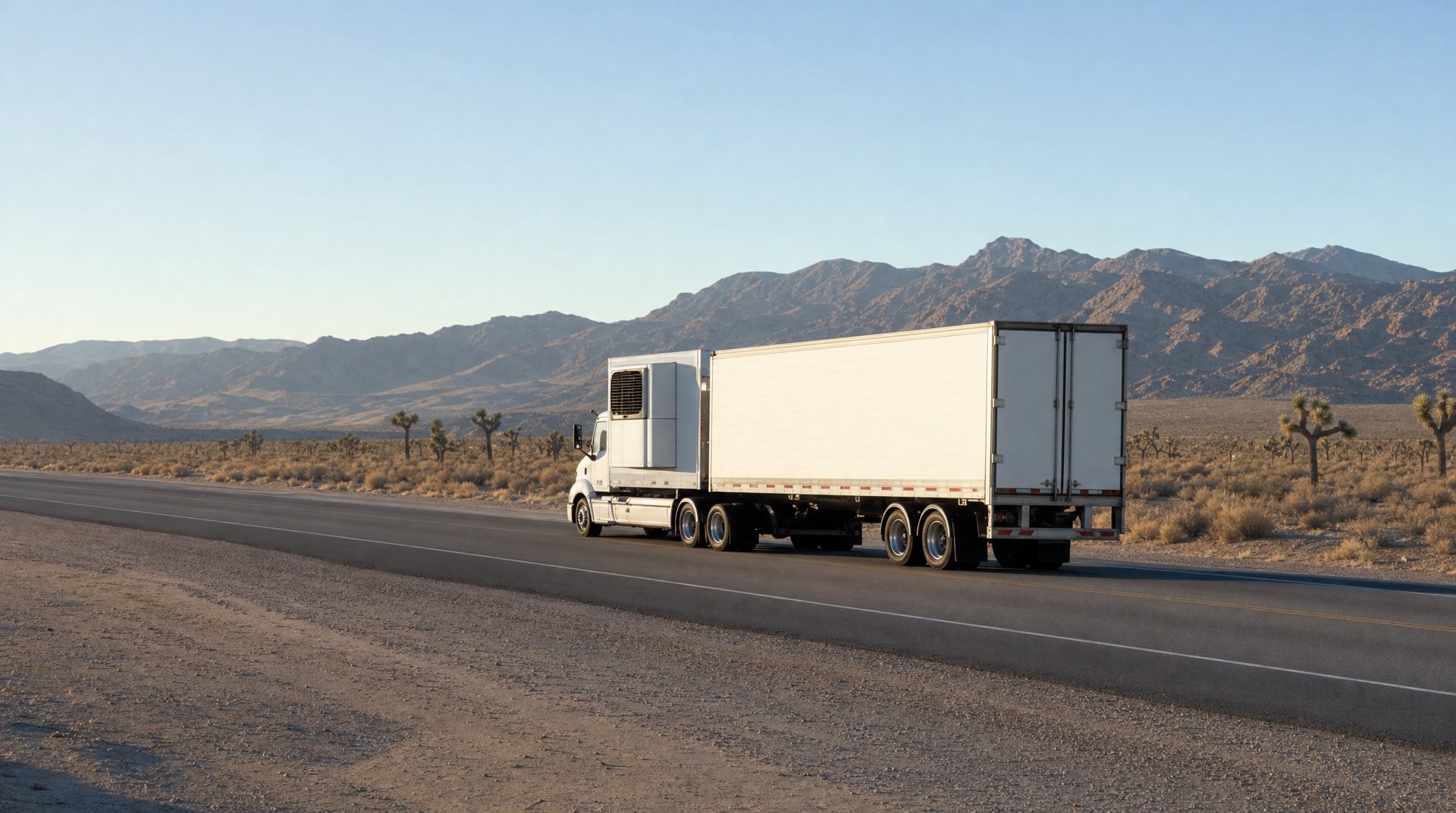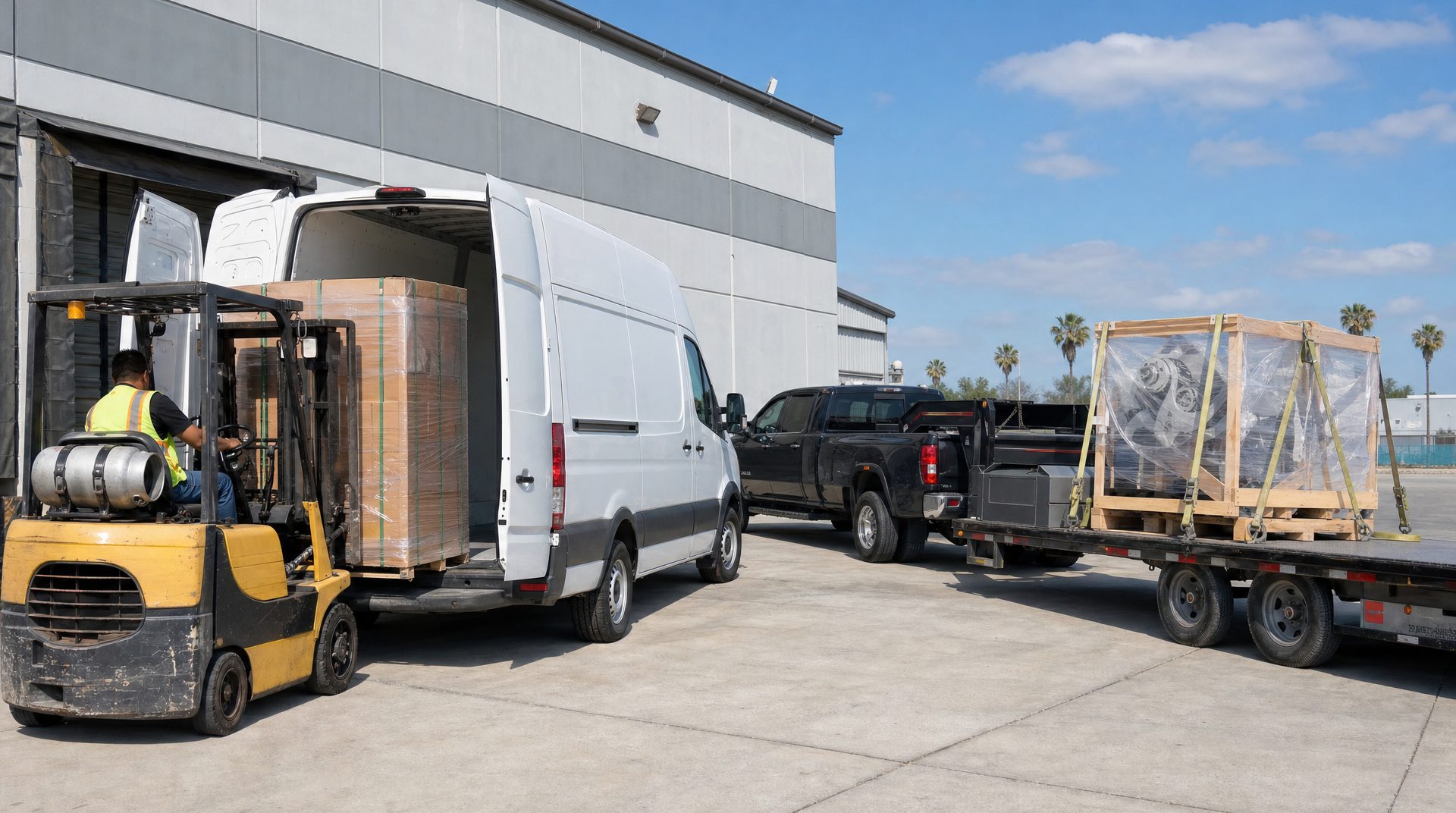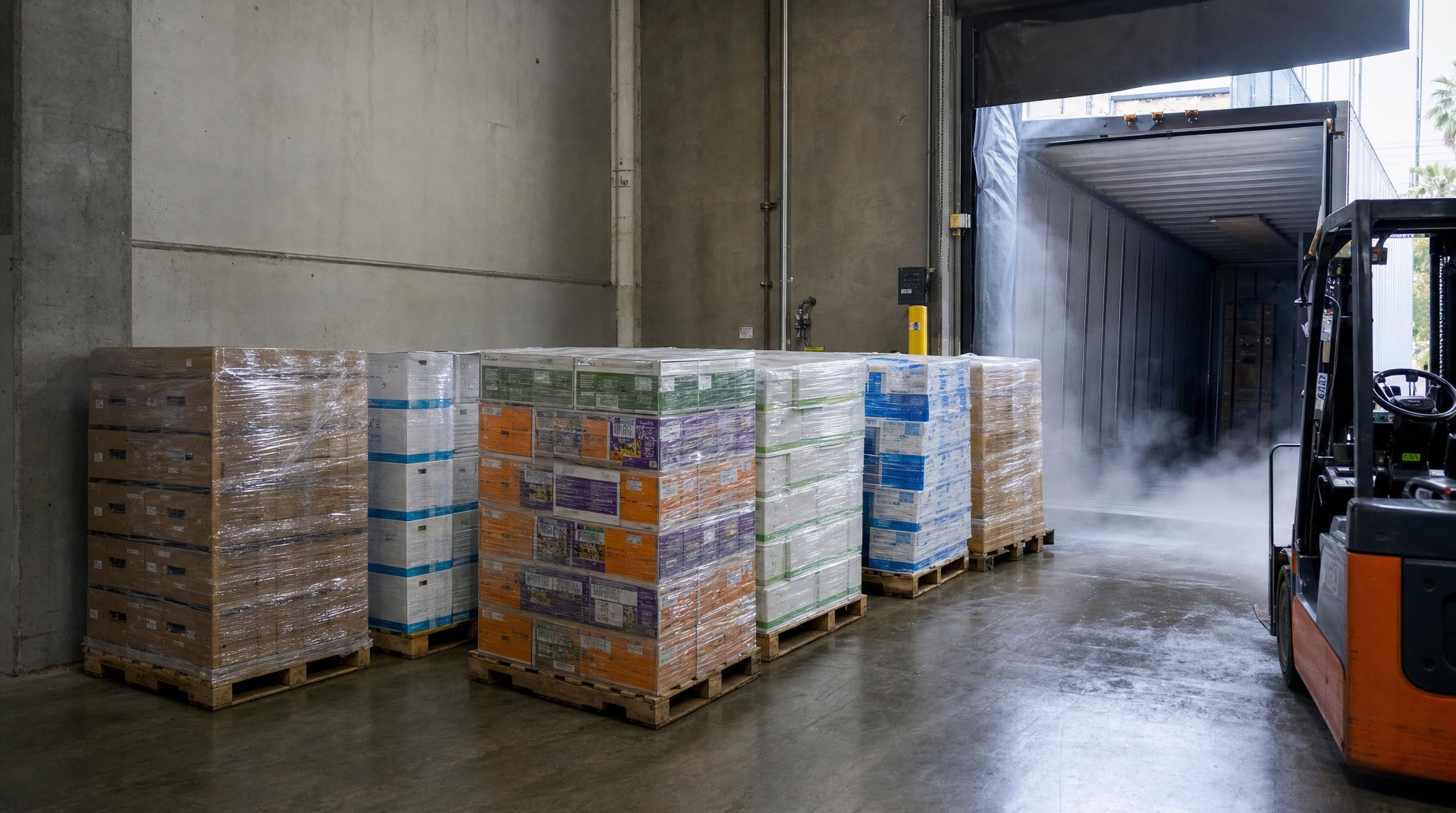
Reefer LTL in California lets a Los Angeles shipper move a few pallets of chilled or frozen product without paying for a whole refrigerated trailer. The trailer is shared, the temperature is held for everyone on it, and you pay for the space your pallets take. The trade is control: more handling, more door openings and less say over the delivery hour than a trailer of your own.
This guide is for the LA-area producer or distributor with four to eight pallets of chilled product and a receiver somewhere in California or a neighboring state. It covers how a partial reefer differs from a full trailer, when sharing wins and when it does not, what decides the price, and how to prepare the pallets. If you already know the lane, our refrigerated LTL and partial load service covers both.
Partial reefer, refrigerated LTL and a full trailer
Carriers use these terms loosely, so ask how a quote will actually move. In general:
- Full reefer truckload. One trailer, one set-point, your freight only. It goes from your dock to the receiver, or along stops you choose, and nobody else’s product opens the doors.
- Partial reefer. Your pallets share a refrigerated trailer with other shippers’ freight at a compatible temperature, usually with a few pickups and drops on the route rather than a pass through a terminal.
- Refrigerated LTL. Smaller shipments consolidated into temperature-controlled trailers, sometimes with a transfer at a cold cross-dock along the way. It is built for a pallet or a handful of pallets.
The floor space explains the price. A 53-foot trailer fits about 26 to 30 standard 48 by 40 pallets, depending on how they are loaded (see how many pallets fit in a truck). Eight pallets is less than a third of that floor. With a full trailer, you pay for the empty two thirds, plus the fuel and engine hours to keep it cold.
When a partial reefer beats a full trailer
Sharing tends to win when most of these are true:
- The pallet count is small. Four to eight pallets is the typical case. The fewer pallets, the more of a full trailer you would be paying for and not using.
- Your set-point is a common one. Chilled product in the 34°F to 45°F range, or ordinary frozen product, is easier to match with other freight than an unusual set-point.
- The delivery date has some room. A shared trailer runs on a route built around several shippers. If a delivery a day later still works, more options open up.
- The product tolerates a few extra stops. Well-packed, pre-cooled product that is not right at the end of its shelf life handles a couple of door openings for other freight.
- The receiver has normal receiving hours. A dock that takes deliveries across the day is easier to serve on a shared route than a single fixed slot.
When a full trailer is still the right call
Paying for the whole trailer makes sense even with a light load when:
- The appointment is fixed and tight. A receiver who will only take the load in one window, with a penalty or a rejection if it is missed, is a reason to own the schedule.
- The set-point is unusual. Deep-frozen product down to -20°F, or a heated load, is harder to share, because the other freight on the trailer must run at the same temperature.
- The product is sensitive or high value. Short shelf life, product that suffers from every door opening, or a load where a single temperature excursion costs more than the trailer.
- Nothing compatible is going your way. If no other freight on the lane can ride at your temperature next to your product, the partial quote may not exist on the day you need it.
- The order is mixed-temperature or multi-drop to your own customers. A dual-temp trailer or a multi-stop route of your own can carry frozen and chilled product to several receivers in one move, which a shared trailer cannot plan around.
| Factor | Partial reefer or refrigerated LTL | Full reefer trailer |
|---|---|---|
| Cost for 4 to 8 pallets | You pay for the space you use | You pay for the whole trailer |
| Delivery timing | Set by a shared route, often with some flexibility needed | Set by you and the receiver |
| Door openings | Other stops open the doors | Only your own stops |
| Set-point | Must match the other freight | Whatever your product needs |
| Handling | Possibly a transfer at a cross-dock | Loaded once, unloaded once |
| Best fit | Common set-point, flexible receiver, regular product | Tight appointment, unusual set-point, sensitive or high-value load |
What rides with your pallets matters
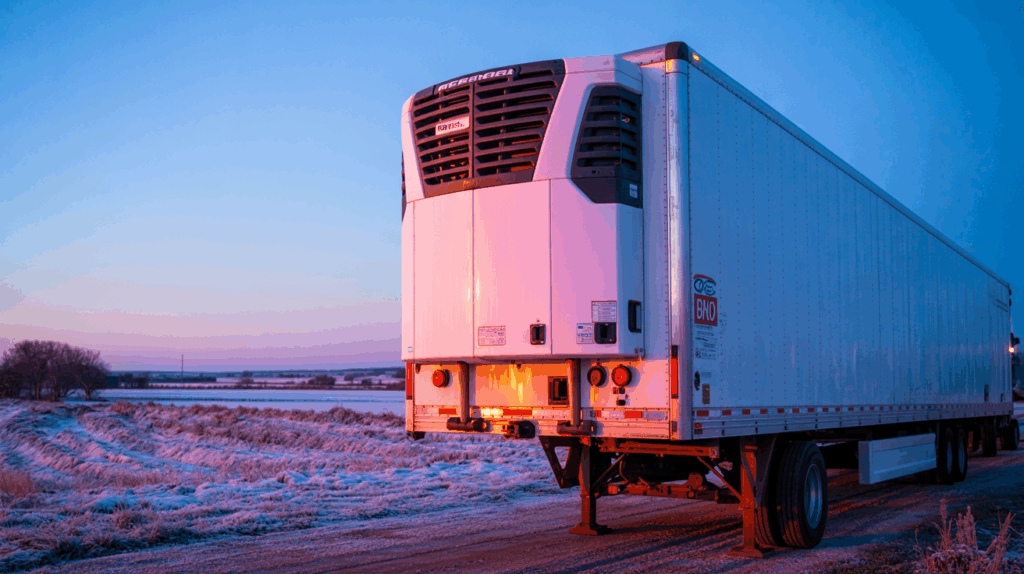
On a shared trailer, the temperature is only the first compatibility question. Before you agree to a partial, ask what else is on the load:
- Temperature. Everything on the trailer runs at one set-point, unless the trailer is dual-temp. Product that needs 34°F and product that tolerates 45°F can share only at a temperature that suits both.
- Odors. Some products give off strong odors, and some, such as dairy and other fatty foods, pick them up.
- Ripening gases. Ripening fruit gives off ethylene, which shortens the life of leafy greens, flowers and other sensitive produce in the same air.
- Raw and nonfood items. Federal sanitary transportation rules require effective measures, such as segregation, isolation or packaging, to protect food from contamination by raw foods and nonfood items in the same load (21 CFR 1.908).
If part of your shipment does not need temperature control at all, it does not have to pay for it. Dry pallets can move separately on standard LTL shipping.
What decides the price of a reefer LTL shipment
A partial reefer quote combines the factors of a refrigerated move with the factors of a shared one:
- Temperature and running mode. Frozen on continuous run costs more to hold than chilled or protect-from-freeze product.
- Pallet count, weight and dimensions. How much of the trailer your freight takes, including pallet height and whether anything can be stacked on it.
- Distance and the lane. A shared route that already runs toward your receiver prices differently from one built for your load.
- Accessorials. Liftgate, inside delivery, residential delivery or a delivery appointment all add to the quote.
- Season and market. Reefer capacity in California tightens in produce season, and holiday peaks move the whole market.
The useful comparison is not the line-haul number alone. Put the partial quote and the full trailer quote side by side, then weigh the difference against what a late or rejected delivery would cost you at that receiver.
How to prepare pallets for a shared reefer
- Pre-cool the product to its set-point. A reefer holds temperature; it is not designed to bring a warm load down. Pallets should be at temperature when they leave your cooler.
- Use standard pallets and secure the load. Stretch wrap or straps, and a label on each piece with the receiver and the temperature requirement.
- Leave room for air. Do not block the vents or wrap pallets so tightly that cold air cannot move around the product.
- Mark anything that cannot be stacked. Say so on the labels and in the booking, so it is not loaded under another shipper’s freight.
- Put the temperature in writing. For food that needs temperature control for safety, the shipper is expected to give the carrier the operating temperature in writing, including pre-cooling where it applies (21 CFR 1.908). Write the set-point on the bill of lading and record product temperatures at pickup.
If your receiver is in Las Vegas, the lane has its own planning points around desert heat and resort receiving docks, covered in our guide to refrigerated trucking from Los Angeles to Las Vegas. For the wider picture, start with cold chain logistics.
How LAX Freight handles refrigerated LTL out of Los Angeles
LAX Freight is based in the Los Angeles area and moves reefer freight as full truckload or as temperature-controlled LTL, so you are not buying fifty-three feet for eight pallets. Loads move through a pre-qualified network of carriers with refrigerated equipment, from deep-frozen down to -20°F to heated loads up to 85°F, in single-temp or dual-temp trailers, with continuous or cycle running. Tracking and load monitoring run 24/7, handling for food and pharmaceutical freight is aligned with FSMA and HACCP, and support is available around the clock from the quote to delivery.
Send us the pickup and delivery points, the set-point, the commodity, the weight and pallet count, and your pickup window, and we will come back with what fits the load.