Short answer
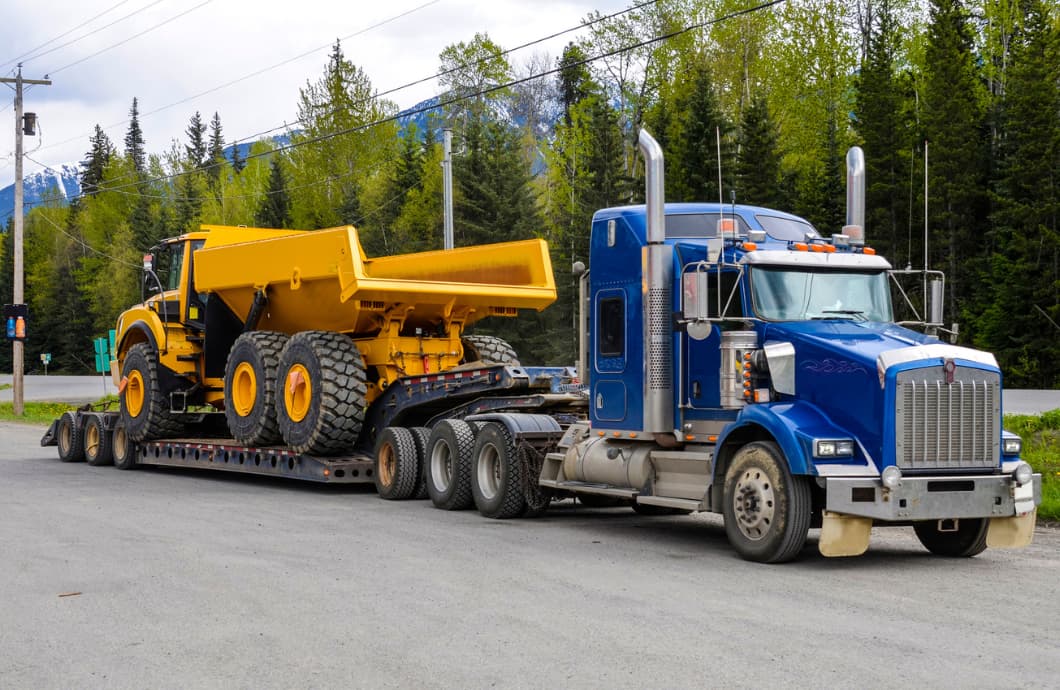
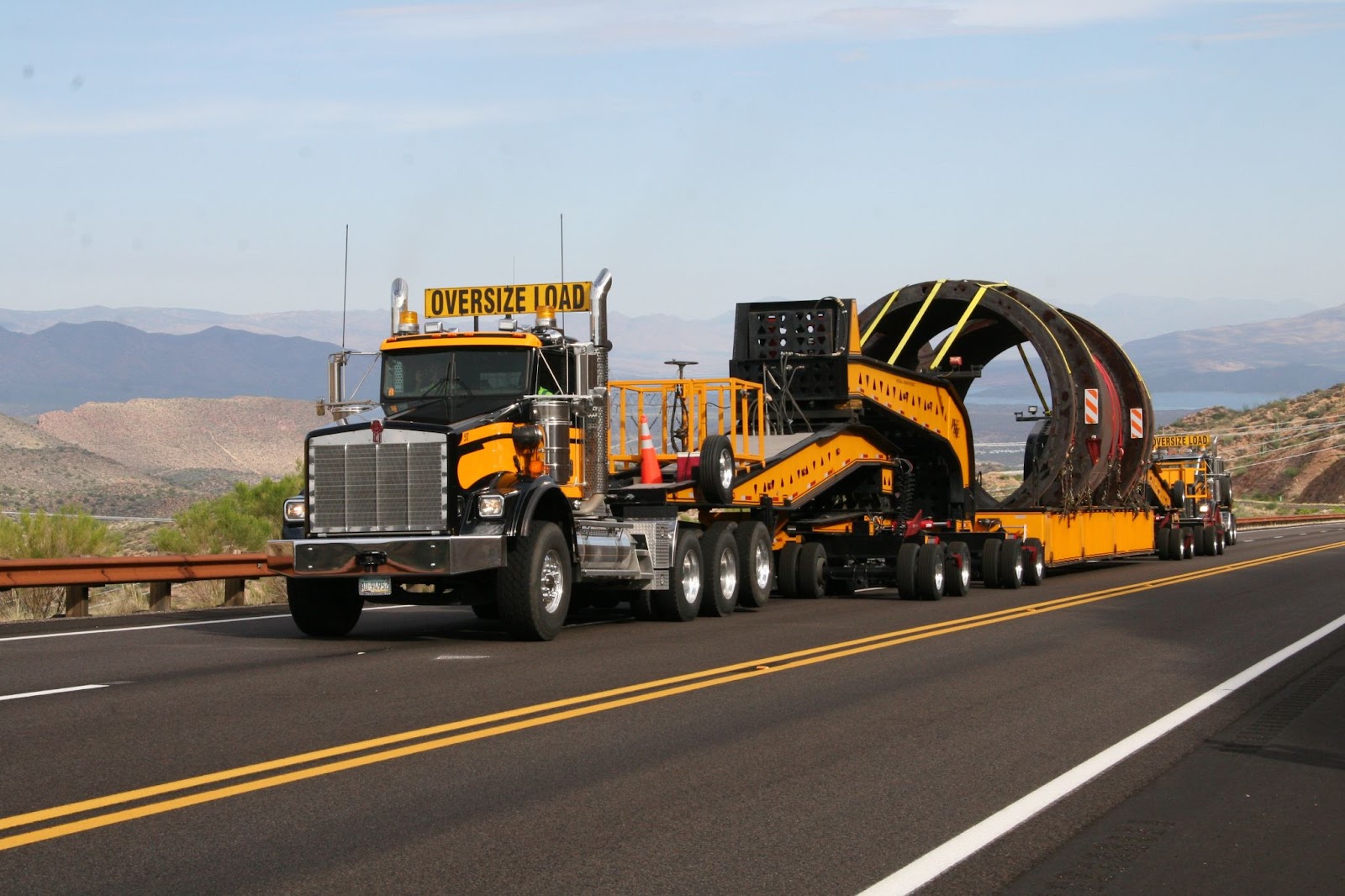
Heavy haul trucking is the movement of freight that exceeds the federal size or weight limits a truck may carry on the Interstate System without a permit: over 80,000 lb gross, over 102 inches wide, or too long or too tall for standard limits. Because the load cannot legally be broken into smaller pieces, it moves under a state-issued oversize or overweight permit, on specialised trailers, along a route approved in advance.
Most explanations of heavy haul trucking list trailer types and stop. The questions that actually decide whether a load is a heavy haul move, and what it will take to move it, are narrower: what the legal limits are, what makes a load “nondivisible”, who issues the permit, and what the driver needs to hold. This page answers those in order, and every federal figure below is cited to the section of law it comes from.
What Is Heavy Haul Trucking?
Heavy haul trucking
The transport of a load that exceeds one or more of the federal weight, width or length limits applying to the National Network, and which cannot be divided into smaller legal loads without destroying its value or its use. It moves on permit, on equipment built for the dimension it exceeds, and usually on a route agreed with the state before the truck rolls.
The word doing the work in that definition is exceeds. Heavy haul is not defined by how big the trailer looks or how much the load costs. It is defined by a legal threshold: below it you book a truck, above it you apply for a permit.
That threshold is federal for the Interstate System, and it is short enough to state in full.
What Are the Federal Limits a Heavy Haul Load Exceeds?
These are the limits for the National System of Interstate and Defense Highways and reasonable access to it. A load over any one of them is a permit load.
| Limit | Federal figure | Where it comes from |
|---|---|---|
| Gross vehicle weight | 80,000 lb | 23 CFR 658.17(b) |
| Any single axle | 20,000 lb | 23 CFR 658.17(c) |
| Tandem axles | 34,000 lb | 23 CFR 658.17(d) |
| Axle groups | Whatever the Bridge Gross Weight Formula allows | 23 CFR 658.17(e) |
| Width | 102 inches, no more and no less | 23 CFR 658.15(a) |
| Semitrailer length | No state may set its limit below 48 ft | 23 CFR 658.13(b)(1) |
| Height | No federal limit exists | see below |
Two of those rows carry detail worth knowing before you quote a load.
The Bridge Formula can bite before 80,000 lb does. It limits the weight carried by any two or more consecutive axles according to how far apart they are, so a legal gross weight can still be an illegal axle group. There is one specific relief in the rule: two consecutive sets of tandem axles may each carry 34,000 lb if the distance from the first axle to the last is 36 feet or more. Even then, 23 CFR 658.17(e) closes with the sentence that governs everything above it: in no case shall the total gross weight of a vehicle exceed 80,000 lb.
Height is not federal. People quote 13 feet 6 inches as though it were a national rule. It is not: 23 CFR part 658 has sections on length, width and weight and no height section at all. Height limits are set by the states, they are not uniform, and a route that clears in one state may not clear in the next. That is a routing question, not a lookup.
What Is a Nondivisible Load?
This is the concept that decides whether a permit is even available, and it is defined precisely.
Nondivisible load or vehicle
Under 23 CFR 658.5, a load or vehicle exceeding applicable length or weight limits which, if separated into smaller loads, would compromise the intended use of the vehicle, destroy the value of the load, or require more than 8 workhours to dismantle using appropriate equipment. The applicant carries the burden of proof on the workhour question.
Read that as a test with three doors. A transformer that would be destroyed by being cut apart passes through the second. A machine that takes two days to strip and rebuild passes through the third, and the eight-hour clock is the applicant’s to prove, not the state’s to disprove.
Freight that could simply be split across two trucks does not qualify, and no permit will make it qualify. That is the first question worth asking about any overweight shipment, because the answer decides whether the conversation is about heavy haul or about a second truck.
The rule also lets a state treat certain things as nondivisible by category: emergency response vehicles including those loaded with salt or sand for icy roads, casks built to carry spent nuclear material, and military vehicles carrying marked military equipment.
How Much Can a Truck Legally Haul Without a Permit?
Eighty thousand pounds gross, with 20,000 lb on any single axle and 34,000 lb on a tandem, subject to the Bridge Formula. In practice the tractor and trailer account for a large share of that, and what remains is the legal payload, which is why the answer to “how much can it carry” is a number about the equipment, not about the law.
Two further points from 23 CFR 658.17 matter when a load is close to the line:
- States cannot set the floor lower. A state may not enforce Interstate weight limits below 20,000 lb on a single axle, 34,000 lb on a tandem, or the Bridge Formula weights up to 80,000 lb, including all enforcement tolerances (658.17(f)).
- The tolerance question has a ceiling. The limits are inclusive of all tolerances, with one exception: a scale allowance when portable wheel-load weighers are used, and that allowance may never exceed 5 % (658.17(g)).
What Trailers Are Used for Heavy Haul Trucking?
The trailer is chosen by the dimension the load exceeds (height, weight, or length), not by preference.
| Trailer | Chosen when the constraint is | What it gives you |
|---|---|---|
| Flatbed | Nothing yet: the load is legal but oversized in footprint | Open deck, loads from any side, highest deck of the group |
| Step deck (drop deck) | Cargo is too tall for a flatbed | A lower rear deck, buying height without a permit in many cases |
| Double drop | Cargo is taller still | A well between the axles, the lowest usable deck of the standard types |
| RGN (removable gooseneck) | The load drives or rolls on | The front detaches so the deck becomes a ramp; heavy machinery loads under its own power |
| Extendable / stretch | The load is too long, not too heavy | The deck telescopes to support overhanging freight along its length |
| Multi-axle | Weight, not size | More axles spread the load, which is what the Bridge Formula actually measures |
| Modular / self-propelled | Everything at once | Configurable axle lines for the largest indivisible pieces; a project move, not a truck booking |
Deck heights, well lengths and per-model capacities vary by manufacturer and by build. We have not verified those figures against a primary source and are not going to publish an unsourced table: ask for the spec sheet of the specific trailer being quoted.
What Permits Does Heavy Haul Trucking Require?
Permits are issued by the states, not by the federal government. Federal law sets the limits and explicitly leaves the exceptions to the states: 23 CFR 658.15(c) says that notwithstanding any other provision, a state may grant special use permits to vehicles exceeding 102 inches in width.
What follows from that, practically:
- A permit per state, on the route you actually take. A cross-country heavy haul move is a sequence of state permits, not one national permit.
- The route is part of the permit. Approved routing exists because bridges, overpasses and pavement have limits the highway itself does not advertise.
- Validity is short and specific. Permits are commonly issued for a defined vehicle, load, route and period: a changed trailer configuration can invalidate one.
- Fees, curfews and travel-day restrictions vary by state. We do not publish a fee table because it would be wrong within a quarter, and a wrong permit figure is worse than none.
Do Heavy Haul Loads Need Escorts or Pilot Cars?
Often, and it is a state determination. The dimensions that trigger an escort requirement, how many escorts are needed, whether a certified escort or a police escort is required, and which routes require a survey are all set state by state. We are not going to publish a national threshold, because there is no federal rule setting one: the number people quote is usually one state’s.
The practical planning consequence is the same in every state: escorts are booked against the permit and the route, so a routing change late in the process affects both.
What Licence Does a Heavy Haul Driver Need?
A Class A commercial driver’s licence, in almost every real heavy haul configuration. The federal definition is specific: under 49 CFR 383.91(a)(1), Group A covers any combination of vehicles with a gross combination weight rating of 26,001 lb or more, provided the vehicle being towed is rated over 10,000 lb. A tractor pulling a loaded lowboy or RGN is squarely inside that.
Group A is the licence class, not the qualification. Endorsements are separate, and the experience that actually matters on a permitted move (reading a routing sheet, working with escorts, judging clearance in real time) is not something a licence class certifies.
How Is Heavy Haul Freight Priced?
By the move, not by a rate card. The variables are the permit set, the route length and difficulty, the escort requirement, the equipment class and the loading method, and they interact, which is why a heavy haul quote is produced per load rather than looked up.
We are not publishing per-mile or per-load figures here. None was verified against a primary source at the time of writing, and an invented range is worse than an honest “it is quoted”.
How Do You Book a Heavy Haul Move?
Four things decide the quote, and having them ready is the difference between a number today and a number next week:
- Dimensions and weight of the piece, not of the crate: length, width, height, gross weight, and where the centre of gravity sits.
- Whether it is nondivisible, and why (see the 23 CFR 658.5 test above).
- Origin and destination with access detail: how the piece is loaded and unloaded, and what equipment is available at each end.
- The date window, because permits, escorts and travel-day restrictions are scheduled, not instant.
What is heavy haul trucking?
Heavy haul trucking is the movement of freight that exceeds federal size or weight limits (over 80,000 lb gross, over 102 inches wide, or beyond standard length or state height limits) and that cannot be divided into smaller legal loads. It moves under state-issued permits, on specialised trailers, along a pre-approved route.
What is a heavy haul truck?
A heavy haul truck is a tractor unit paired with a trailer built for the dimension the load exceeds: a double drop or RGN for height, a multi-axle configuration for weight, an extendable deck for length. The tractor is usually a higher-horsepower unit specified for the gross combination weight it will pull, and the driver holds a Class A CDL under 49 CFR 383.91(a)(1).
What is heavy haulage?
Heavy haulage is the same activity under a different name, used more often outside the United States. It describes the transport of indivisible loads over the legal weight or size limits, under permit and on specialised equipment.
What is heavy hauling?
Heavy hauling is the act of moving those loads: the planning, permitting, routing, escorting and transport of freight that is over the legal limits and cannot be broken down. The term covers the whole operation, not just the drive.
What is the meaning of heavy haulers?
“Heavy haulers” refers either to the carriers that specialise in permitted oversize and overweight freight, or to the trucks and trailer configurations they run. In both senses the defining feature is the same: equipment and process built around loads that exceed standard limits.
Written by the LAX Freight heavy haul desk. Reviewed 31.08.2026. Federal figures on this page are cited to 23 CFR part 658 and 49 CFR part 383 as published in the 2026-01-01 edition of the electronic Code of Federal Regulations. Permit fees, escort thresholds, state height limits and per-model trailer capacities are not published here because they vary by state or by manufacturer and none was verified from a primary source at the time of writing: where a figure could not be checked, we say so rather than estimate.