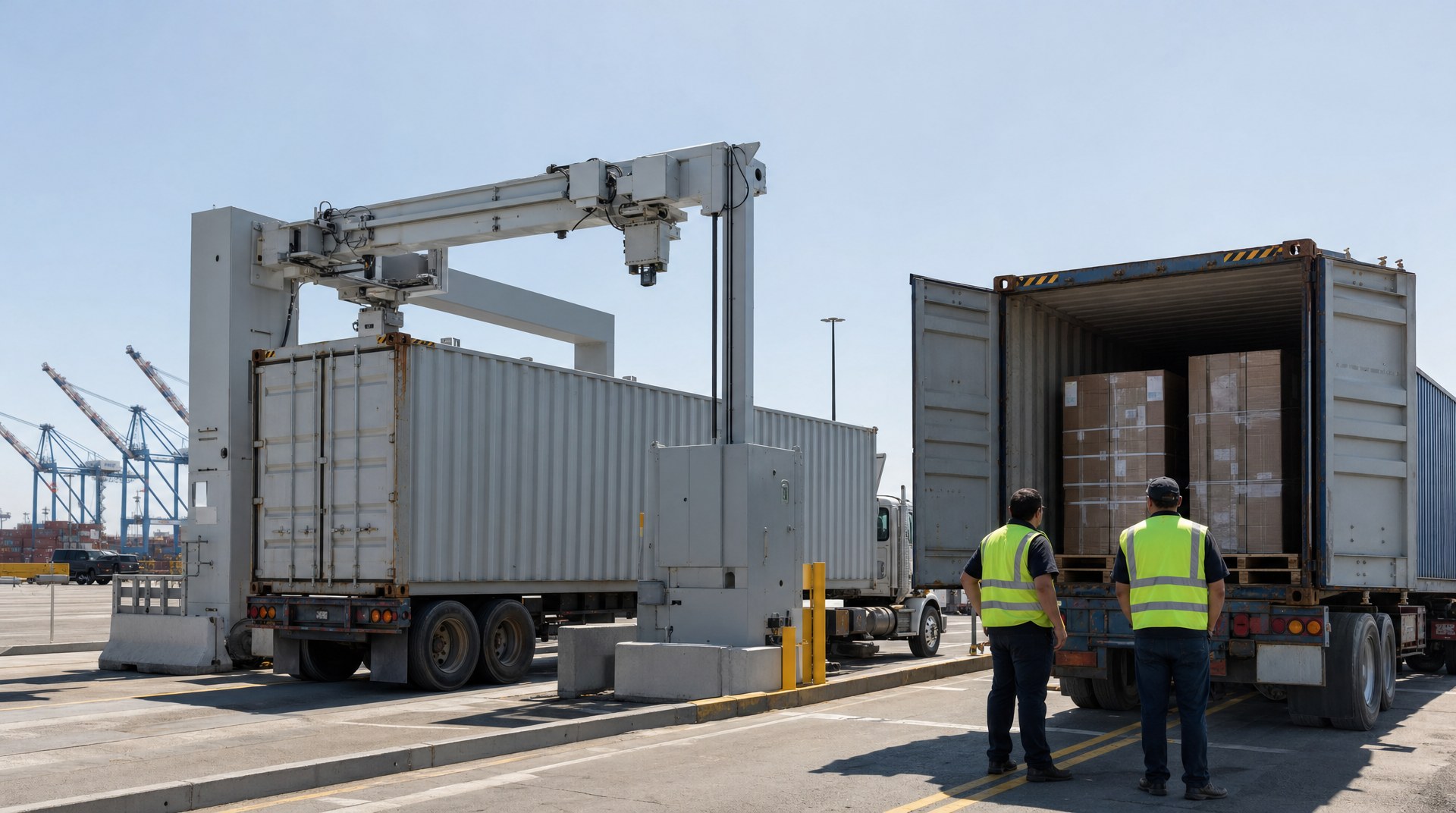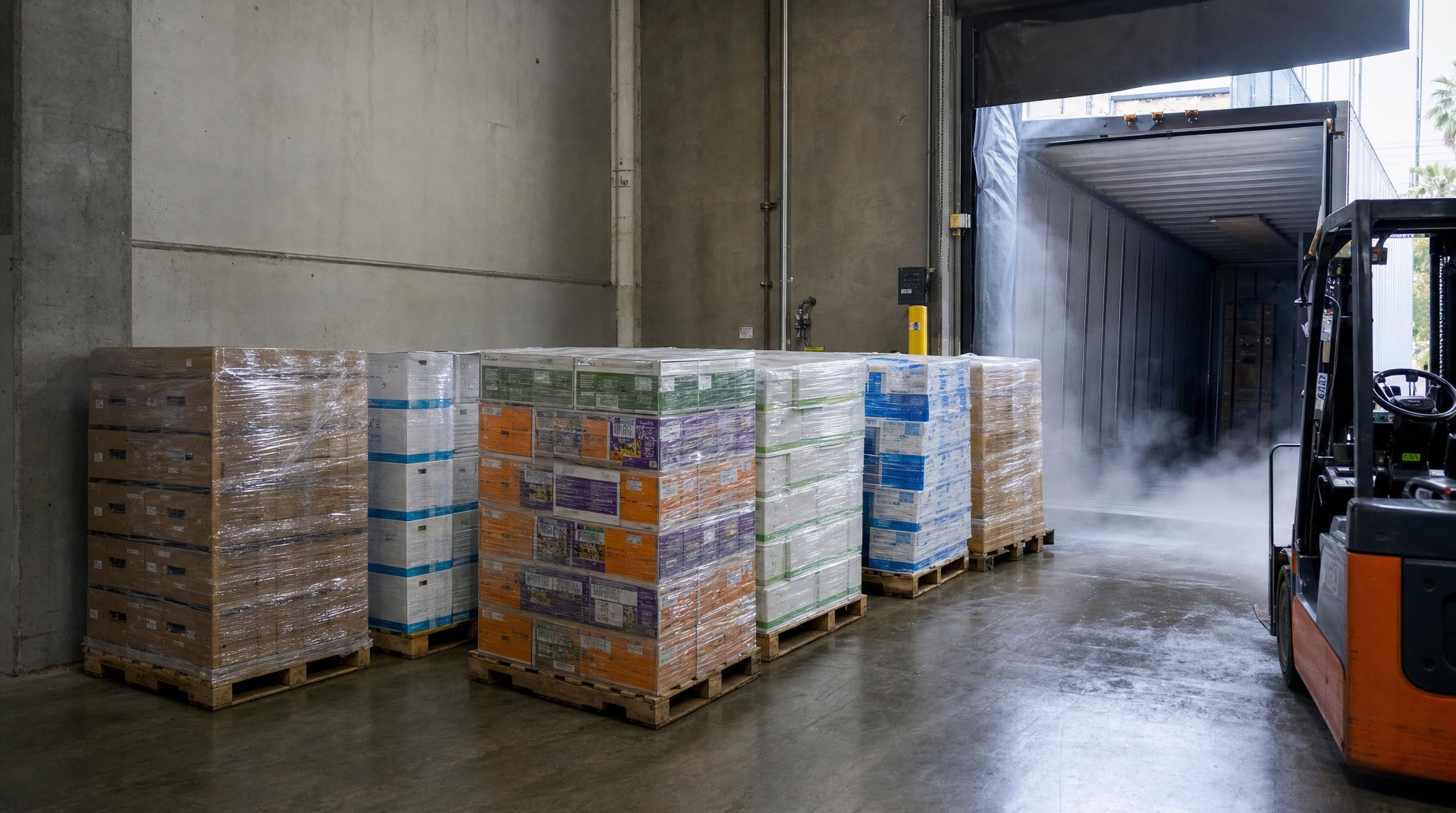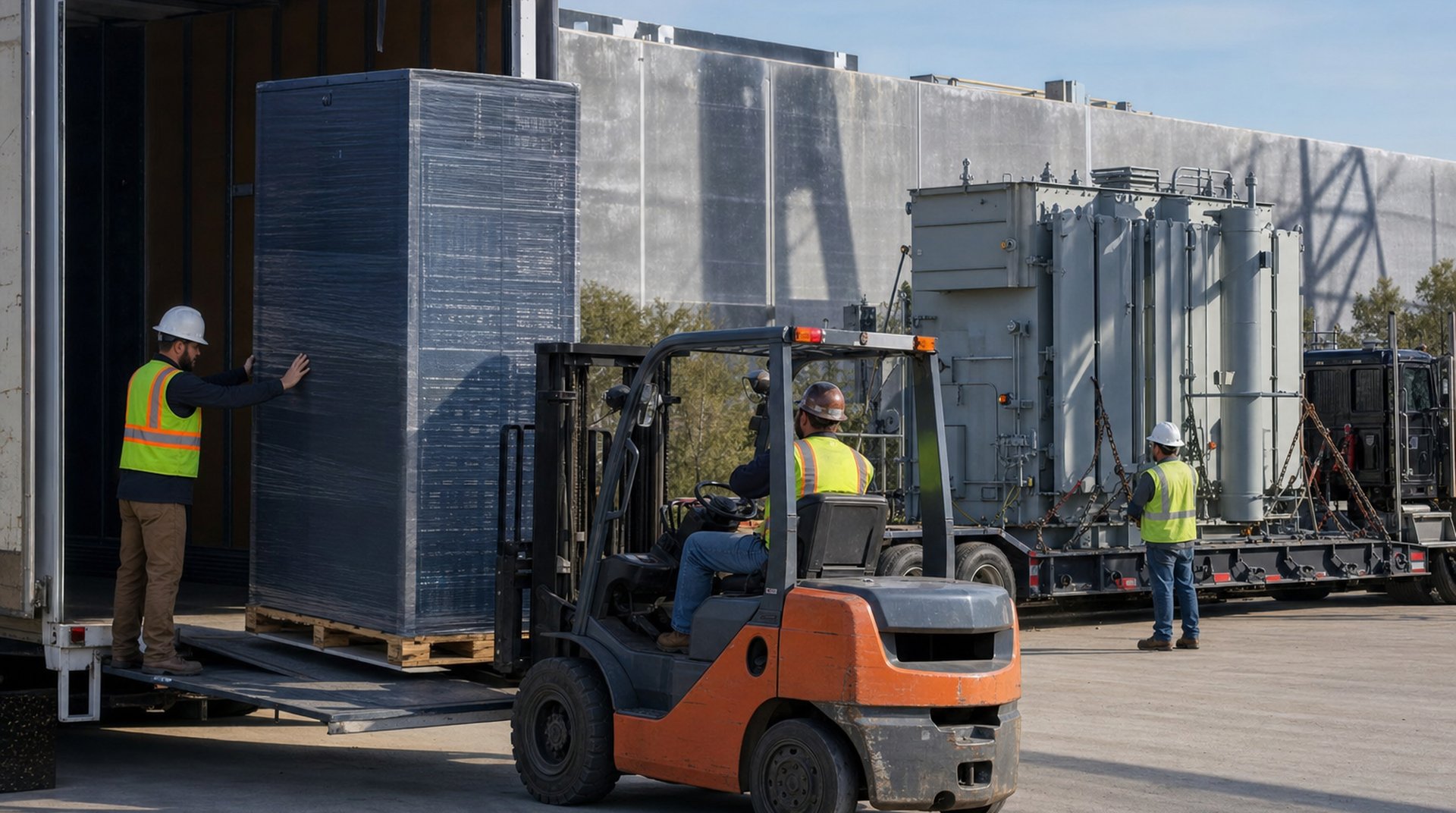
A data center build or refresh ships three different kinds of freight, and each one moves under its own rules. Server racks are high-value electronics that need careful handling at the dock and inside the building. Lithium ion UPS batteries are Class 9 hazardous materials. Transformers, generators and large switchgear can run past the federal width and weight limits and need state permits. Put them on one purchase order and one delivery date, and the slowest of the three sets the schedule.
This guide is for the project manager, the general contractor or the equipment vendor who has to get that freight to site. It covers how to sort the bill of materials, what to prepare for racks, what the hazmat regulations require for lithium UPS batteries, and what a carrier needs from you before it can price an oversize load. It describes the federal rules; state permit terms and your own site rules come on top of them.
Sort the bill of materials into three kinds of freight
Before anyone asks for a quote, split the equipment list by how it has to move:
- IT hardware: server racks, network gear, storage. The hazmat rules reach it only through batteries shipped inside it, so ask what is installed. The rest is handling: shock, static and moisture.
- Lithium ion batteries: UPS battery cabinets and modules, shipped alone or installed in equipment. Regulated as Class 9 under 49 CFR.
- Electrical and mechanical equipment: transformers, generators, switchgear, chillers. The question here is size and weight, and whether the load is legal on a standard trailer.
Ask each vendor for the dimensions, weight and packaging of every piece, and for the battery chemistry and Watt-hour rating of anything with a battery in it. Those numbers decide the trailer, the paperwork and the permits.
Server racks: plan the inside delivery
For racks, the planning that matters happens at the building. Settle these points with the site before the truck is booked:
- Whether the racks ship populated or empty, and the weight of each rack as it will ship.
- Whether the site has a dock or needs a liftgate truck, and the dock height if there is one.
- The path from the dock to the data hall: door widths and heights, ramps, thresholds, and the elevator’s size and rated load.
- Floor protection rules, receiving hours and who signs for the delivery.
- Whether the delivery ends at the dock, at the room, or with the rack in its position, and who removes the packaging.
Put the answers on the order. A carrier that knows the rack has to travel through a freight elevator can send the right crew and equipment the first time.
Lithium ion UPS batteries are Class 9 hazmat
The Hazardous Materials Table lists lithium ion batteries under two entries (49 CFR 172.101):
- UN3480, Lithium ion batteries: batteries shipped on their own, such as spare modules or replacement strings.
- UN3481, Lithium ion batteries contained in equipment or packed with equipment: a UPS cabinet shipped with its batteries installed, or with the batteries in the same package.
Both are Class 9, and both point to the packaging rules in 49 CFR 173.185. Whoever offers the batteries for transport has to classify and prepare them. When that is the vendor, your part is to ask the right questions before the freight is tendered.
What to ask the battery vendor
- The UN 38.3 test summary. Each cell and battery type must be of a type proven to meet the UN Manual of Tests and Criteria, and each manufacturer and subsequent distributor of lithium cells or batteries “must make a test summary available” (173.185(a)). The summary names the manufacturer, the test report number and the battery’s Watt-hour rating.
- The Watt-hour rating on the case. Since May 10, 2024, “each lithium ion battery must be marked with the Watt-hour rating on the outside case” (173.185(a)(5)). The small-battery exception in 173.185(c) stops at 100 Wh for a lithium ion battery, so anything rated higher ships under the full rules.
- How the batteries are packed. The packaging must prevent short circuits, damage from shifting and accidental activation of the equipment (173.185(b)(2)). Batteries of 12 kg (26.5 pounds) or more with a strong, impact-resistant outer casing may go in strong outer packagings, in crates or on pallets, but they must be secured against shifting and “the terminals may not support the weight of other superimposed elements” (173.185(b)(5)). In plain terms: nothing stacked on the terminals.
- The shipping papers and package markings. Batteries above the small-battery limits are subject to the hazard communication rules in subparts C through H of part 172: shipping papers, marking, labeling, placarding and emergency response information.
Placards, aircraft and the normal route by truck
One requirement falls away on a domestic move. For Class 9, “a CLASS 9 placard is not required for domestic transportation” (49 CFR 172.504(f)(9)). The same paragraph still requires a bulk packaging to show the identification number, and the papers and package markings above do not go away. The truck does not need a Class 9 placard, but the freight still ships as hazmat.
Air is limited. In the Hazardous Materials Table, UN3480 is forbidden on passenger aircraft and limited to 35 kg per package on cargo aircraft. UN3481 is limited to 5 kg on passenger aircraft and 35 kg on cargo aircraft. Check the package weights against those limits: a battery shipment that exceeds them moves by ground.
Damaged and decommissioned batteries
Batteries leaving a site follow different rules from new ones arriving:
- For recycling or disposal: batteries moved by motor vehicle to a permitted storage facility, a disposal site or for recycling are excepted from the testing and record keeping requirements and from the UN performance packaging requirements when packed in a strong outer packaging (173.185(d)).
- Damaged or defective batteries: batteries that have been damaged or identified by the manufacturer as defective for safety reasons “may be transported by highway, rail or vessel only.” Each one goes in its own non-metallic inner packaging with non-combustible, non-conductive, absorbent cushioning, inside Packing Group I packaging marked “Damaged/defective lithium ion battery” in characters at least 12 mm high (173.185(f)).
If a battery module was dropped or swollen on site, tell the carrier before pickup. It cannot ship as ordinary freight.
Transformers, generators and switchgear: width, weight and permits
Federal rules set the baseline that state permits work from:
- Width: states may not set a width limit of more or less than 102 inches on the National Network (23 CFR 658.15), and may grant special permits for vehicles wider than 102 inches.
- Weight: on the Interstate System the maximum gross vehicle weight is 80,000 pounds, 20,000 pounds on any one axle and 34,000 pounds on a tandem axle, with the bridge formula able to set a lower gross (23 CFR 658.17). States may issue special permits beyond those limits for nondivisible loads.
“Nondivisible” has a definition. A load counts as nondivisible if separating it would compromise its intended use, destroy its value, or “require more than 8 workhours to dismantle using appropriate equipment,” and the applicant carries the burden of proof on the workhours (23 CFR 658.5). A transformer that can ship with its radiators or bushings removed, or switchgear that can split into shipping sections, may not qualify as one piece. Ask the manufacturer how the unit is meant to ship before anyone applies for a permit.
To quote an oversize move, a carrier needs from you:
- Length, width, height and weight of each piece as it will ship, with the skid or cradle.
- The center of gravity and the lift and tie-down points from the manufacturer’s drawing.
- Pickup and delivery addresses, and the access roads at the site.
- Who unloads: a crane on site, a rigging contractor, or the carrier.
- The date the pad or the room is ready to receive the unit.
The height and length of the loaded trailer decide the trailer type and the route. For a guide to the options, see heavy haul trailer types and their uses.
The three kinds of freight side by side
| Freight | Rules that apply | What to collect before booking |
|---|---|---|
| Server racks and IT hardware | Hazmat rules only through batteries shipped inside | Weight as shipped, dock or liftgate, path to the data hall, receiving hours |
| Lithium ion UPS batteries | Class 9, UN3480 or UN3481, 49 CFR 173.185 | UN 38.3 test summary, Wh rating, packaging, shipping papers |
| Transformers, generators, switchgear | 23 CFR 658: 102 inches, 80,000 pounds, state permits for nondivisible loads | Dimensions and weight, center of gravity, lift points, unloading plan |
How LAX Freight handles data center freight
For server and data center moves, we provide door-to-door transport of server racks and IT hardware with unpacking, setup, asset tagging, and debris removal, in anti-static, moisture-barrier crates, with professional inside delivery, rack mounting and serial verification. We offer in-rack mounting, serial logging, cable management, and basic testing.
For the batteries, our hazmat shipping service transports Class 9 miscellaneous items, including lithium batteries, with all required documentation and packaging in place. For the large electrical equipment, our heavy haul team handles state-specific permits for weight, width, and length, route surveys around bridge capacities, road restrictions, and clearances, pilot cars, and lowboy, RGN and multi-axle trailers.
Send us the equipment list with dimensions and weights, the battery Wh ratings, the pickup and site addresses and the date the site can receive. We will tell you how each piece should move.