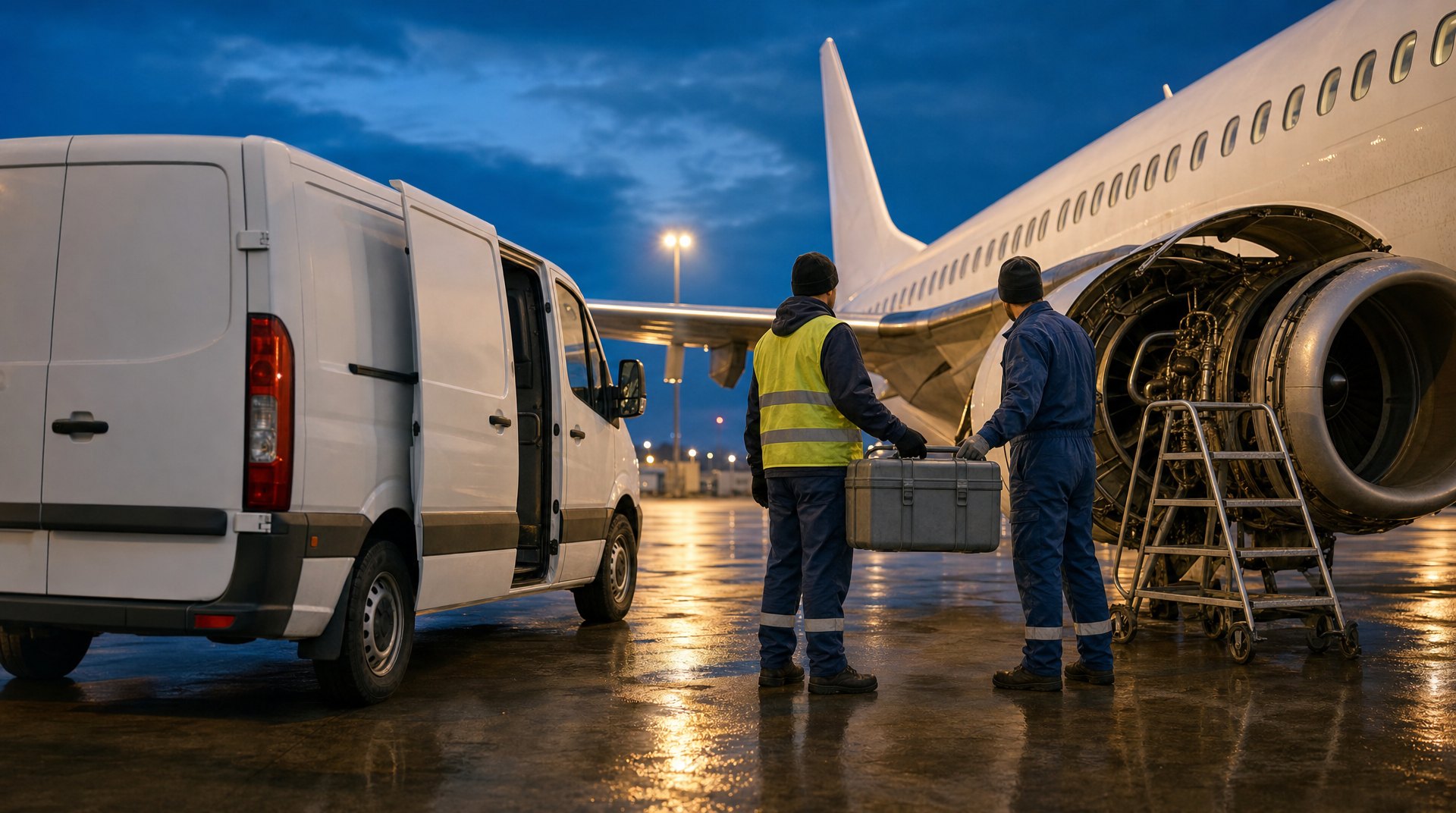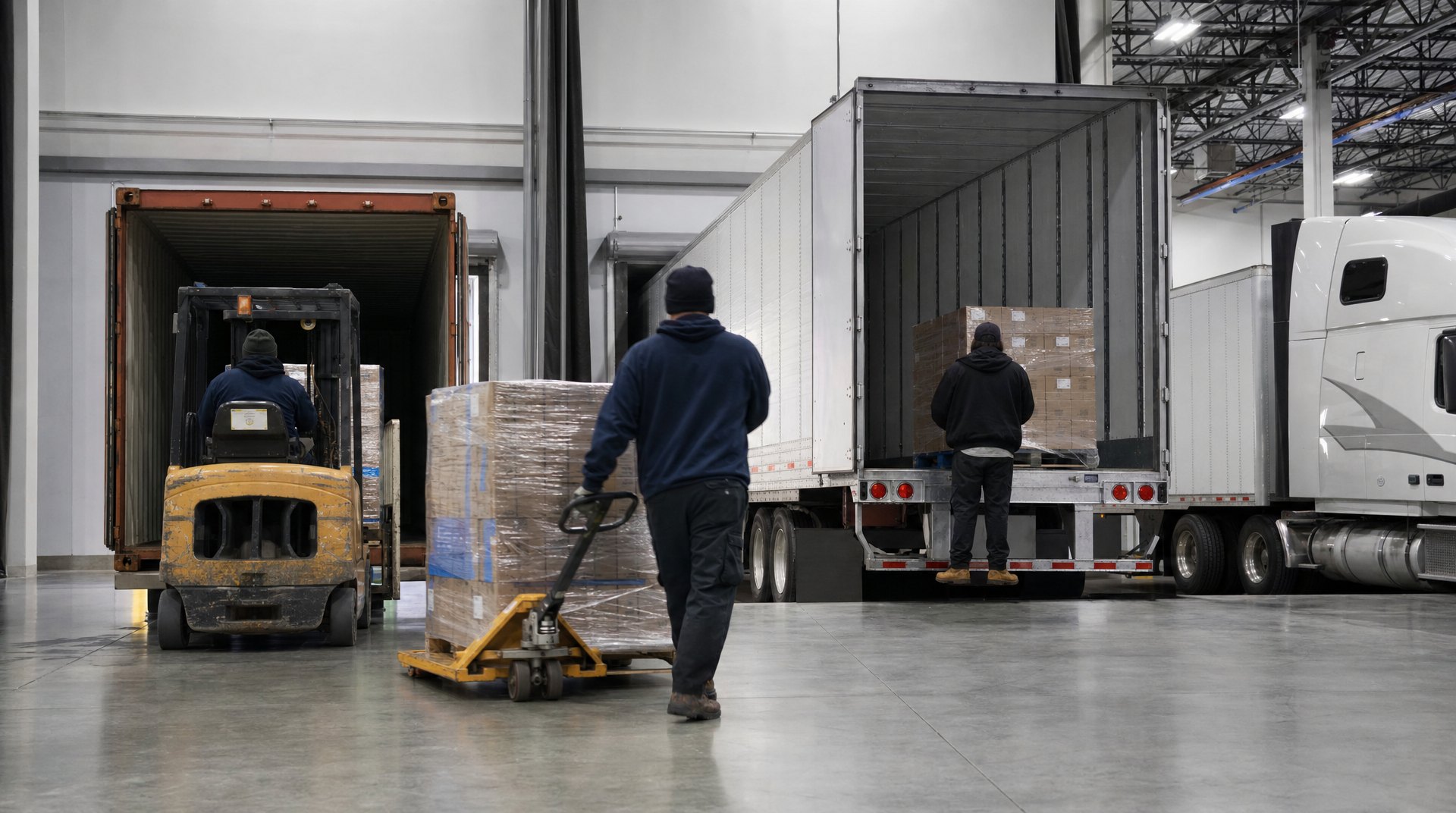
Same-day freight in Los Angeles means one vehicle, booked for your shipment alone, picks up today and drives straight to the receiver. There is no terminal, no sorting and no transfer to a linehaul truck. That is what separates it from regular LTL, which moves through terminals on a schedule, and from a parcel courier, which is built for envelopes and cartons rather than pallets, crates and machine parts.
This guide is for the plant, warehouse or purchasing team in the LA area with freight that has to move today: a part a customer’s line is waiting on, pallets the LTL carrier never picked up, or an order that misses its window if it rides tomorrow’s truck. It covers which vehicle fits the freight, how far a same-day run can reach, and what has to be true at both docks for delivery to happen today. If you already know you need a truck, our same-day expedited service takes bookings around the clock.
When same-day freight is the right call, and when a courier is enough
Three situations account for most same-day freight calls out of Los Angeles:
- A line is down, yours or a customer’s. The replacement part, tooling or packaging material is in an LA warehouse, and every hour without it costs more than the truck. What you control on your side in that first hour is covered in our article on line-down freight recovery.
- The truck did not come. The LTL carrier missed the pickup, the driver arrived after the freight was staged elsewhere, or production finished after the cutoff. The next regular attempt is tomorrow, and after that the pallets still cross a terminal before they reach the receiver.
- The order has a hard delivery window. A customer needs the goods for a shift that starts in the morning, a jobsite has a crane booked, or a receiver will not hold the slot past today.
If the shipment is an envelope or a box one person can carry, a local courier is built for that and is usually the cheaper answer. Same-day freight starts where courier work stops: palletized or crated goods, heavy or awkward pieces, and anything that needs a dock, a forklift or a liftgate at one end or both.
Match the vehicle to the freight
The vehicle is chosen from the freight, not the other way round. Getting it wrong costs more time than any traffic on the 405: a van that arrives for a crate it cannot take means a second truck and a second wait.
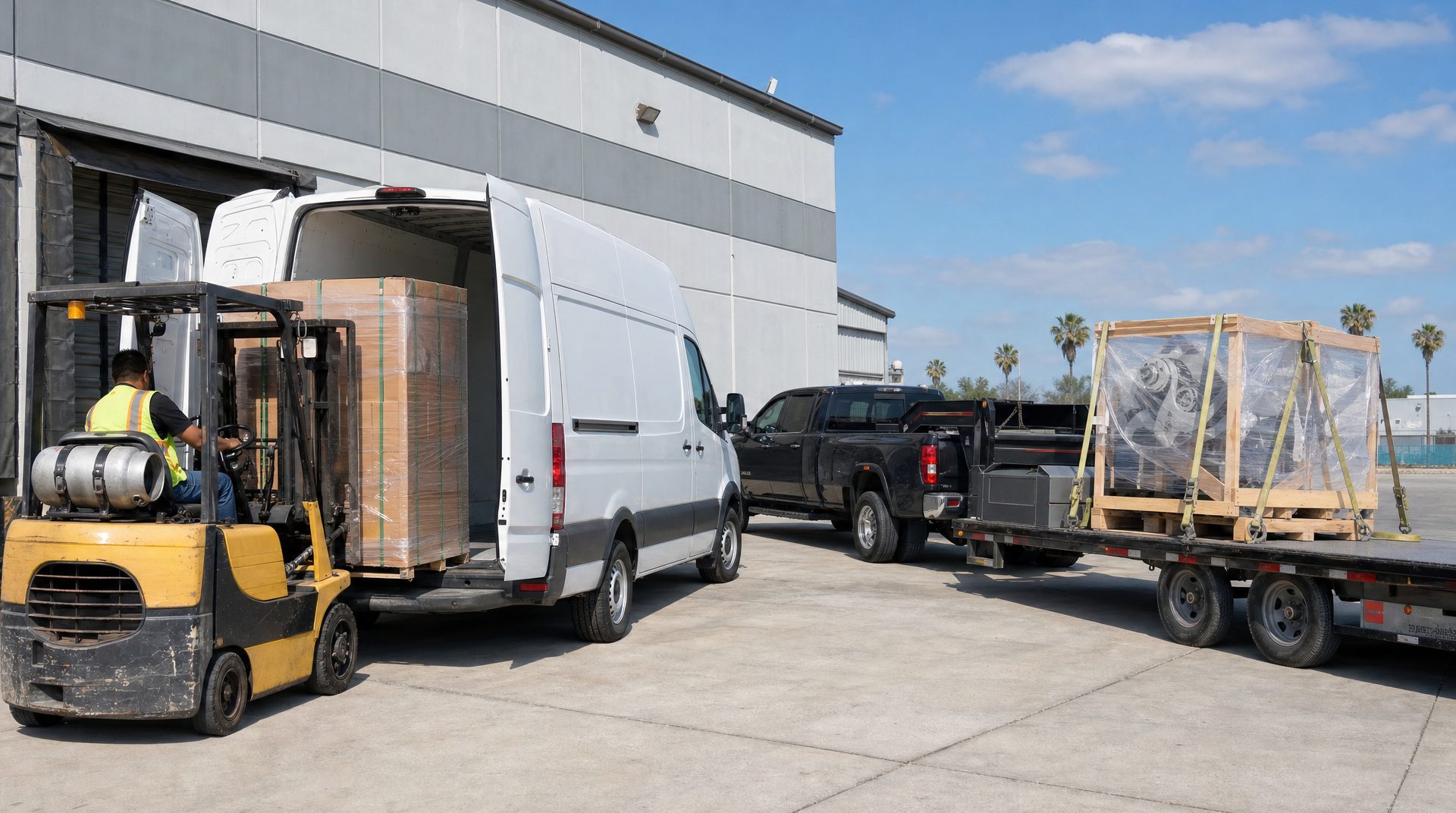
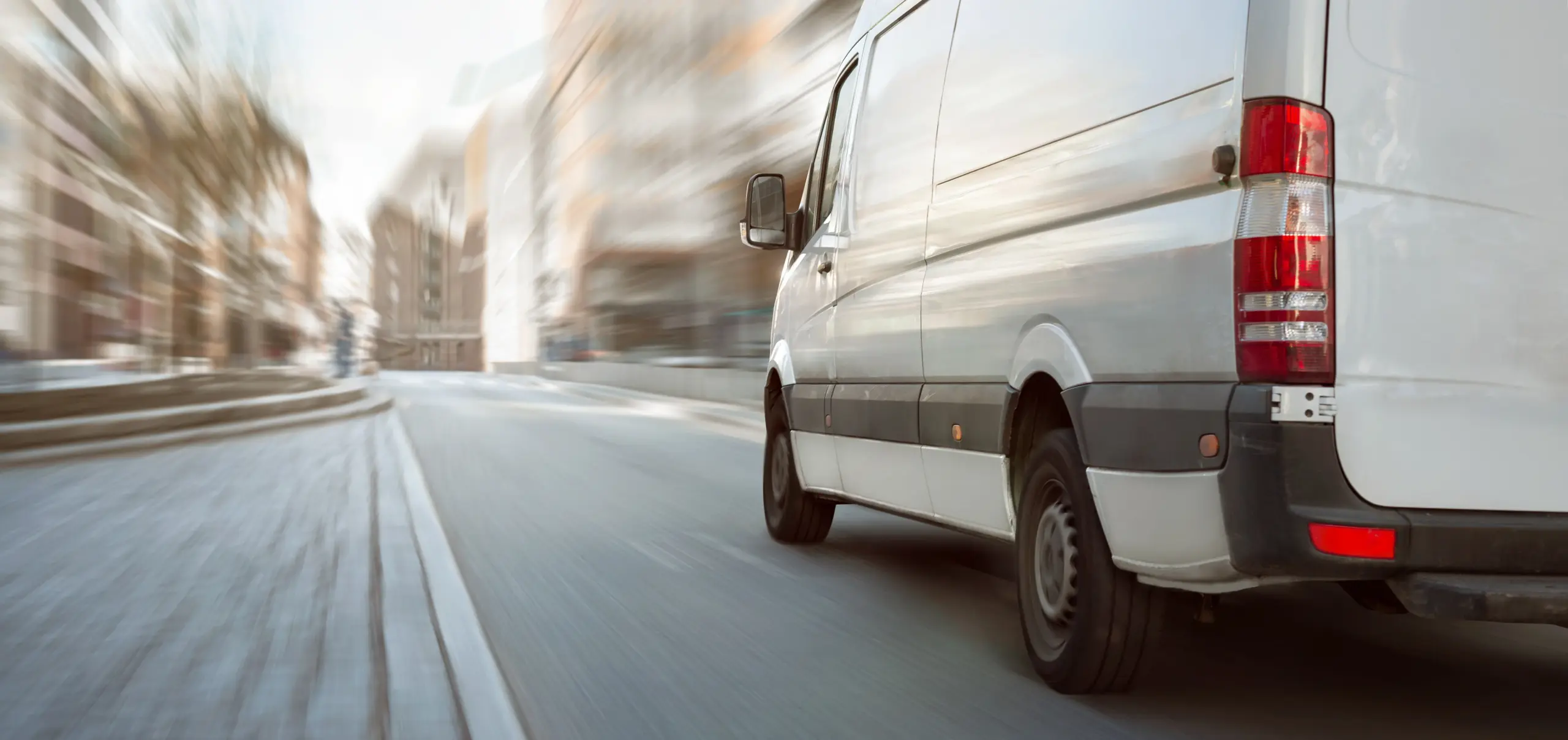
- Cargo van. Cartons, boxed parts and light pallets that can be loaded through the rear or side doors. It is the quickest vehicle to dispatch and to move through city traffic, and it is limited by floor space, door height and payload. Our comparison of box trucks and cargo vans covers where one stops and the other starts.
- Hot shot. A pickup truck pulling a flatbed or gooseneck trailer. It suits heavy or long pieces such as a crated machine component, a coil or a fixture that has to be loaded by forklift from the side. Open-deck freight has to be strapped and protected from the weather, so say whether the piece can ride uncovered.
- Dedicated truck. When there are several pallets or the freight needs a dock-height trailer, a truck booked only for your load is still same-day freight: it loads, closes the doors and goes direct. Our guide to how many pallets fit in a truck helps you size it before you call.
- Team drivers. Two drivers take turns so the truck keeps moving while one rests. This matters once the run is longer than one driver can legally cover in a day, which the next section explains.
To choose between them, the dispatcher needs measured dimensions and weight for every piece, whether the pallets can be stacked, and how the freight will be loaded at pickup and unloaded at delivery: dock, forklift, liftgate or by hand.
How far same-day reaches from Los Angeles
Inside Southern California, same-day delivery is the normal case: the Inland Empire, Orange County, San Diego, Ventura County and the high desert are all within a working day of an LA pickup. Runs into nearby states, such as Las Vegas or Phoenix, can still be same-day, but whether they are depends mostly on what time the freight is ready to load.
The limit is usually the driver’s hours, not the truck. Where the vehicle and the trip fall under federal hours-of-service rules, a driver may drive a total of 11 hours within a 14-hour window that starts when they come on duty after 10 consecutive hours off (49 CFR 395.3). Waiting at your dock counts against that window just as driving does. A driver who has already worked a morning of local deliveries may not have enough hours left for an afternoon run out of state, so a long same-day run often needs a fresh driver or a team, and the dispatcher has to know early.
Plan backward from the receiver, not forward from your dock. Start with the time the receiver stops accepting freight, subtract unloading time, the drive including the traffic at that hour, and the loading time at your dock. What is left is the time the truck has to be at your door. A run that is easy with a 7 AM pickup can be impossible at 2 PM for the same distance.
What has to be ready at the pickup dock
Most same-day loads that slip lose their time at origin, not on the road. Before the truck arrives:
- The freight is packed, wrapped and labeled. A pallet still being built when the driver backs in uses up the driver’s hours and the receiver’s window.
- The bill of lading is printed. Shipper, consignee with a phone number, piece count, weight and any handling notes, matching what was quoted.
- The loading method matches the vehicle. A dock-height trailer at a dock, a forklift for a flatbed, a liftgate or hand load for a van. If your dock cannot serve the vehicle that was booked, say so before it is dispatched.
- Hazardous materials are declared up front. They change which vehicle and driver can take the load and what papers have to travel with it. A hazmat item found at pickup can cancel the run.
- Someone can release the freight. A named person at the dock who knows the load is going, so the driver is not held at the gate while someone finds a supervisor.
What has to be true at the receiving end
A same-day truck that reaches a closed dock has delivered nothing. Confirm these before you book, not while the truck is on the freeway:
- Receiving hours and appointments. Many distribution centers only accept trucks with an appointment. Ask whether they will take an unscheduled same-day delivery and until what time.
- How the freight comes off. A dock, a forklift on site, or a liftgate on the truck. A jobsite or a small shop without a dock needs that settled at booking, because it decides the vehicle.
- Who signs. A name and a mobile number for the person who will meet the truck, especially for a delivery after normal hours.
- Where the part actually goes. For a line-down delivery, the receiving dock and the stopped line may be far apart inside the same plant. Agree who carries the part from the dock to the line.
Common same-day situations and what each needs
| Situation | Usually fits | Confirm before booking |
|---|---|---|
| Replacement part for a stopped line in the Inland Empire | Cargo van for boxed parts, hot shot for a heavy or long piece | Packed size and weight, who takes it from the dock to the line |
| Pallets the LTL carrier did not pick up | Dedicated truck sized to the pallet count, or a van for a light pallet | Receiver hours and whether an appointment is needed |
| Crated equipment to a site without a dock | Hot shot with a flatbed, or a truck with a liftgate if the weight allows | Forklift on site, ground conditions, whether it can ride uncovered |
| Order for Las Vegas or Phoenix ready after lunch | Dedicated truck with a fresh driver, or a team if hours are tight | That the receiver will still be open on arrival |
If none of the options can reach the receiver today, the next question is the earliest delivery tomorrow. A truck that leaves this evening and delivers at opening time often protects the same shift a same-day run would have. When the freight is small and the distance is long, flying it can beat driving; our article on hot shot vs expedited vs charter compares the modes under a deadline.
What to send when you ask for a same-day quote
A quote comes back faster when the first message already holds what the dispatcher needs: the pickup address and the time the freight is ready, the delivery address and the latest time the receiver will accept it, the piece count with measured dimensions and weight, whether the pallets stack, how the freight is loaded and unloaded at each end, and whether anything is hazardous. If the delivery is for a stopped line, say so; it tells the dispatcher that the deadline is real and that a fallback plan is worth discussing.
Price follows the same facts. The distance, the weight and dimensions, the vehicle and any extra services, such as a liftgate or inside delivery, decide what a same-day run costs.
How LAX Freight handles same-day freight out of Los Angeles
Our expedited shipping service runs same-day freight for urgent shipments within Southern California and nearby states, with sprinter vans and hot shots for smaller or last-minute loads, dedicated capacity, and team drivers for longer distances with minimal stops. Dispatch works 24/7 with live support and real-time visibility on the load, and drivers are TSA-cleared for sensitive freight. Accessorials such as a liftgate or inside delivery are part of the quote. When today is not possible, next-day delivery runs nationwide by ground or air, and air charter is available for urgent, high-value freight.
Tell us what is on the dock and when it has to arrive, and we will tell you which vehicle fits the freight and when it can deliver.