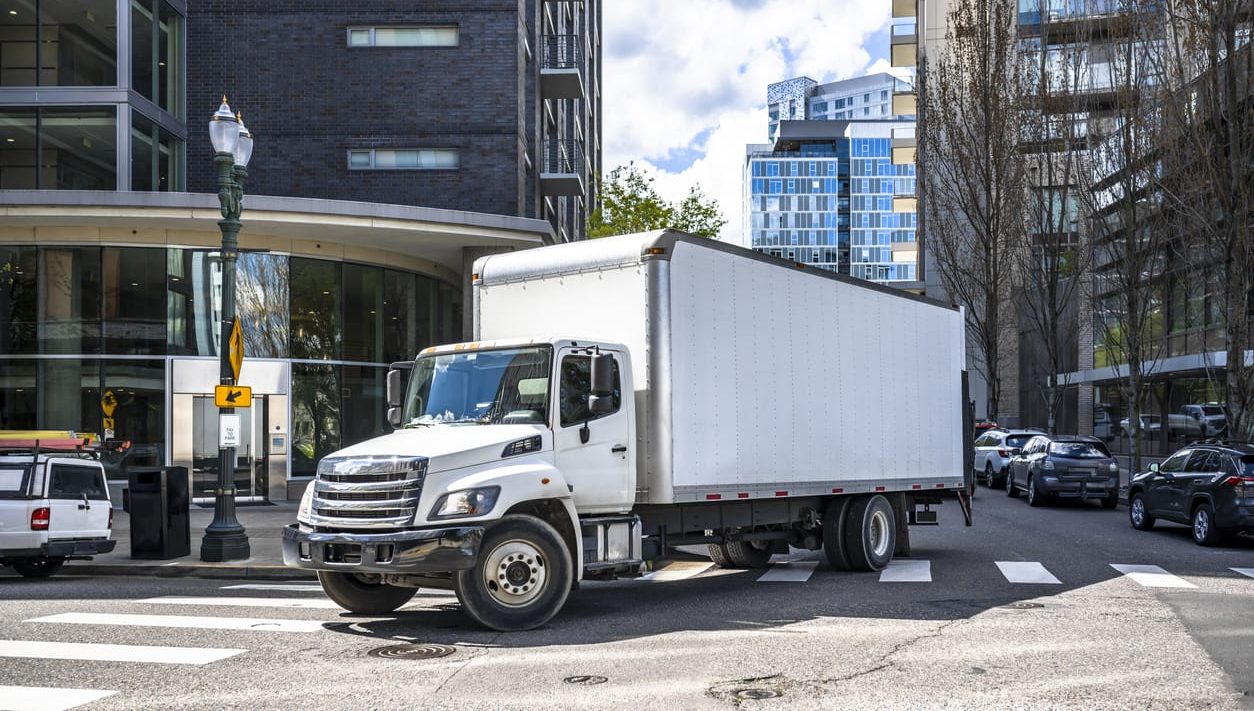
The United States economy relies significantly on the freight trucking industry, which accounts for the transportation of approximately 70 percent of annual freight goods or 72.5 percent of the country’s freight by weight.
Understanding the nuances of box trucks and their diverse hauling capabilities is crucial for businesses considering commercial box trucks, small box trucks, and various box truck sizes for their freight shipping needs. To aid in this decision-making process, we have created a comprehensive guide to elucidate the various types of box trucks, including the best cargo van options.
What Is a Box Truck?
A commercial box truck, also known as a straight box truck, offers versatility in hauling freight. Despite variations in box truck types, certain features define what a box truck is.
- Single Frame: A commercial box truck has a single frame extending from the front to the rear, with axles and cargo container attached to the same frame.
- Sliding Back Door: The rear door of a commercial box truck opens with a roll-up cargo door, making it ideal for hauling furniture and appliances.
- Varying Sizes: Box truck types differ in length, height, and hauling capacity, with a rectangular-shaped cargo box separate from the cab.
- Pull-out Ramps: Various box truck types, including small box trucks, come with hydraulic lifts or pull-out ramps.
- Hauling Capacity Limit: Commercial box trucks can haul up to 10,000 lbs.
- Protection from Elements: Enclosed like a straight truck van, a commercial box truck is shielded from the elements.
When considering what a box truck is, it’s essential to compare it with other commercial vehicles, such as a box cargo van and box truck vs sprinter van.
What Is a Sprinter Cargo Van?
Distinguishing between a box truck vs sprinter van is important. Sprinter cargo vans, compared to box vans, offer unique advantages.
- Different Cargo Capacities: Sprinter vans excel in transporting freight, providing 120 to 200 cubic feet of space and accommodating 4,000 to 5,000 pounds of weight.
- Access to Various Locations: Sprinter vans can reach places inaccessible to commercial box trucks.
- Excellent Mobility: Sprinter vans, unlike some box truck types, are fuel-efficient, easy to drive, and maneuverable.
Considering box truck vs cargo van differences, the primary distinctions lie in vehicle design, weight and size, and fuel and engine efficiency.
Box Truck Vs Cargo Van: Key Differences
Three general categories outline the primary differences between a box truck vs cargo van.
- Vehicle Design and Construction: Box trucks have a two-piece construction with a separated cargo area, while cargo vans have a one-piece design connecting the transporting area to the passenger section.
- Weight and Size: Box truck types generally provide more cargo space and higher weight capacities than cargo vans.
- Fuel & Engine Efficiency: Box trucks typically have larger, less fuel-efficient engines compared to cargo vans.
Understanding what a box truck is, along with the pros and cons, is vital when deciding between a box truck vs cargo van. Design, size, and efficiency play crucial roles in this decision-making process.
Sprinter Cargo Van vs Box Truck: Which One to Choose?
When deciding between a box truck vs sprinter van, considerations include size, fuel efficiency, and loading ease. The business’s specific needs are paramount in making this decision.
Conclusion
Having grasped the disparities between a box truck vs cargo van, the next step is selecting a reputable freight shipping company. LAX Freight offers an excellent selection of quality box truck types and sprinter cargo vans to efficiently and safely haul freight. Contact LAX Freight today for your freight shipping quote.
Key Takeaways
Choosing between a box truck and a cargo van comes down to matching the vehicle to the freight, the route, and the driver who will operate it. Here is a quick summary before diving into the questions shippers ask most often.
- Box trucks carry more weight and more volume, making them the better fit for bulky furniture, pallets, and large appliance deliveries.
- Cargo vans are easier to park, easier to drive in tight urban areas, and generally cost less to fuel and maintain.
- Licensing requirements can differ once a box truck crosses certain weight thresholds, while most cargo vans can be operated with a standard license.
- Cargo vans tend to load and unload faster for smaller, frequent stops, while box trucks are more efficient for consolidated, higher volume runs.
- The right choice depends on the shipment size, the delivery environment, and how often the vehicle will be on the road.
Frequently Asked Questions
How much more cargo can a box truck carry compared to a cargo van?
Box trucks are built with a separate, rectangular cargo box that is not limited by a shared cab and chassis, so they generally offer more usable interior height, length, and floor space than a cargo van. Cargo vans keep the driver compartment and cargo area connected in one body, which naturally caps how much space and weight they can carry. For businesses regularly moving large furniture, multiple pallets, or oversized items, a box truck is usually the more practical option.
Which vehicle is better for last mile deliveries in cities?
Cargo vans tend to perform better in dense urban environments. Their smaller footprint makes it easier to navigate narrow streets, fit into standard parking spots, and access loading zones that a larger box truck cannot reach. Box trucks are still capable in cities, but drivers need more room to maneuver and park, which can slow down routes with frequent stops.
Do I need a special license to drive a box truck?
It depends on the specific box truck and its gross vehicle weight rating. Many smaller and mid-size box trucks can be operated with a standard driver’s license, while larger models that exceed certain weight thresholds may require a commercial driver’s license. Cargo vans almost always fall under standard licensing requirements. Anyone unsure where a specific vehicle falls should check the weight rating and confirm licensing rules before assigning a driver.
Which option costs less to operate?
Cargo vans typically cost less to fuel and maintain because they are lighter and use smaller engines built for efficiency rather than heavy hauling. Box trucks carry larger engines suited to hauling greater weight, which usually means higher fuel consumption and maintenance costs over time. Businesses weighing the two should balance the lower running costs of a van against the added capacity a box truck provides.
Can a cargo van handle freight that a box truck normally hauls?
A cargo van can handle smaller versions of the same freight, such as boxed goods, equipment, or limited pallet counts, as long as the shipment fits within its weight and space limits. Once a load exceeds what a van can safely carry, a box truck becomes the more suitable choice. Matching vehicle capacity to shipment weight helps avoid overloading and keeps deliveries running smoothly.
How do I decide which one is right for my business?
Start with the type and volume of freight moved on a regular basis. Businesses hauling large, heavy, or bulky shipments benefit from the added space and weight capacity of a box truck. Businesses making frequent smaller deliveries, especially in tight urban settings, often find a cargo van more efficient and easier to manage. Working with an experienced freight partner can help match the right vehicle type to specific shipping needs.