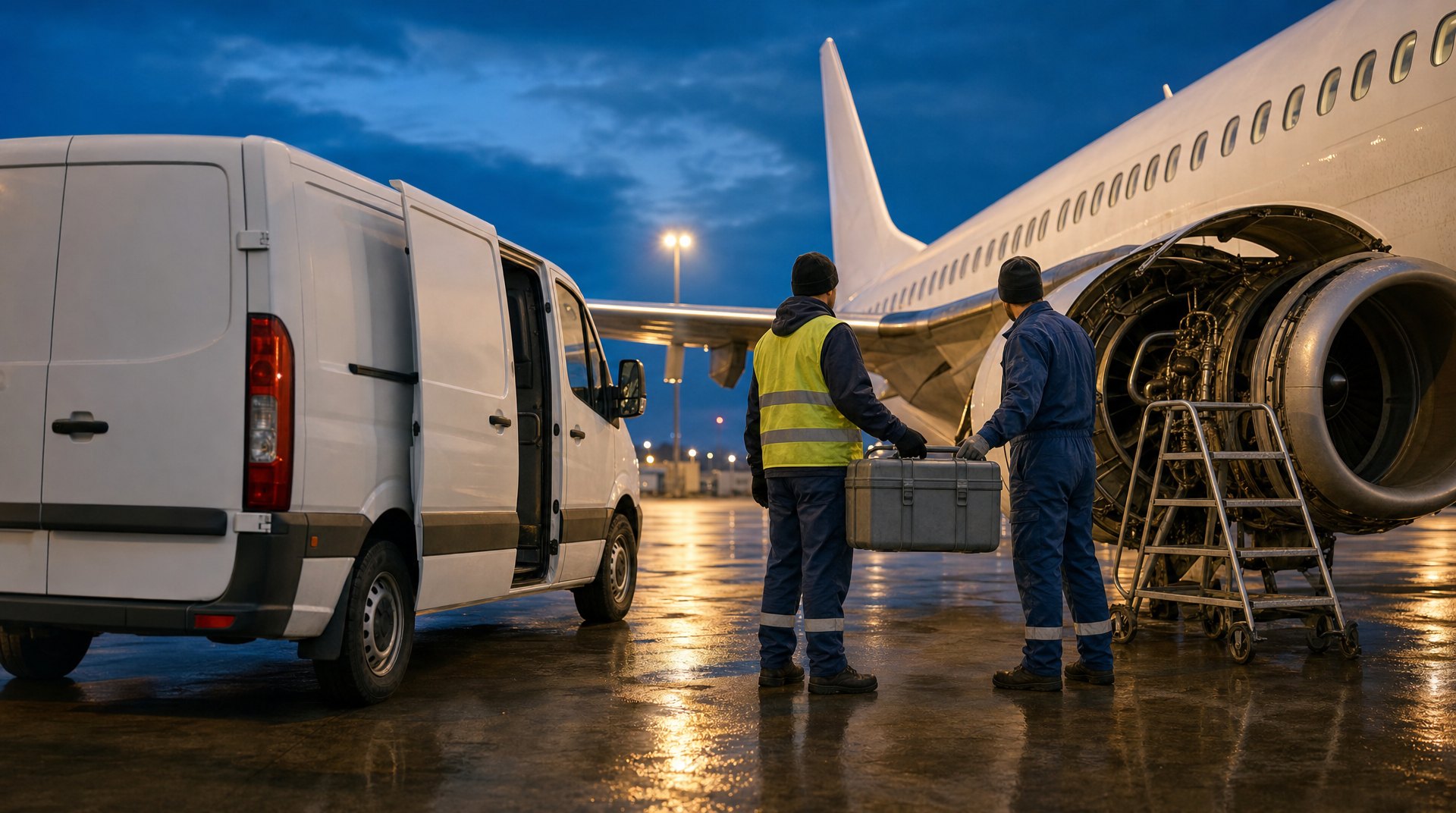
When an aircraft is on the ground somewhere else and the part that fixes it is in Los Angeles, four routes can get it there today: a dedicated driver who takes it to the aircraft, a next-flight-out booking on a scheduled airline, an on-board courier who flies with it, or a charter aircraft. Which one is fastest depends on three things you know before you pick up the phone: where the aircraft is, how big and how restricted the part is, and the time it has to be at the aircraft.
This guide is for the MRO planner, stores lead or maintenance controller in the LA area who has an AOG part in hand and a deadline. It covers how to choose the route and what the dispatcher needs from you to start. The requirements that apply to every AOG move, such as release paperwork, dangerous goods and airside delivery, are covered in our earlier article on what moving an aircraft-on-ground part actually requires.
Start with three facts: where, what and by when
- Where the aircraft is. The airport, the stand or hangar, and the name of the person who will take the part airside. A delivery address of “the airport” is not enough.
- What the part is. Part number, serial number, packed dimensions and weight, and whether anything in or on it counts as dangerous goods: a battery, a gas cylinder, a pyrotechnic charge, residual fuel or hydraulic fluid.
- By when. The time the part has to be at the aircraft, not the time it has to leave Los Angeles. Every plan is worked backward from that time.
These three answers rule routes out quickly. A piece too big for a passenger aircraft’s hold rules out a booking on most scheduled flights. A part classed as dangerous goods rules out a courier’s suitcase. An aircraft a few hours’ drive away often rules out flying at all.
Route 1: drive it, when the aircraft is within a day’s drive
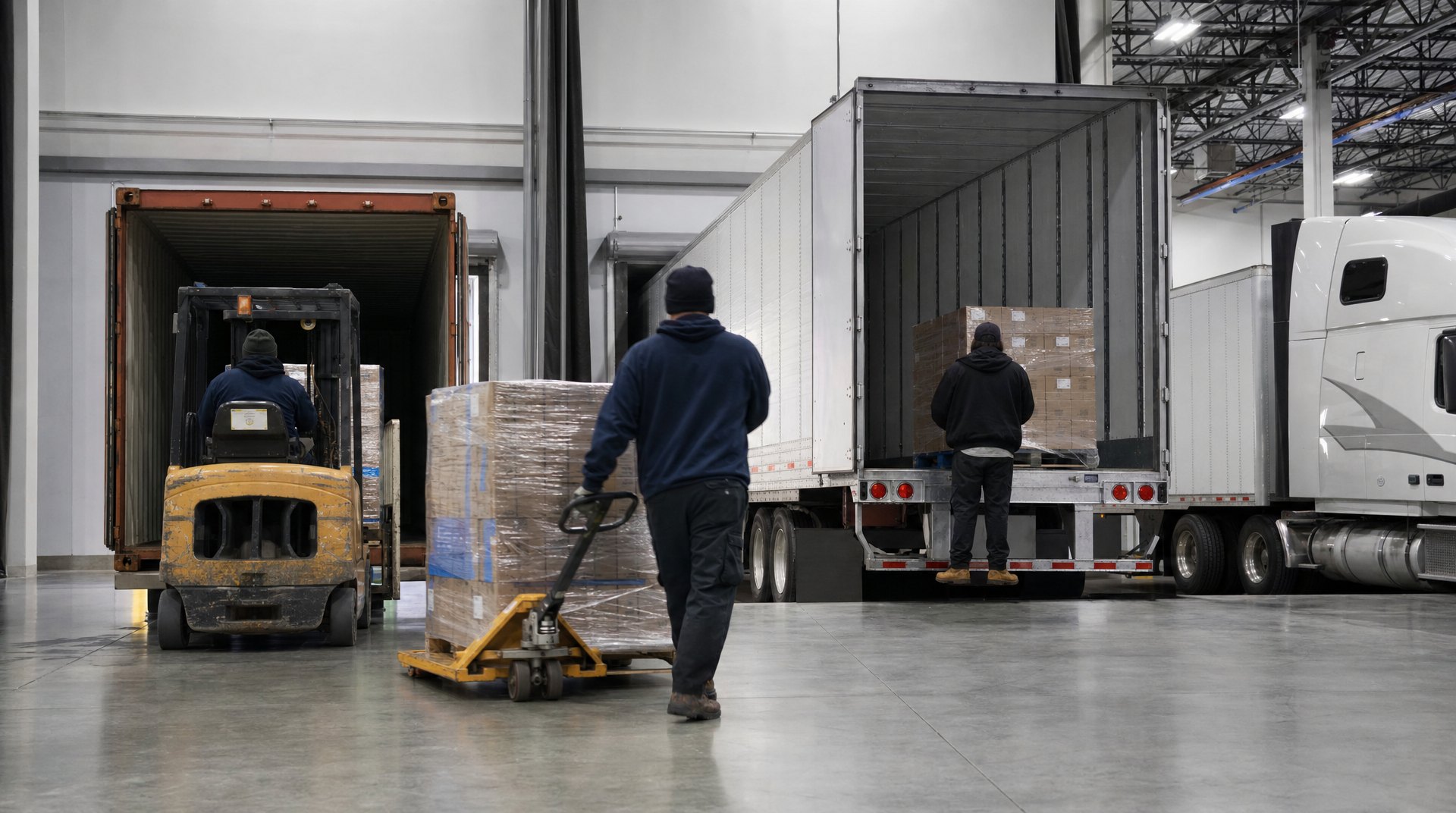
For an aircraft at Burbank, Long Beach, Ontario, San Diego or Palm Springs, or at an airport in a neighboring state, a dedicated vehicle is often the fastest way from your stores to the aircraft. There is no airline cutoff to make, no cargo acceptance line, no screening queue and no second driver at the destination airport. The part leaves the moment it is packed and is handed over at the delivery point by the same driver who picked it up.
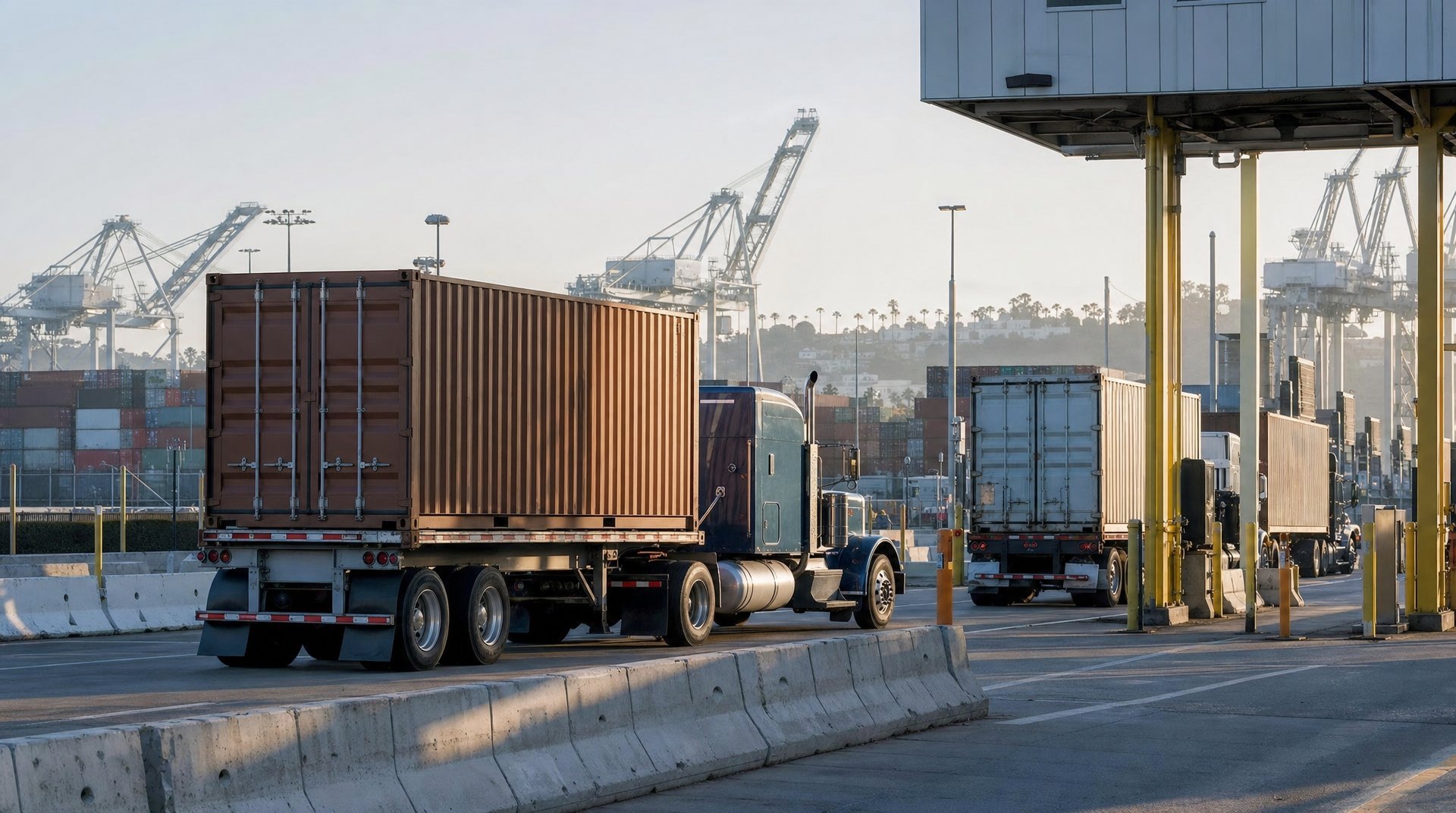
A cargo van handles cases, boxed line-replaceable units and small assemblies. A hot shot truck with a flatbed takes heavier pieces that do not fit a van. On a long overnight run, a team of two drivers keeps the truck moving while one rests.
The fair test is not drive time against flight time. It is drive time against the whole air chain: pickup, the trip to the airline’s cargo terminal, acceptance before the cutoff, screening, the flight, recovery from the destination airport and the last leg to the aircraft. On short and medium distances those steps add up to more than the flight itself.
Two things to settle before the van leaves: who meets it at the destination airport, and whether that person can take the part airside or the driver needs an escort. A part delivered to a landside office at 2 AM is delivered on paper only.
Route 2: next flight out on a scheduled airline
When the aircraft is too far away to drive in time, the next scheduled flight with space is usually the most affordable way to fly the part. Next flight out means exactly that: the part goes on the first flight that can accept it, instead of waiting for consolidation on a standard air freight schedule.
What decides whether the part makes the flight:
- The acceptance cutoff. Each airline sets its own deadline for cargo at its LAX terminal before departure. The flight that leaves soonest is not always the one you can still make.
- Screening. Airlines must screen and inspect cargo under their security programs before it goes on board (49 CFR 1544.205). Build that time into the plan, and pack the part so it can be screened without being taken apart.
- Size and aircraft type. A piece that fits a wide-body hold may not fit the narrow-body that flies the route tonight. Packed dimensions decide which flights are possible at all.
- Dangerous goods. The airline must confirm that any hazardous material is authorized for air and within the quantity limits before it accepts the shipment (49 CFR 175.30). A restricted item declared at the counter for the first time can miss the flight.
- Recovery at the other end. Book the driver who collects the part from the destination airport at the same time as the flight. A part that lands at 9 PM with nobody booked to pick it up sits in the cargo shed until morning.
Route 3: an on-board courier who flies with the part
An on-board courier buys a passenger ticket, carries the part as baggage and hands it over in person at the destination. The part never enters the cargo system, so cargo cutoffs and cargo recovery drop out of the timeline, and one person stays responsible for it from your stores to the hand-off.
It works best for small, high-value parts going long distances or abroad, especially late in the day when cargo cutoffs have passed but passenger flights are still leaving. It has firm limits:
- The part has to travel as baggage. It must fit the airline’s baggage size and weight rules, and the courier needs a seat on a flight that leaves in time.
- Dangerous goods mostly cannot come along. Passengers may carry hazardous materials only within the narrow exceptions listed in 49 CFR 175.10. A unit with a lithium battery, a gas bottle or residual fluid usually has to fly as declared cargo instead.
- An export is still an export. A part carried abroad by hand is still exported. One common exemption from filing Electronic Export Information covers shipments where the value under each Schedule B number is $2,500 or less (15 CFR 30.37(a)). An expensive component is above that line, so check the filing before the courier leaves.
Route 4: a charter aircraft, when nothing scheduled will work
A dedicated aircraft makes sense in two situations. The first is a part too large or too heavy for scheduled capacity: an engine, landing gear, a flight control surface or a large structural piece. The second is a deadline that no scheduled flight can meet, often because the aircraft is at an airport with few or no scheduled flights that day.
A charter flies on your schedule and to the airport closest to the aircraft, so there is no cutoff and no transfer between flights. It is also the most expensive option, and availability depends on the hour and the aircraft type needed. Decide early: the options for a large piece narrow quickly as the day goes on. Our guide to when freight needs an air charter covers the trade-off in more detail.
Which route fits your part?
| Route | Usually wins when | Ruled out when |
|---|---|---|
| Dedicated driver | The aircraft is in Southern California or a neighboring state; the part is heavy, awkward or restricted for air | The drive takes longer than the full air chain |
| Next flight out | The destination is far, a flight leaves in time and the part fits the hold | The cutoff has passed, the piece is too big for the aircraft type, or a restricted item cannot be accepted in time |
| On-board courier | The part is small, valuable and going far or abroad, late in the day | The part contains dangerous goods or exceeds baggage limits |
| Charter | The part is outsized, or no scheduled flight reaches the aircraft in time | A cheaper route meets the same deadline |
Routes can also be combined. A driver can take a part from Los Angeles to a different airport that has a better connection, and a part that flies scheduled still needs a driver at both ends. When you ask for options, ask for the door-to-aircraft time on each one, not just the flight time.
Before the part leaves your stores
Whatever the route, a few minutes at origin save hours later:
- The release certificate is in the box. For a part released in the United States, that is usually the FAA Form 8130-3, the Authorized Release Certificate. Check that it is complete and that the serial number matches the unit.
- The dangerous goods question has an answer. Decided before booking, not at the airline counter.
- Packed dimensions and weight are measured, not estimated. They decide which flights and vehicles are possible.
- The person receiving it is named. With a phone number, and confirmed as able to take the part airside at the hour it arrives.
- The return is planned. The removed unit often goes back to a repair shop, and it may not be classified the same way as the serviceable part. Ask for both legs at once.
What to send when you ask for an AOG quote
A quote comes back faster when the first message already has what the dispatcher needs: pickup address and the time the part is ready, the destination airport and delivery point, the time it must be at the aircraft, the part description with packed dimensions and weight, the dangerous goods status, and for international moves, the destination country and the declared value. If you already know a route will not work, such as a part that is too large for a passenger flight, say so up front.
How LAX Freight handles AOG parts out of Los Angeles
Our aerospace and AOG service runs 24/7 dispatch for grounded aircraft, with air charter and on-board courier capability for same-day delivery of high-value parts, and specialized trailers for engines and landing gear. On the ground, our expedited service covers same-day freight within Southern California and nearby states with sprinter vans, hot shot trucks and team drivers. In the air, our air freight service books next flight out and charters, door to airport or door to door, with customs handled through our network of licensed customs agents.
Tell us where the aircraft is and what the part is, and we will lay out the routes that can reach it in time.