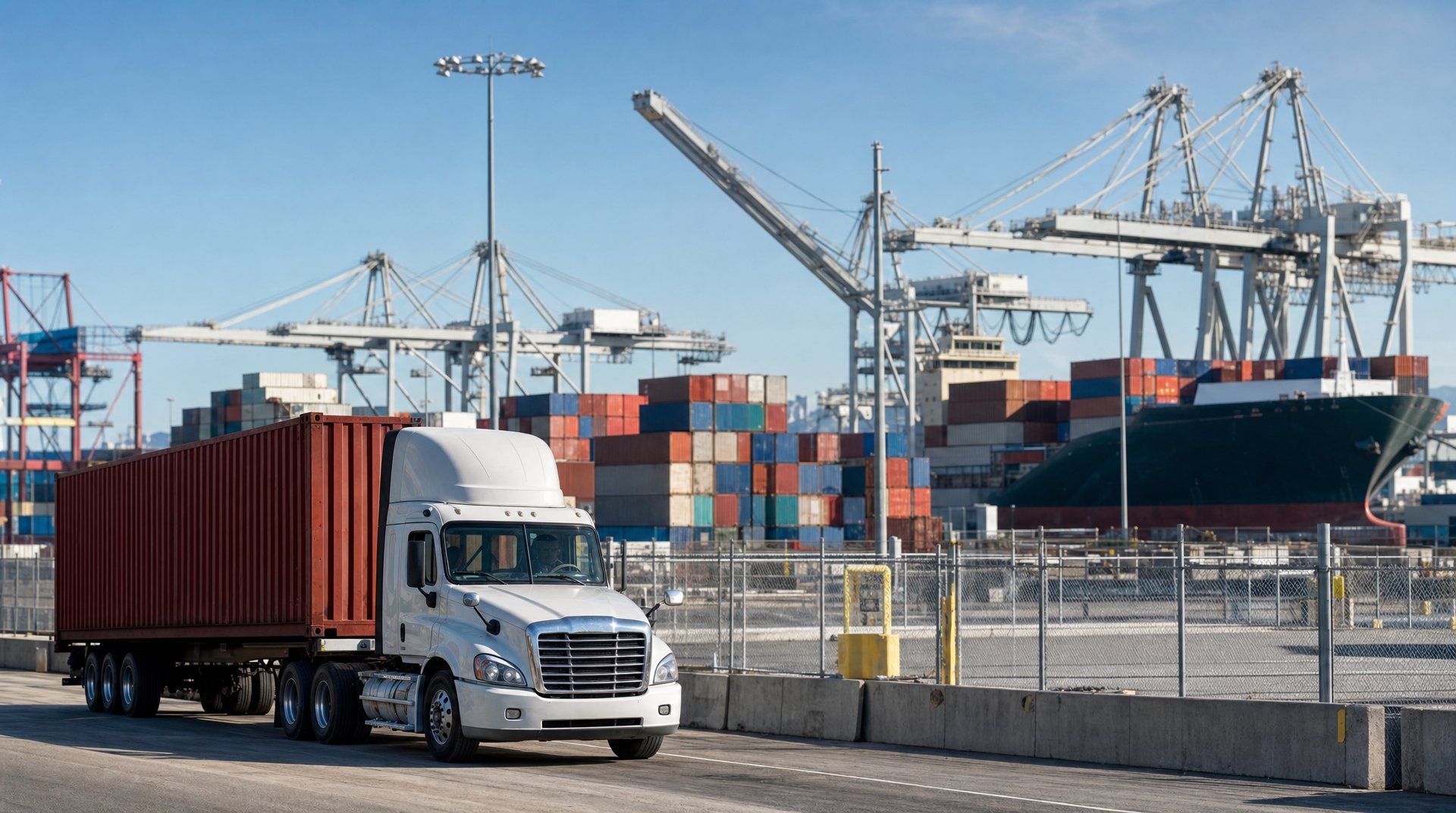
Demurrage is what you pay when a container sits too long inside the terminal. Detention is what you pay when you keep the carrier’s container too long outside the terminal, usually because the empty has not been returned. Both start once free time runs out, both are charged per container per day, and at the Ports of Los Angeles and Long Beach a slow pickup can trigger the first and a slow empty return the second on the same box.
Below: where each clock starts and stops, what the federal billing rules require on the invoice, and how to keep both clocks short.
What is the difference between demurrage and detention?
The difference is where the container is when the clock runs. Most carrier tariffs and terminal schedules split it like this:
| Demurrage | Detention | |
|---|---|---|
| Where the container is | Inside the marine terminal | Outside the terminal, at your warehouse, a yard or on a chassis |
| What it charges for | Using terminal space after free time | Keeping the carrier’s equipment after free time |
| Clock usually starts | When the import is available for pickup | When the container leaves the terminal |
| Clock usually stops | When the full container is picked up | When the empty is returned |
| Who usually bills | The ocean carrier or the terminal operator | The ocean carrier |
| Also called | Storage, in some terminal schedules | Per diem, in many carrier tariffs |
Carriers do not all use these names the same way, and the federal rules use one definition that covers both, including per diem. Before you dispute anything, read the tariff rule or service contract named on the invoice.
Why do the charges stack up at LA and Long Beach?
Because one container crosses both clocks, and every step is a chance to lose a day:
- The vessel discharges and the container becomes available. Demurrage free time starts.
- A trucker needs a terminal appointment and a chassis to pull it. If either is missing, the box waits and demurrage can start.
- The container leaves the terminal. Detention free time starts.
- It is delivered and unloaded, or transloaded.
- The empty goes back to the terminal or depot the carrier names. Detention stops only when it is returned.
When the warehouse cannot receive on time, the usual move is to pull the container out of the terminal and hold it at a yard. That stops demurrage, but detention keeps running until the empty is back. If the freight needs to wait longer, a container freight station or transload lets you empty the container, return it, and store the cargo instead of the box.
Who sends the invoice, and what must it include?
Since May 28, 2024, demurrage and detention invoices from ocean carriers, marine terminal operators and NVOCCs must follow the Federal Maritime Commission’s billing rule, 46 CFR Part 541, adopted under the Ocean Shipping Reform Act of 2022. The final rule sets these requirements:
- Shipment: bill of lading and container numbers, port of discharge for imports, and why you are the party billed.
- Time: free time in days, its start and end dates, the availability date for imports, and the dates charged.
- Rate: the total, the rate, and the tariff rule or contract section it comes from.
- Dispute: a contact and the process to request mitigation, a refund or a waiver.
If required information is missing, the rule says the billed party has no obligation to pay that charge.
How long do they have to bill you, and how long do you have to dispute?
The rule sets three 30 day windows:
- Invoice deadline: the billing party must issue the invoice within 30 calendar days from the date the charge was last incurred. If it does not, you are not required to pay.
- Your dispute window: you get at least 30 calendar days from the invoice date to request mitigation, a refund or a waiver.
- Their answer: the billing party must try to resolve your request within 30 calendar days of receiving it, or by a later date both sides agree to.
Separately, the FMC’s interpretive rule on demurrage and detention practices says detention charged when an empty container cannot be returned is likely to be found unreasonable, absent extenuating circumstances. If the terminal would not take your empty, keep the appointment screenshots and dates.
How do you keep demurrage and detention low?
- Know the free time before the vessel arrives. It comes from the tariff or your contract, not from the port.
- Book the drayage before availability. A trucker with an appointment and a chassis lined up is what turns availability into a pickup.
- Track the empty return. Detention stops at the return, not at delivery, so plan the empty leg when you plan the delivery.
- Check every invoice line against the rule. Dates, free time and rate source must be on it, and the invoice date must fall within 30 days.
- Keep your paperwork straight. The bill of lading and container numbers are how you match an invoice to a box.
Frequently asked questions
Is per diem the same as detention?
In most carrier tariffs, yes: the daily charge for keeping the carrier’s container outside the terminal. The tariff rule named on the invoice is the final word.
Can a terminal charge demurrage on a container I could not pick up?
A charge can still be invoiced, but the FMC considers whether demurrage relates to when the cargo was actually available for pickup. If a hold or a closed terminal kept the container in, request mitigation within the 30 day window and attach the evidence.
Who pays, the shipper or the consignee?
Whoever the contract and the bill of lading make responsible. The invoice must state why you are the party being billed, which is your first check when a charge lands on you.
The short version
Demurrage is the terminal clock, detention is the equipment clock. Both are driven by the same few things: an appointment, a chassis, a ready receiver and an empty that goes back on time. Invoices must show free time, dates and the rate source, and you have at least 30 days to dispute.
Our drayage team at LA and Long Beach books the pickup against your free time, holds containers at the yard when the warehouse is not ready, transloads when the cargo needs to wait longer than the box, and plans the empty return with the delivery. Send the container numbers and the ETA, and we will tell you where the clocks stand.