Most damage to electronics in transit is decided before the truck arrives. It comes from the mode you book, the number of times the freight is handled on the way, and what the carrier was told about the shipment. A pallet of monitors, a crated test instrument and a single server each move safely by truck when those three things are right.
This guide is for shippers of finished electronics, test and lab equipment, servers and components. It covers when to book a dedicated truck instead of a shared trailer, what to send for an accurate quote, how batteries inside the equipment change the paperwork, and how to choose a carrier. If you are moving a whole data center, with racks, UPS batteries and switchgear, start with our data center equipment shipping guide.
Shared trailer, dedicated truck or expedited
Trucking gives you three basic ways to move electronics. They differ in who else is on the trailer and how many times your freight is loaded and unloaded before it reaches the consignee.
- LTL (shared trailer). Your pallets ride with other shippers’ freight and usually pass through terminals, where they are unloaded and reloaded. Our LTL service handles shipments between 150 and 15,000 pounds, with liftgate, inside delivery and residential access. It suits well packed, stackable pallets where the cost of a full truck is hard to justify.
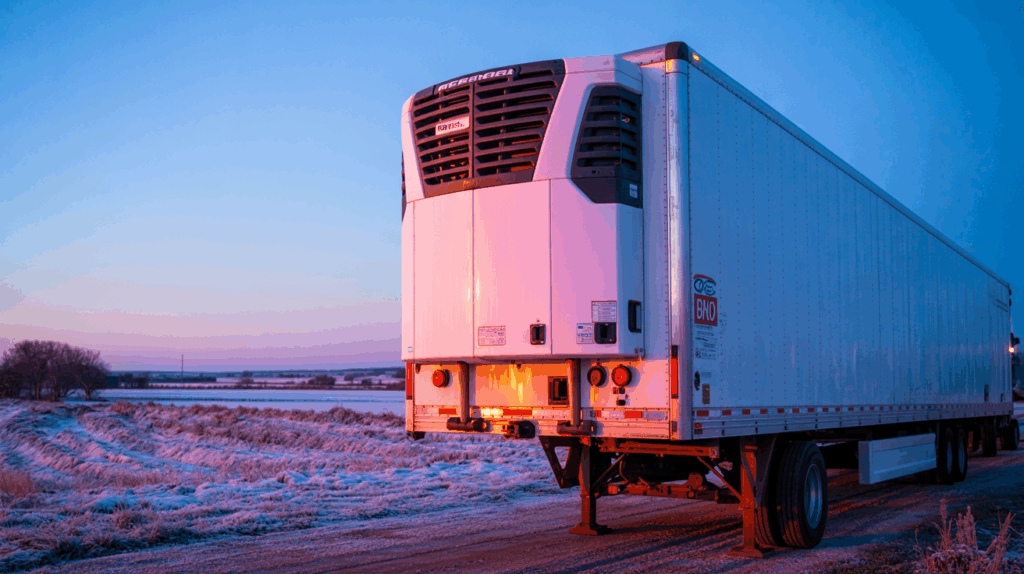
- Dedicated truck (FTL). The trailer is yours. It is loaded at your dock and opened at the consignee’s, with no transfer in between. Our dry van FTL service provides secure, dedicated truck capacity in 53′ dry van trailers, and electronics are one of the freight types it moves.
- Expedited. A dedicated truck run on a direct route, with team drivers when the distance calls for it. Our expedited shipping service uses dedicated trucks, team drivers and direct routes, with fewer handling points, reducing the risk of damage or loss.
Price per pound favors LTL. Handling favors a dedicated truck. The question is which of the two matters more for this shipment.
Signs the freight should not share a trailer
Book a dedicated truck, or ask for a quote on one next to the LTL quote, when any of these is true:
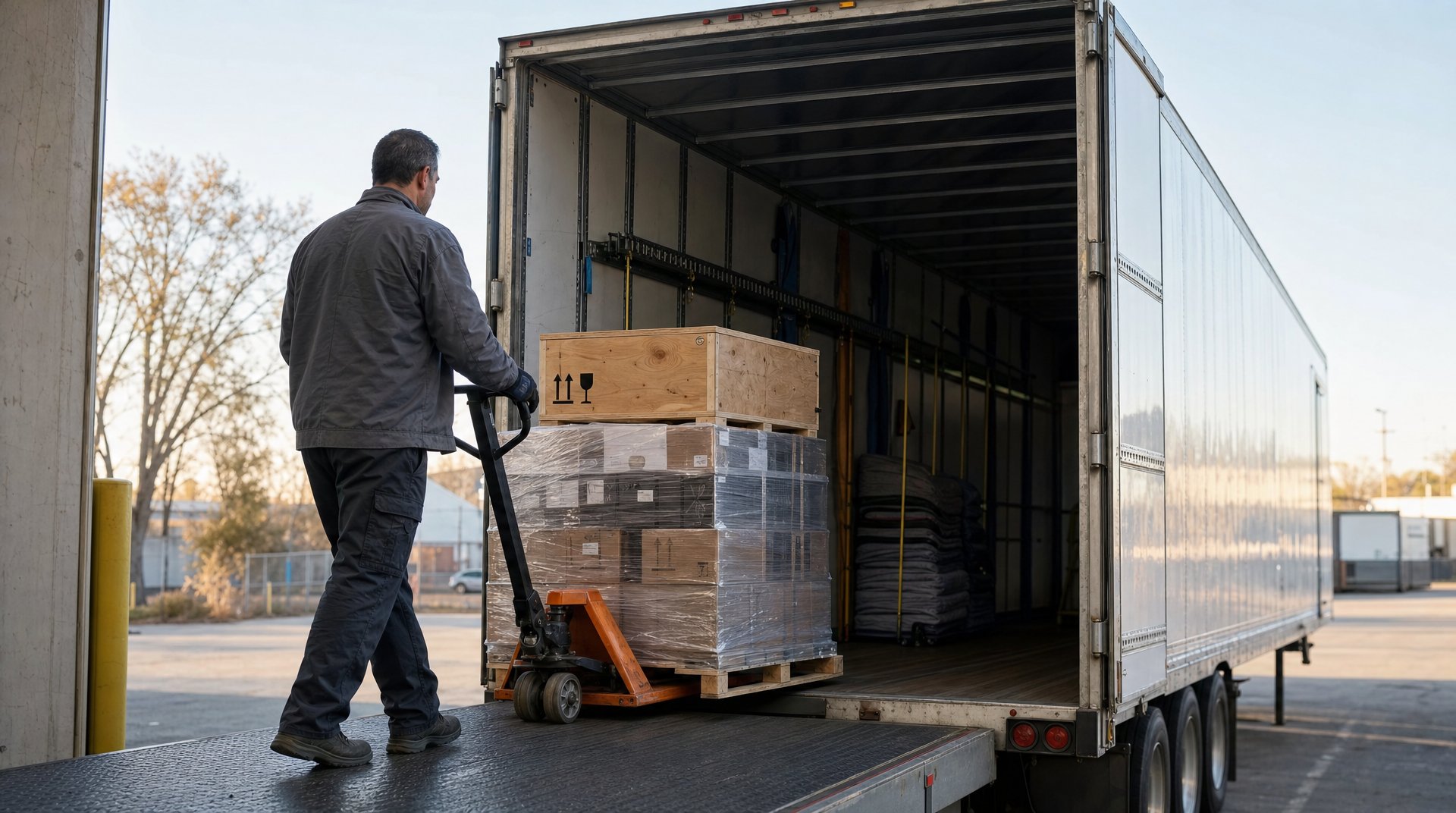
- It cannot be stacked. A top-heavy crate, a cabinet on casters or a pallet with a fragile top layer cannot have other freight loaded on it. In a shared trailer you depend on every dock worker reading the label.
- It is sensitive to shock or tilt. Every transfer at a terminal is another forklift move and another chance of a drop. A truck loaded once and unloaded once removes those moves.
- Its value is high for its weight. Processors, test instruments and servers pack a lot of value into a small pallet, and fewer touches means fewer chances for loss.
- The delivery has a fixed window. An install date, a production line waiting for parts or a lab with booked receiving hours. Terminal schedules add time you do not control.
- The consignee needs more than a dock drop. Inside delivery, unpacking or debris removal is easier to arrange when the truck and crew go straight to the site.
If none of these applies and the freight is boxed, palletized and wrapped for stacking, LTL is usually the sensible choice.
| Shipment | Usual fit | Why |
|---|---|---|
| Boxed consumer electronics on stackable pallets | LTL | Packaging carries the handling; cost per pound is lower |
| Crated test or lab instrument, not stackable | Dedicated truck | No other freight on top, no terminal transfers |
| Servers or components with a fixed install date | Dedicated or expedited | Direct route, delivery time you can plan around |
| A full trailer of finished goods to a distribution center | Dedicated truck (FTL) | Loaded at origin, opened at the consignee’s dock |
What to send for a quote
A quote is only as accurate as the shipment description behind it. Much of what a carrier asks for is what has to go on the bill of lading anyway: under 49 CFR 373.101, a for-hire motor carrier’s bill of lading shows the consignor and consignee, the origin and destination points, the number of packages, a description of the freight and, where it affects the rate, its weight, volume or measurement. Collect it once and send it with the request:
- Addresses and sites. Pickup and delivery addresses, whether each end has a dock or needs a liftgate, and any access limits such as a residential street or a building with booked receiving hours.
- Pieces. The number of pallets, crates or cartons, with the length, width, height and weight of each as packed, not as listed in the product sheet.
- Description. What the equipment is, how it is packed, whether it can be stacked and whether it has to stay upright.
- Batteries. Whether lithium batteries are installed or packed with the equipment, and their Wh rating. The next section explains why.
- Value. The value of the shipment, so the liability terms can be set before pickup.
- Dates and services. Ready date, required delivery date or window, and anything needed at delivery: inside delivery, unpacking, debris removal.
- Border crossing. Whether the freight leaves the United States, so export paperwork can be planned with the move.
A quote request with these details can be priced as LTL and as a dedicated truck at the same time, which is the easiest way to compare the two options on real numbers.
Batteries inside the equipment
Laptops, handheld instruments, backup units and many devices ship with lithium ion batteries inside. Lithium batteries are regulated as hazardous materials, but 49 CFR 173.185 sets out exceptions for smaller cells and batteries.
- Smaller batteries. Under paragraph (c), a package of lithium cells or batteries packed with or contained in equipment is excepted from most of the hazmat communication requirements of part 172 when, among other conditions, each lithium ion cell is rated at no more than 20 Wh and each lithium ion battery at no more than 100 Wh. The battery must be marked with its Wh rating on the outside case.
- Highway or rail only. For transport by highway or rail only, the same paragraph raises those limits to 60 Wh per lithium ion cell and 300 Wh per battery, provided the outer package is marked that the lithium batteries are forbidden for transport aboard aircraft and vessel. A package shipped under this allowance cannot go by air or vessel.
- Packing. Equipment must be secured against shifting inside its outer packaging and packed to prevent accidental operation during transport.
- Returns of faulty units. Under paragraph (f), lithium batteries that are damaged, or identified by the manufacturer as defective for safety reasons, may move by highway, rail or vessel only, in individual non-metallic inner packaging with non-combustible, non-conductive cushioning. Tell the carrier before pickup if a shipment includes units like these.
Batteries above these limits ship under the full Class 9 requirements of the section. Check the Wh rating before you book, because it decides which rules apply.
Declared value and carrier liability
Under 49 U.S.C. 14706, an interstate motor carrier is liable for the actual loss or injury to the property it carries. The same section allows the carrier to set rates that limit its liability to a value established by the shipper’s written or electronic declaration or by written agreement, and it requires the carrier to give the shipper, on request, the rate, classification and rules that apply.
For electronics, where a small shipment can carry a high value, that has two practical consequences. Ask for the liability terms in writing before pickup, and declare the value of the freight when you book, so the terms that apply match what is on the truck.
How to choose a carrier for electronics
Rates are easy to compare. Handling is not, so ask about it directly:
- Capacity. Can the carrier offer a dedicated truck as well as LTL, so the mode follows the freight rather than the carrier’s network?
- Handling points. How many times will the freight be loaded and unloaded between your dock and the consignee’s?
- Packaging. Can the carrier supply anti-static or moisture-barrier crating if your packaging is not built for the trip?
- Delivery services. Liftgate, inside delivery, unpacking and removal of packaging at the destination.
- Visibility. How you will see where the shipment is and get alerts if it is delayed.
- Batteries. Whether the carrier asks about lithium batteries at booking. A carrier that never asks is relying on you to know the rules.
- Liability. The written rate, classification and rules that set its liability, as 49 U.S.C. 14706 entitles you to request.
How LAX Freight ships electronics
For electronics and server shipments, we provide door-to-door transport of server racks and IT hardware with unpacking, setup, asset tagging, and debris removal, in anti-static, moisture-barrier crates, with professional inside delivery, rack mounting and serial verification. A shipment visibility portal with geo-fencing and alerts shows where the freight is, and for shipments leaving the country we offer cross-border shipping with export compliance, duties, bonded warehouse, and ATA Carnet support.
We run dedicated and spot capacity in dry vans, LTL for smaller shipments, and expedited service with team drivers when the date cannot move. Send us the piece list with dimensions and weights, the battery Wh ratings, the two addresses and the delivery date, and we will tell you which option fits the shipment.