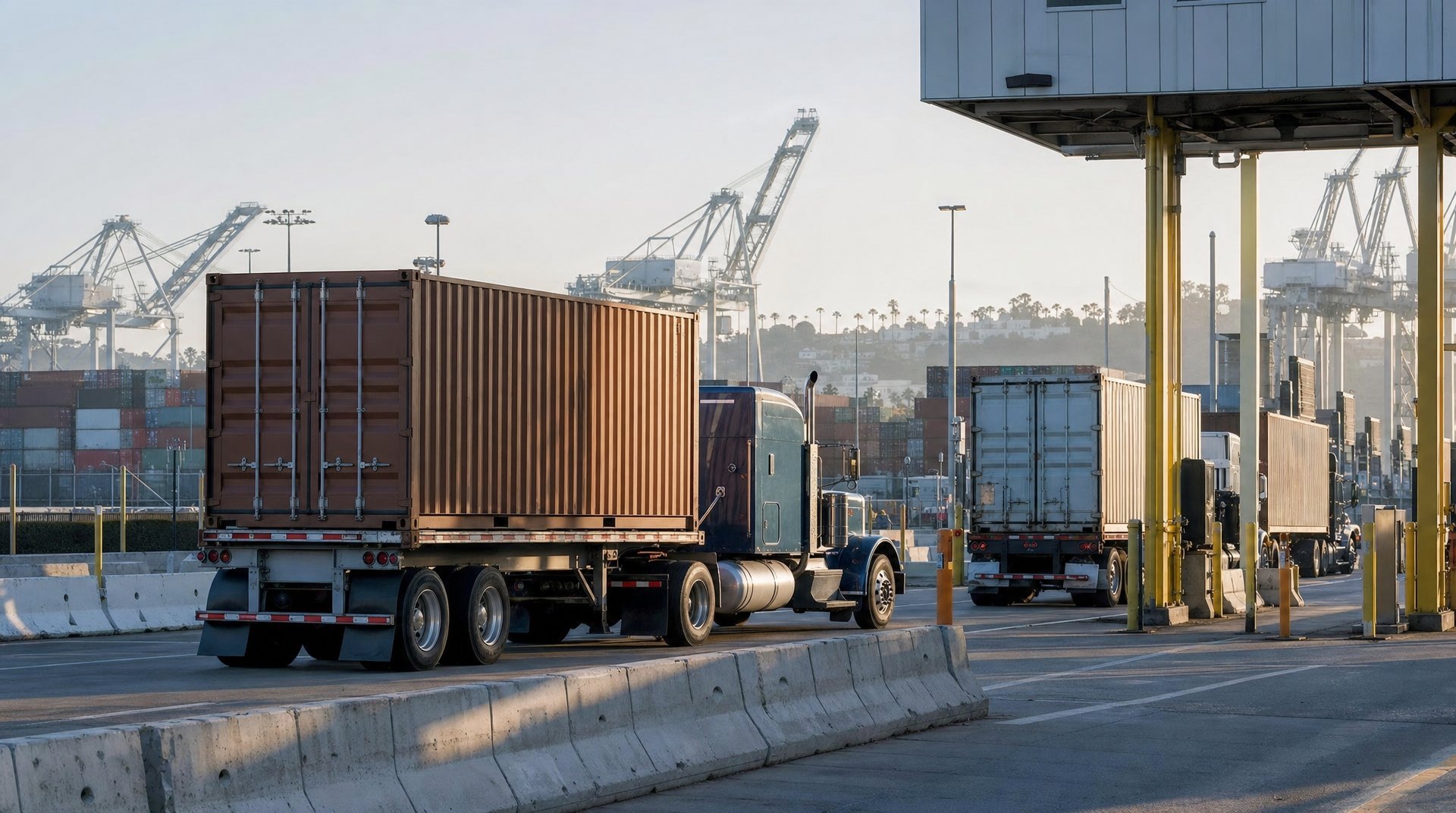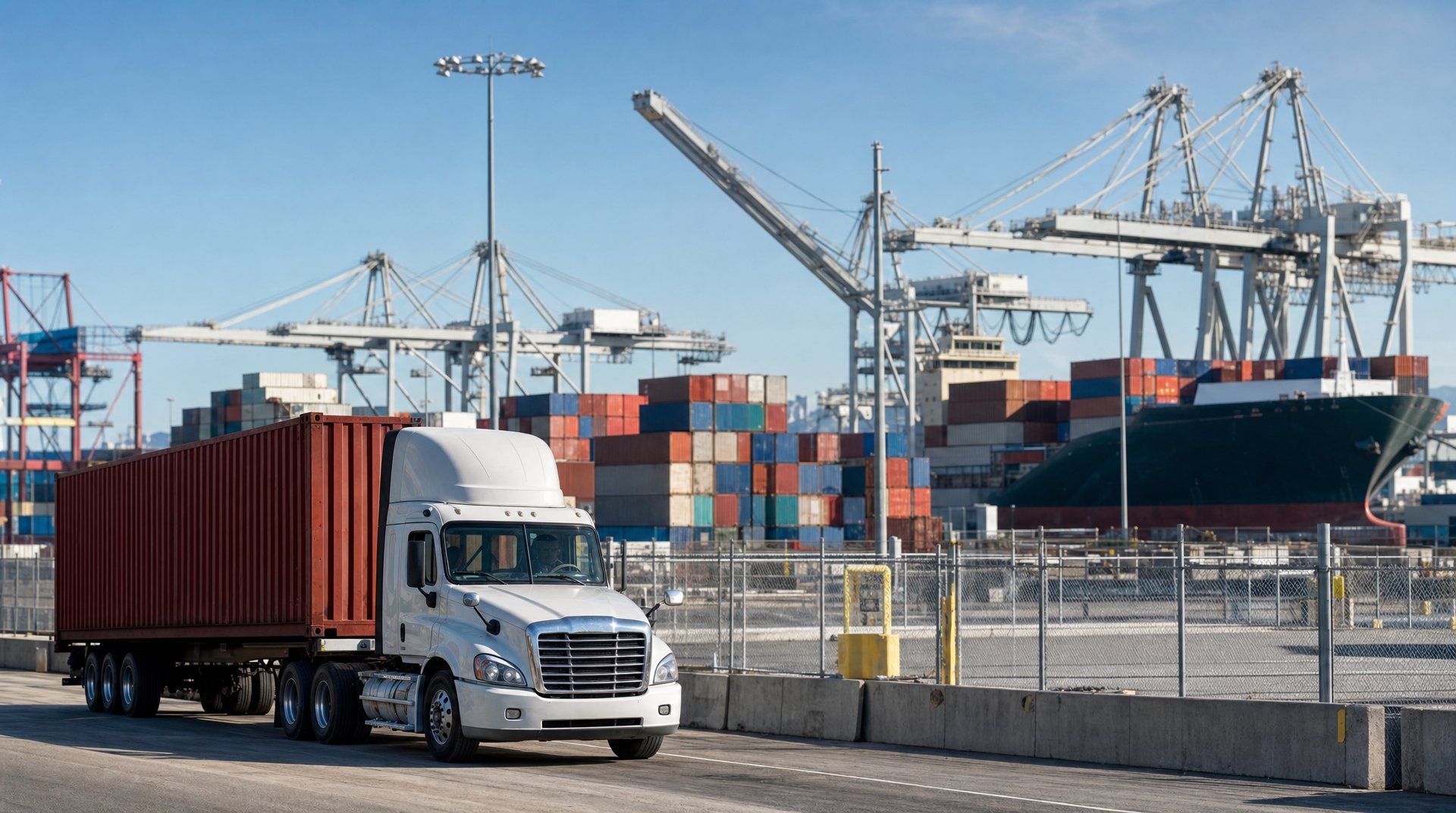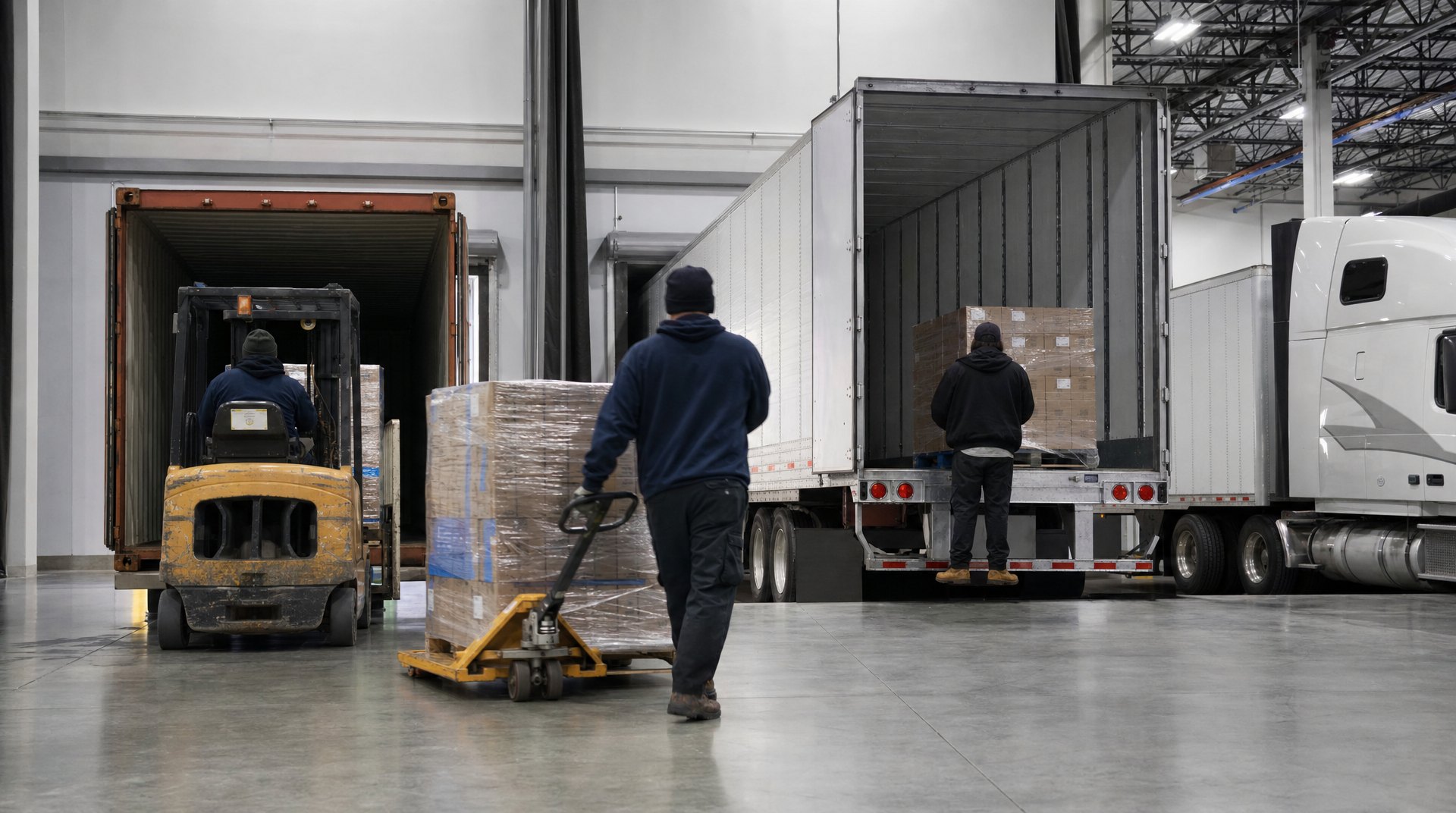
Transloading means taking the cargo out of the ocean container close to the port and reloading it into a domestic trailer, usually a 53-foot dry van, for the rest of the trip. The alternative is to dray the container itself to your warehouse and unload it there. Transload near Los Angeles and Long Beach when the freight is going far, is being split between destinations, or when keeping the ocean carrier’s container is the expensive part. Dray the container straight to you when the destination is close and the whole box goes to one place.
Below: how the two options differ, when each one wins, what each adds to the bill, and what to send for a quote.
What is transloading, and how is it different from cross-docking?
Transloading is a change of equipment: the freight comes out of the international container and goes into domestic equipment. Cross-docking is a change of truck with little or no storage in between: inbound freight is unloaded, sorted and loaded straight onto outbound trucks, often several of them. Near the LA and Long Beach ports the two often happen in the same building, which is why quotes tend to use the words together.
Transload near the port or dray the container inland?
| Transload near the port | Dray the container to your site | |
|---|---|---|
| What travels inland | A domestic trailer, usually 53 feet | The ocean container on a chassis |
| Container clock | Can stop soon after the container is unloaded near the port and the empty goes back | Keeps running while the container travels, waits to be unloaded and comes back empty |
| Handling | One extra unload and reload | Unloaded once, at your dock |
| Splitting the shipment | One container can become several outbound loads for different destinations | One container, one delivery |
| Trailer length | Domestic 53-foot trailers generally provide more cargo floor length than a 40-foot ocean container | Limited to the container |
| Best fit | Long distances, several destinations, appointment-based deliveries to distribution centers | Short distances, one destination, freight that should not be handled twice |
The road weight limits are the same either way: 80,000 pounds gross on the Interstate system, with lower limits where the bridge formula applies (23 CFR 658.17). The difference is that at a transload, a heavy shipment can be spread across trailers instead of riding as one box.
When does transloading near the port make sense?
- The destination is far. Drayage is generally used for short-haul container moves between ports, rail terminals, warehouses and nearby facilities. As the inland distance grows, compare the cost of keeping the ocean container and chassis in the move against transloading near the port and continuing in domestic equipment. Our guide to demurrage vs detention explains how that clock is charged.
- The container feeds more than one place. Mixed product for several distribution centers or stores can be sorted at the transload and sent out as separate loads, instead of one container going to one dock and being re-shipped from there.
- Delivery depends on an appointment. Retail or Amazon receiving appointments may not match the day a container is released. Transloading lets the freight wait in a warehouse instead of in a container on the clock. Our Amazon FC delivery service can route freight through a vetted partner warehouse first when direct delivery does not make sense.
- The freight needs work before delivery. Relabeling, consolidating or splitting shipments is easier on a warehouse floor than at the receiver’s dock.

When is it better to dray the container straight to you?
- Your warehouse is close to the port. If the round trip is short and your dock can unload the same day, the extra handling of a transload buys little.
- The whole container goes to one place. No split, no sorting, no reason to stop on the way.
- The cargo should be touched as little as possible. Fragile, high-value or awkward freight carries more risk with every extra unload and reload.
- You have the labor and the dock. A floor-loaded container takes time to unload by hand. If your team does it anyway, doing it once at your building is simpler.
What does each option add to the bill?
Both options start with drayage from the terminal, so the usual drayage lines apply either way: base haul, fuel, chassis, port fees and any waiting time. Our breakdown of drayage cost at LA and Long Beach goes through them line by line. After that, the two options split:
| Transload near the port | Dray the container to your site |
|---|---|
| A short drayage run from the terminal to the transload warehouse | A longer drayage run to your site and back with the empty |
| Handling: unloading the container and loading the trailer | Chassis days while the container waits at your dock |
| Palletizing and wrapping, if the container is floor loaded | Detention if the empty cannot be returned inside free time |
| Storage, if the freight waits for an appointment | Waiting time if your dock is not ready when the truck arrives |
| Linehaul in a domestic trailer, full truckload or LTL | No separate linehaul: the drayage run is the delivery |
Compare the two totals for the same shipment, not the drayage rates alone. A transload can cost more in handling and still be the cheaper move once the container days on the other side are counted.
What should you send for a transloading quote?
- The terminal, the container size and how many containers
- Whether the cargo is floor loaded or on pallets, the pallet count and the weight
- Every destination, with any delivery appointment or receiving window
- Anything that needs special handling: hazmat, temperature control, high value
- Any work needed before delivery, such as relabeling or splitting by destination
- Whether the container is a full load for you or a shared LCL box that will go through a container freight station first
How LAX Freight handles transloading in Los Angeles
Our drayage service picks up containers at the Ports of Los Angeles and Long Beach and includes transloading and cross-docking, live unload and drop and pick options, and secure storage and yard holding. For the inland leg we run 53-foot dry van truckloads nationwide, and LTL with consolidation and pool distribution when a container splits into smaller shipments.
Send us the container details and the destinations, and ask for a quote on the route that fits: transload near the port or drayage straight to your dock.