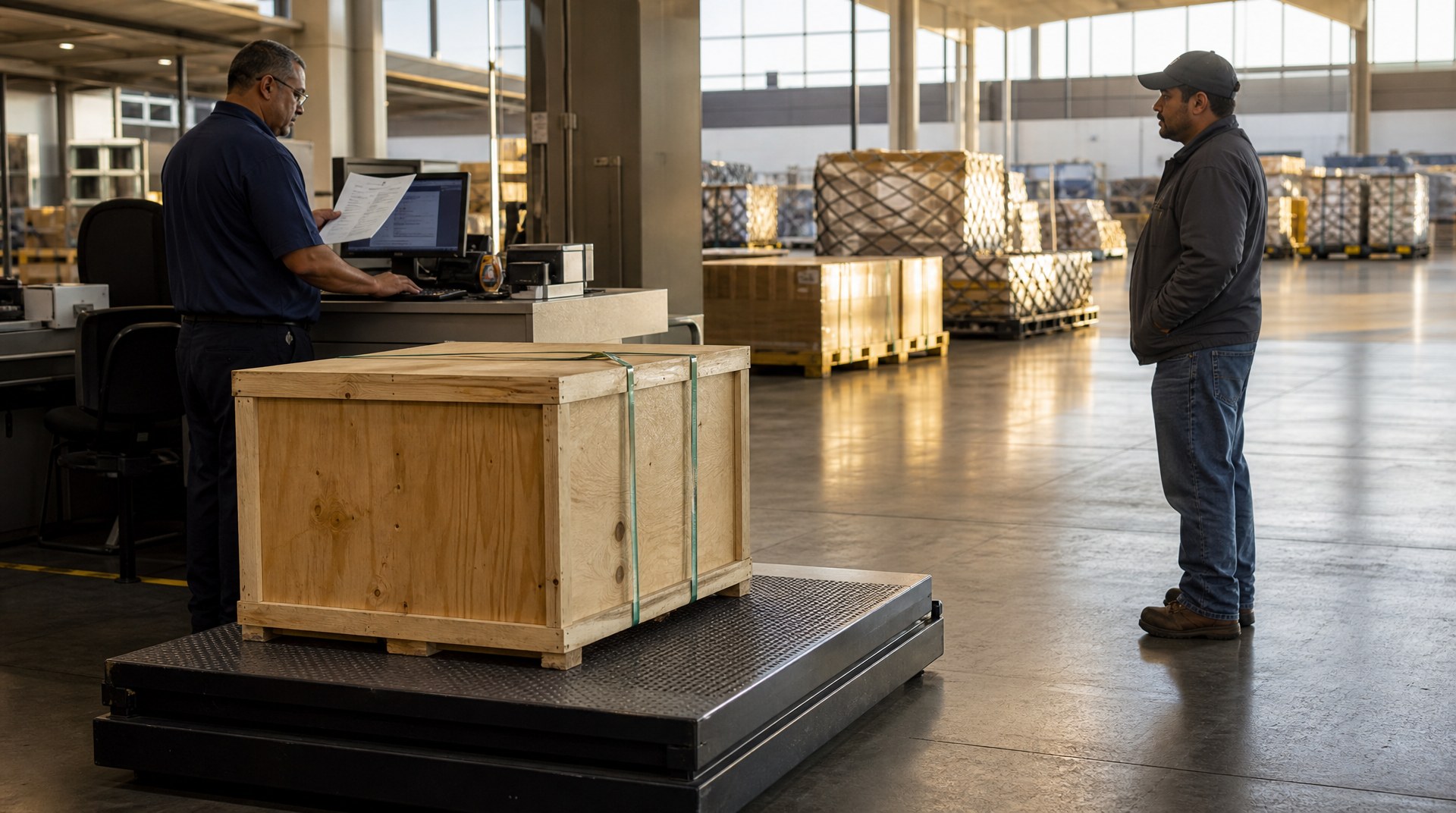
You made the cut-off. That is not the same as making the flight.
The driver is at the airline cargo counter at 3:40 PM against a 4 PM cut-off. Paperwork accepted, freight signed for, receipt in hand. The shipper is told it made the cut-off, and everyone treats the 9 PM departure as settled. It is not settled. Between the counter and the aircraft sit three or four more steps, each with its own unpublished internal deadline, and a shipment that clears the customer-facing cut-off can still miss the build, miss screening, or miss the manifest.
This is the most misunderstood interval in air freight, for a reasonable reason: from the outside it looks like one event. From the inside it is a sequence, and the customer-facing cut-off is only the first gate.
The status codes tell you which one you are in
Air cargo runs on a standardised status vocabulary, and knowing four of the codes removes most of the ambiguity. Freight on hand means the shipment is physically at the terminal. Received from shipper means the airline has formally taken custody against the air waybill. Manifested means it has been assigned to a specific flight’s load plan. Departed means the aircraft left with it aboard. Those messages are the industry’s own account of where a shipment actually stands, and the standards work behind them sits with IATA’s cargo programme.
At 4 PM this matters because a driver’s receipt proves the second state and says nothing about the third. A shipment can sit at received from shipper for a full flight cycle, roll to the next day, and produce no exception message, because from the airline’s point of view nothing exceptional happened. It was simply not manifested.
The cut-offs behind the cut-off
The published cut-off is the last time the counter will accept freight. Behind it sit several earlier deadlines that are not shared. Documentation has to be complete and correct in the system before the manifest closes, and a discrepancy found at 5 PM on a shipment tendered at 3:40 does not reopen the counter, it removes the shipment from the flight. Screening capacity is finite and queued. The pallet or container build has to be finished before loading, and once a ULD is closed, adding a piece means breaking it down again, which will not happen for one consignment.
So arriving at 3:40 for a 4 PM cut-off is technically compliant and operationally marginal. Arriving at 1 PM is not gold-plating, it is buying position in three separate queues. The same mechanic makes the collection window at the far end shrink without anyone announcing it: published times describe the customer interface, not the operation behind it.
Paperwork is the most common reason freight does not get manifested
When a shipment clears the counter and still does not fly, documentation is the usual cause, and it is the failure most within your control. Weights and piece counts that do not match between the air waybill and the physical freight will hold it. So will a commodity description too vague for a security or customs determination, a missing or unsigned shipper’s declaration on anything restricted, and consignee details that will not support the destination’s import filing.
None of these produce a phone call in the moment. They produce a shipment that quietly does not appear on a load plan. Catch them by asking a direct question instead of waiting for an exception: has this air waybill been manifested on tonight’s flight. That question has a yes or no answer and it is available two or three hours before departure, when there is still time to fix a document.
That is a different question from the usual one, which is some version of is everything okay. Everything is okay is honest right up until the manifest closes: nothing has gone wrong yet, and the person answering has no reason to look. Naming a flight and an air waybill forces somebody to open a record. That is the difference between finding a documentation error at 6 PM and finding it at 8 the next morning.
What to do with the two hours you just found
If the answer is no, the useful window is the short interval between the manifest closing and the aircraft leaving. What can be done in it depends on how fast the problem is identified and on whether the person holding the shipment has leverage with the carrier at that hour. A correction filed at 6 PM against a 9 PM departure is often recoverable. The same correction at 8:30 is not.
Getting to a person who can actually reopen a decision is its own skill, and it is worth understanding what escalation genuinely changes and what it does not before spending the window on it. Pressure applied to the wrong desk consumes the same hours as pressure applied to the right one and produces nothing.
Where the flight is genuinely lost, the decision moves to the next service or another routing, and an air freight recovery desk should be pricing the alternative while the first conversation is still running. Running the two in sequence is how a missed manifest becomes a missed day.
Ask for the manifest, not for the receipt
Three questions close this gap. Is the shipment received against the air waybill, which the driver’s receipt answers, and is it manifested on the intended flight, which the receipt does not answer at all. Is the documentation complete in the carrier’s system, checked rather than assumed. And who is verifying uplift after departure rather than waiting for an arrival message that will never come. Tendered is a state you can prove at 3:40 PM. Uplifted is the only one that means the shipment is moving.