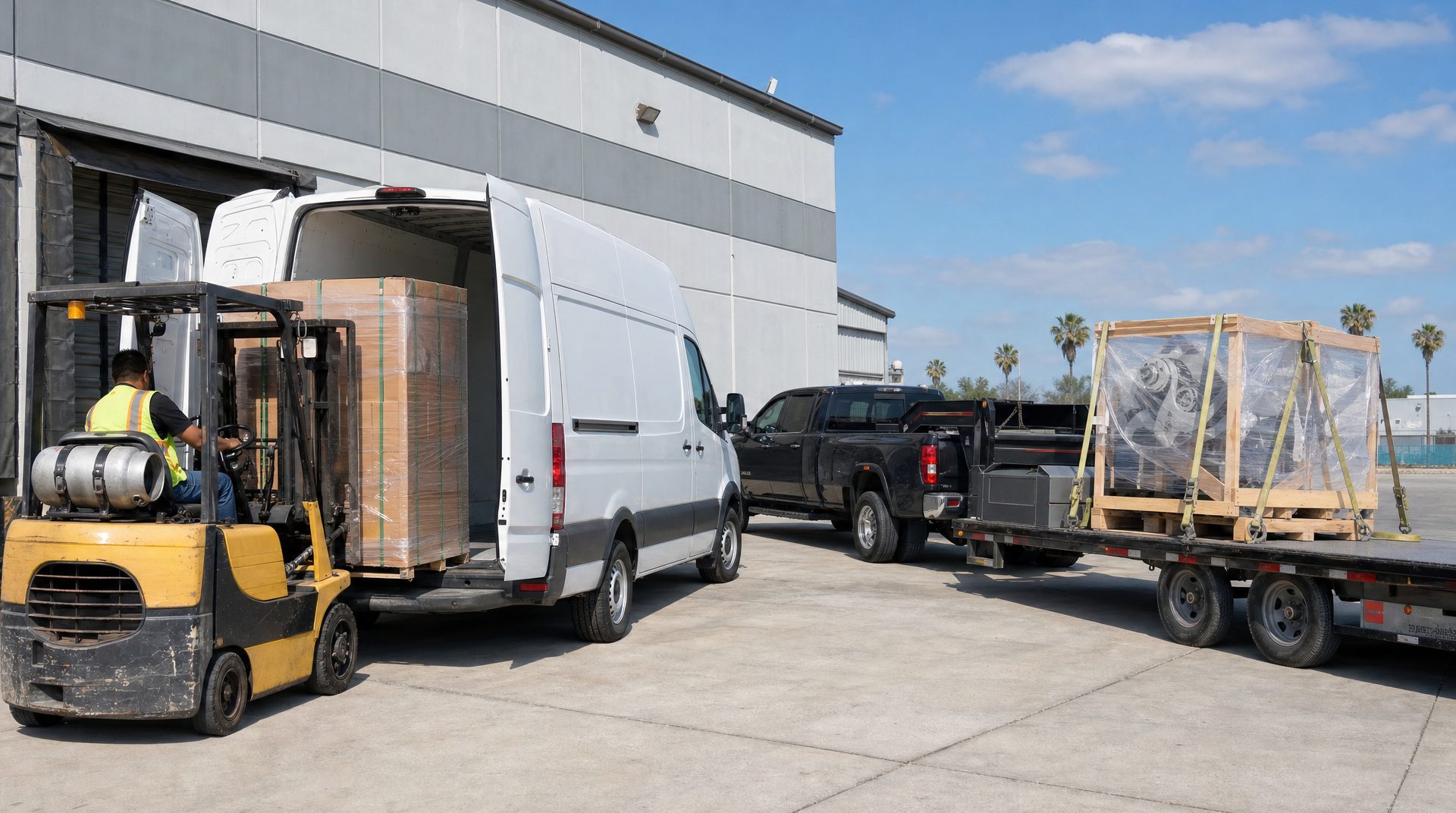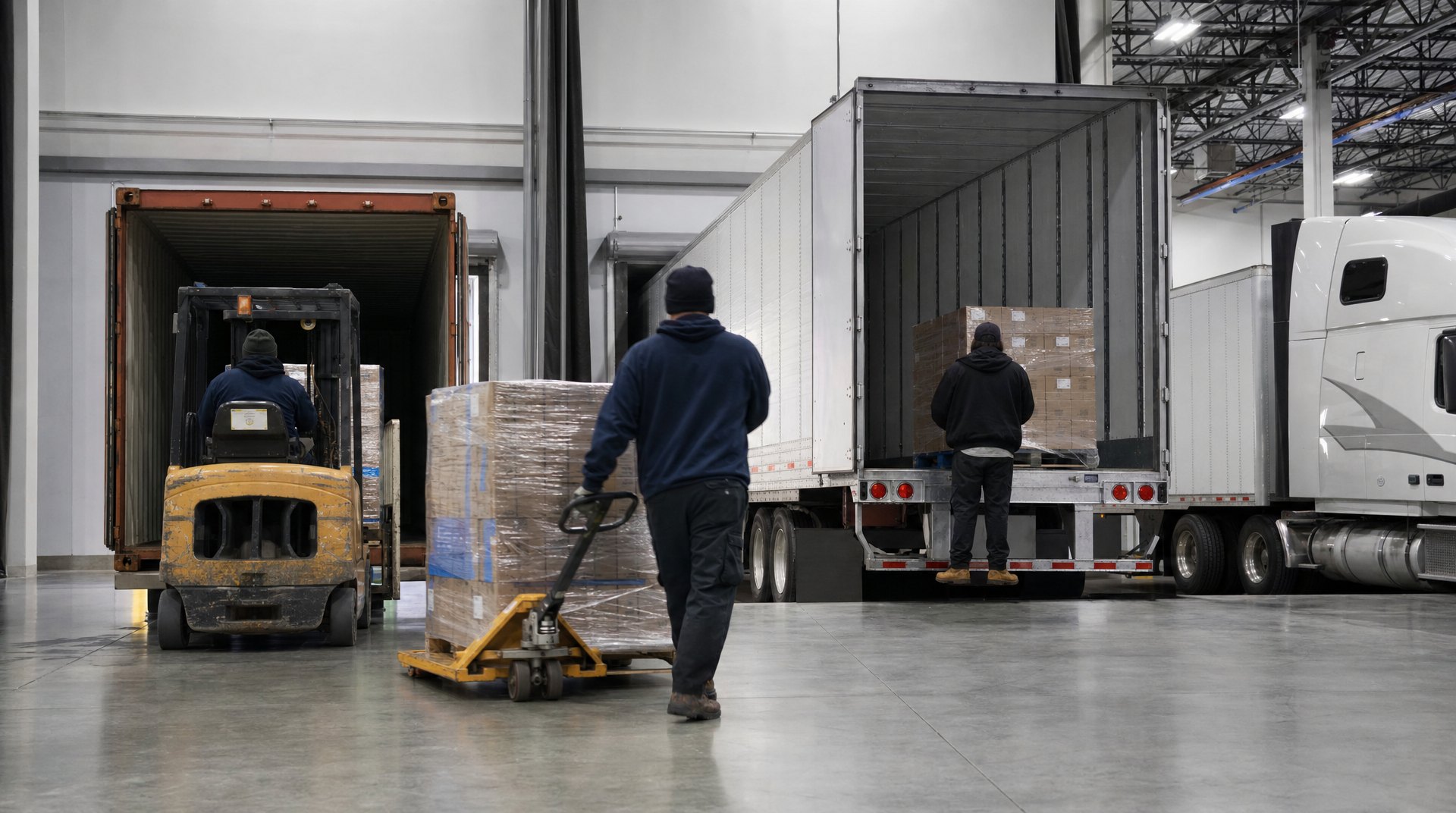
You do not need the shipment. You need enough of it.
Twelve hundred pieces sit at a supplier six hundred miles away and the line went down at 2 PM. The whole quantity will not move tonight — the supplier cannot pick, pack and paperwork twelve hundred pieces before the driver leaves to make a morning delivery. So the lot moves tomorrow and the line restarts a shift late. Or somebody asks the question that changes the recovery: how many do you need to start running again, and for how long will that hold you.
That question is triage, the least practised skill on a line-down call. It feels like a compromise, so people avoid raising it. In practice it is the fastest restart available: a line does not need a shipment, it needs supply arriving faster than it is consumed, long enough to bridge the next delivery.
What a partial actually has to satisfy
A partial is worth doing when the quantity shipped tonight covers consumption until the balance arrives, with margin enough that the line does not stop twice. That is arithmetic, not judgement: the line runs at a known rate, the balance has a known earliest arrival, and the required quantity falls out of the two. It feels like judgement only because nobody on the call holds both numbers at once.
The planner knows takt and the shift pattern. The buyer knows what the supplier can release tonight. The freight desk knows what a 9 PM truck can deliver by. Put those three on one call and the quantity is obvious inside five minutes. Run them sequentially through email and the decision arrives after the truck has gone.
The failure mode worth naming is a partial that is too small. Restarting a line and stopping it again four hours later is worse than one longer stop: a second startup, a second changeover of attention, and credibility that makes the next recovery harder to run. If the arithmetic does not clear the gap with margin, the honest answer is that the partial is not worth moving.
Not all pieces are equal, and the part number does not tell you
Triage also has to handle a shipment that is not one homogeneous quantity: a mixed pallet, a kit, or several line items on one order, with the line down on exactly one of them. Splitting on quantity is easy. Splitting on which line items matter requires somebody at the plant to mark the blocking ones on the manifest, and that person is frequently not on the freight call.
This is where partials quietly go wrong. A supplier asked to send half a shipment sends the half that is easiest to pick, rarely the half that matters. The instruction has to name line items and quantities, in writing, on the delivery order, and it comes from the plant rather than the buyer’s assumption about what the plant needs.
Two moves cost more than one, and usually less than the stop
A split creates a second move, almost always the expensive one: small, on short notice, going to the destination the first just served. Buyers see that line on the invoice and remember it. What no invoice shows is the shift that did not happen, so the comparison made in people’s heads is systematically unfair to the partial.
The fair comparison puts both moves against the extra downtime the single move would have caused, and on a stopped line that arithmetic is not close. Structured operations practice, of the kind bodies like the Institute of Industrial and Systems Engineers exist to formalise, treats a stoppage as a calculable number rather than an abstraction — and once it is a number, the second freight charge stops looking like waste.
It is the same reframing that governs how a line-down recovery gets run at all: a decision about total cost rather than freight cost. A split only makes the tradeoff visible on an invoice.
Book the partial so the balance is already arranged
The mechanics remove the most common second failure. When the partial goes, the balance should already be booked, not arranged in the morning. The supplier has a pickup slot before the first truck leaves, the consignee knows two deliveries are coming and on what days, and the paperwork on each move references the other so the dock does not treat the second as an unexpected inbound.
The guarantee on the first move has to be real, because the arithmetic depends on the partial arriving when promised. A partial that slips is a stopped line with an extra invoice attached, and a desk running an expedited line-down recovery books both legs in the same conversation rather than treating the balance as tomorrow’s problem.
That is why what a guaranteed delivery time actually commits to matters more on a split than on a straight move. A late single shipment costs the hours it was late. A late split costs the hours plus the credibility of the approach, and next time you propose a partial the plant says no.
Ask the plant before you ask the supplier
Three questions decide whether a split is right. What quantity restarts the line, and how many hours will it cover. Which line items are blocking, named on the manifest rather than described in general. And is the balance booked before the first truck leaves. Answer those and a partial is the fastest restart on most line-down events. Skip them and a truck carries the wrong half to a dock not expecting a split, buying four hours before the line stops again. The question to open with is not what can ship tonight. It is what the line needs to run.
Run the split arithmetic with us while the line is still down.