When a shipment cannot wait, the instinct is to charter a plane. Sometimes that is exactly right. More often it is the most expensive way to solve a problem the next flight out would have handled for a fraction of the cost. The skill is knowing which situation you are in before you commit the spend.
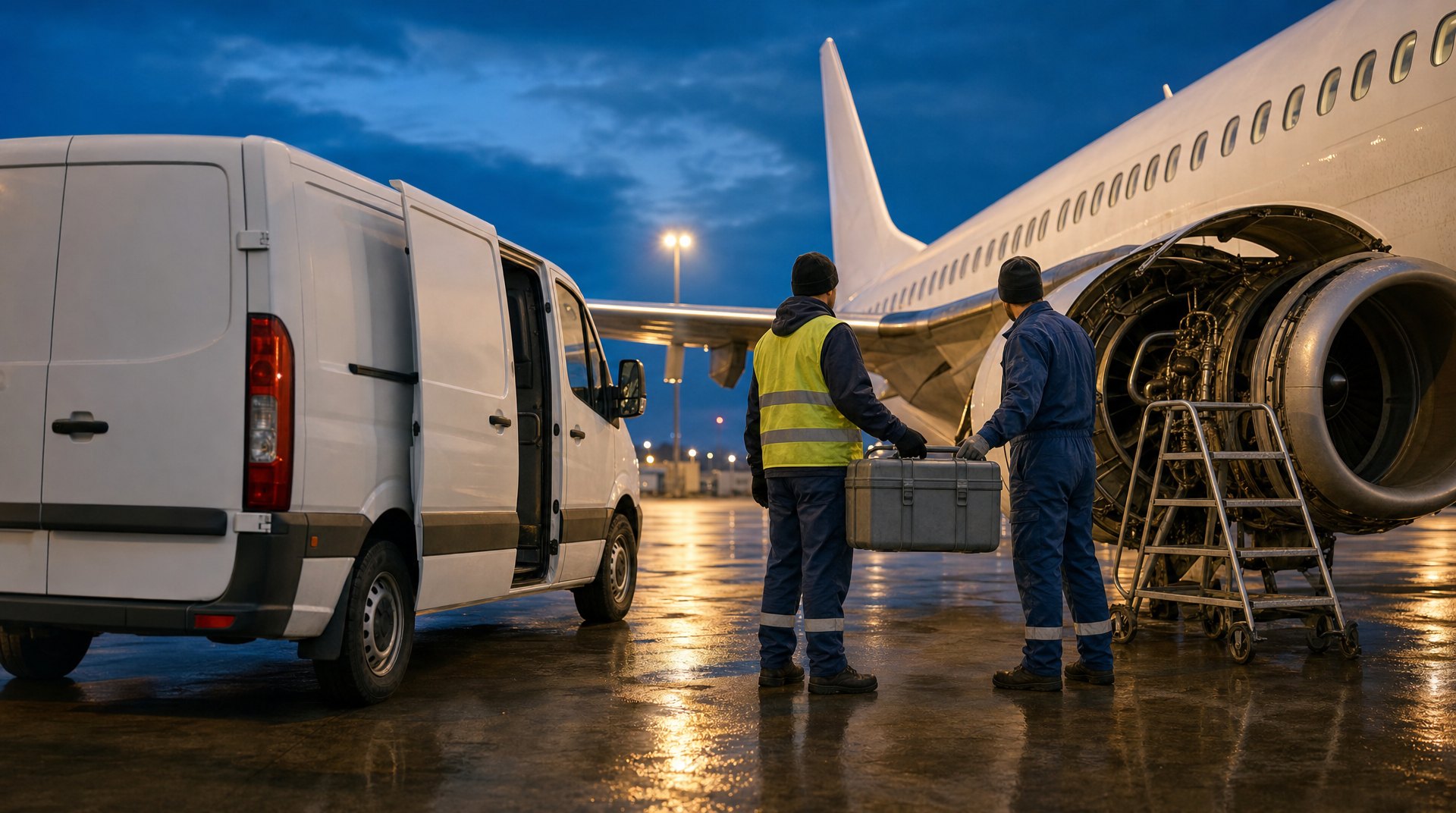
The stakes are real. When an aircraft is grounded waiting on a part, an AOG event costs an airline somewhere between $10,000 and $150,000 an hour depending on the aircraft and route, by Boeing’s own estimate. Against a number like that, a charter to deliver the part is a rounding error. The same logic holds for a production line or a project site on a hard deadline. So the question is rarely whether the freight is worth moving fast. It is which air option actually fits.
Start with the cheaper question: charter, or next flight out?
Most urgent air freight does not need a dedicated aircraft. Next flight out means putting the shipment on the next scheduled commercial departure, with a driver recovering it at both ends, so it moves within hours without paying for an empty plane. It is faster to arrange than a charter and a fraction of the price. Reach for a charter only when the next flight out genuinely cannot do the job, which comes down to four specific triggers.
When an air charter is actually the right call
No commercial flight fits the window. The route is thin, the last departure has gone, or the only connections add a day. A charter flies direct, on your schedule, including nights and weekends.
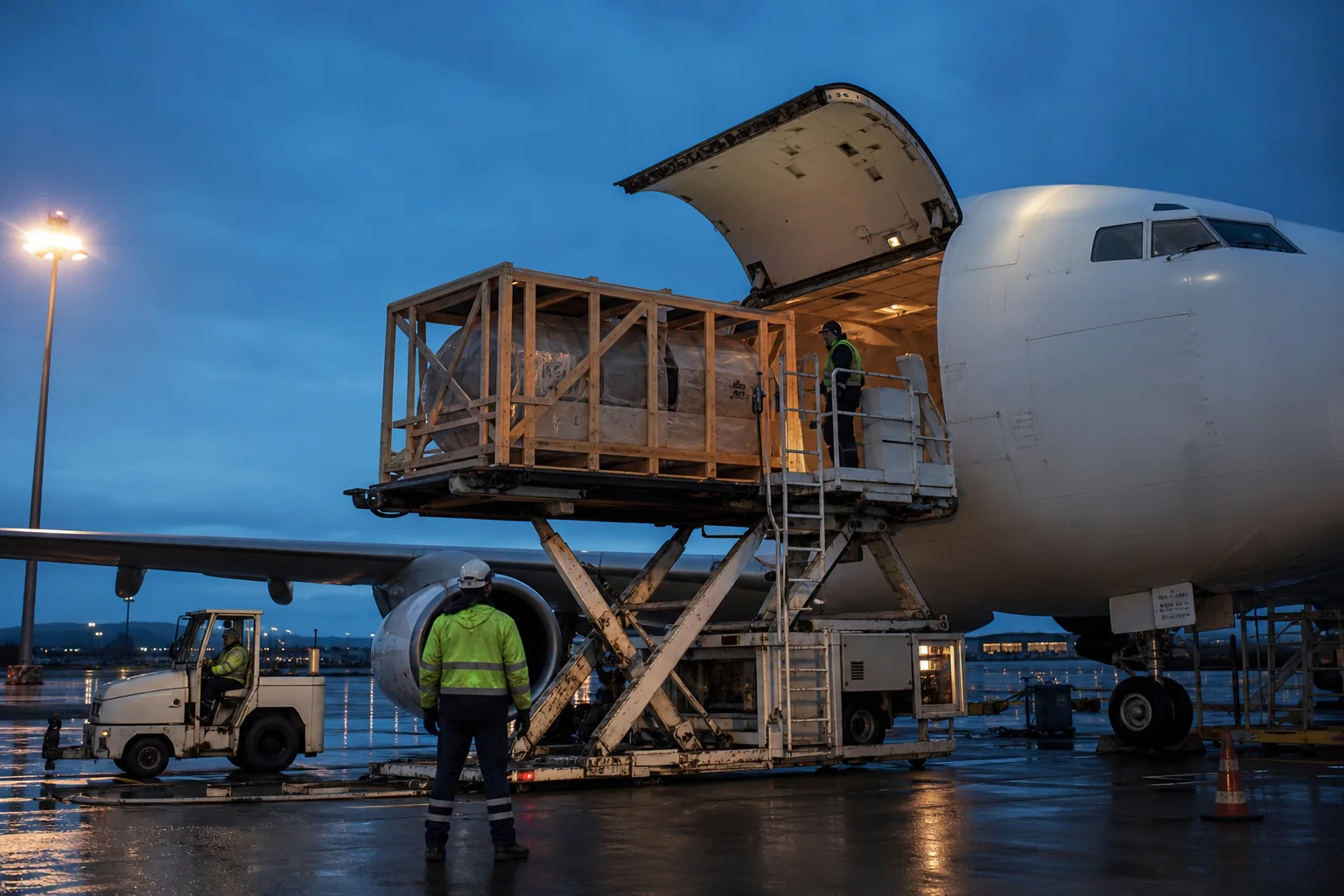
The freight will not fit commercial lift. Oversize or heavy pieces that exceed belly-hold or main-deck limits need an aircraft sized to the cargo. This is where oversize and heavy freight often forces the decision regardless of cost.
Handling or security rules it out. Certain hazardous materials, temperature-controlled loads, or high-value freight that cannot leave your custody will not move on a passenger flight. A charter gives you full control of the aircraft.
The downtime dwarfs the charter. An aircraft on ground, a stopped line, or a project at a standstill can burn more in an hour than the charter costs outright. When the math is that lopsided, speed is the only number that matters.
What an air charter actually costs, and what moves the price
A charter is priced per flight, not per seat or per pound, so the drivers are different from commercial air. The aircraft type sets the floor: a light turboprop for a single pallet is a different world from a freighter for an oversize assembly. Distance matters, and so do positioning legs, the empty flying to get the aircraft to your pickup, which can be a large share of a one-way job. Add airport and handling fees, any permits for oversize or hazardous cargo, and crew duty limits that can require a second crew on long runs. A good broker shows you which of these is driving the quote so you can weigh it against the clock honestly.
Here is how the air options compare when you are choosing under pressure:
| Option | Speed to arrange | Capacity | Relative cost | Best when |
|---|---|---|---|---|
| Next flight out (commercial belly) | Hours | Smaller parts, palletized | Moderate | A scheduled flight fits the window |
| Main-deck cargo (scheduled freighter) | Same day to next day | Larger, heavier freight | High | Too big for belly, a freighter route exists |
| On-demand air charter | Hours, on your schedule | Oversize, hazmat, full control | Highest | No commercial lift fits, or downtime dwarfs the cost |
What a charter desk needs from you to quote fast
A charter quote turns around faster when the request is complete on the first call. The details that actually change the aircraft and the price:
- Exact pickup and delivery airports or facilities, and whether ground recovery is needed at either end.
- The hard deadline, with the time zone, not a vague “as soon as possible.”
- Total weight and the largest single piece dimensions, including the crate or skid.
- Whether the freight is hazardous, temperature-sensitive, or security-controlled.
- Who can authorize the spend and up to what figure, so the booking is not waiting on a signature.
With those in hand, an operator can match the aircraft, price the positioning legs, and confirm crew and slots in one pass instead of three. On a true time-critical move, that preparation is often worth more than the aircraft choice itself.
How fast can a charter actually launch?
A charter is fast, but it is not instant, and planning around the real timeline keeps expectations honest. Once the move is approved, the operator has to position the aircraft, which may be sitting at another airport, confirm a crew inside its duty limits, file the flight, and clear slots and ground handling at both ends. For a domestic run with a suitable aircraft nearby, that can mean wheels up in a few hours. For a long positioning leg, an international permit, or an oversize load that needs a specific freighter, it takes longer. This is exactly why the authorization and the freight details matter: the faster those are settled on the ground, the sooner the aircraft is in the air and moving toward you. The clock you are racing does not pause while the paperwork catches up.
The decision rule
Work it in order. First ask whether it has to fly at all, or whether dedicated ground beats air door to door on the distance. If it has to fly, price the next flight out first. Move to a charter only when one of the four triggers above is true, and when it is, decide fast. A widebody losing $60,000 an hour on the ground does not have time for a procurement cycle on a $40,000 charter. The expensive mistake is almost never the charter itself. It is the hour spent deciding whether to book one.
If you have a grounded aircraft or a line down right now, calling operations is faster than a form. If you are scoping options before you need them, that is the right time to map the next-flight-out and charter routes for your lanes.