When a production line stops, the expensive clock starts before anyone has booked a truck. Aberdeen Research puts the average cost of unplanned manufacturing downtime at about $260,000 an hour, and in automotive, where just-in-time leaves no buffer, estimates run past $2 million an hour. Siemens’ 2024 True Cost of Downtime report found the typical unplanned event lasts around four hours and costs roughly $2 million.
Against numbers like that, the freight itself is rarely the bottleneck. The first hour is. And most of what decides whether that hour runs fast or slow sits on the shipper’s side of the phone, not the carrier’s. Here are the four things you control, and a simple way to pick the right recovery mode once the clock is running.
1. Know the real deadline, not “as soon as possible”
“ASAP” gives a recovery desk nothing to plan against. The deadline that matters is the line restart time or the customer ship date you are protecting, with the hard hour attached. A part that has to be on the floor by 6 AM and a part that has to be there “today” produce completely different, and differently priced, moves. Lead with the hard time. It is the one detail that lets a carrier choose the right mode in the first ten minutes instead of the first hour, and it is the difference between catching the next flight and missing it by twenty minutes.
2. Have the part ready before the driver arrives
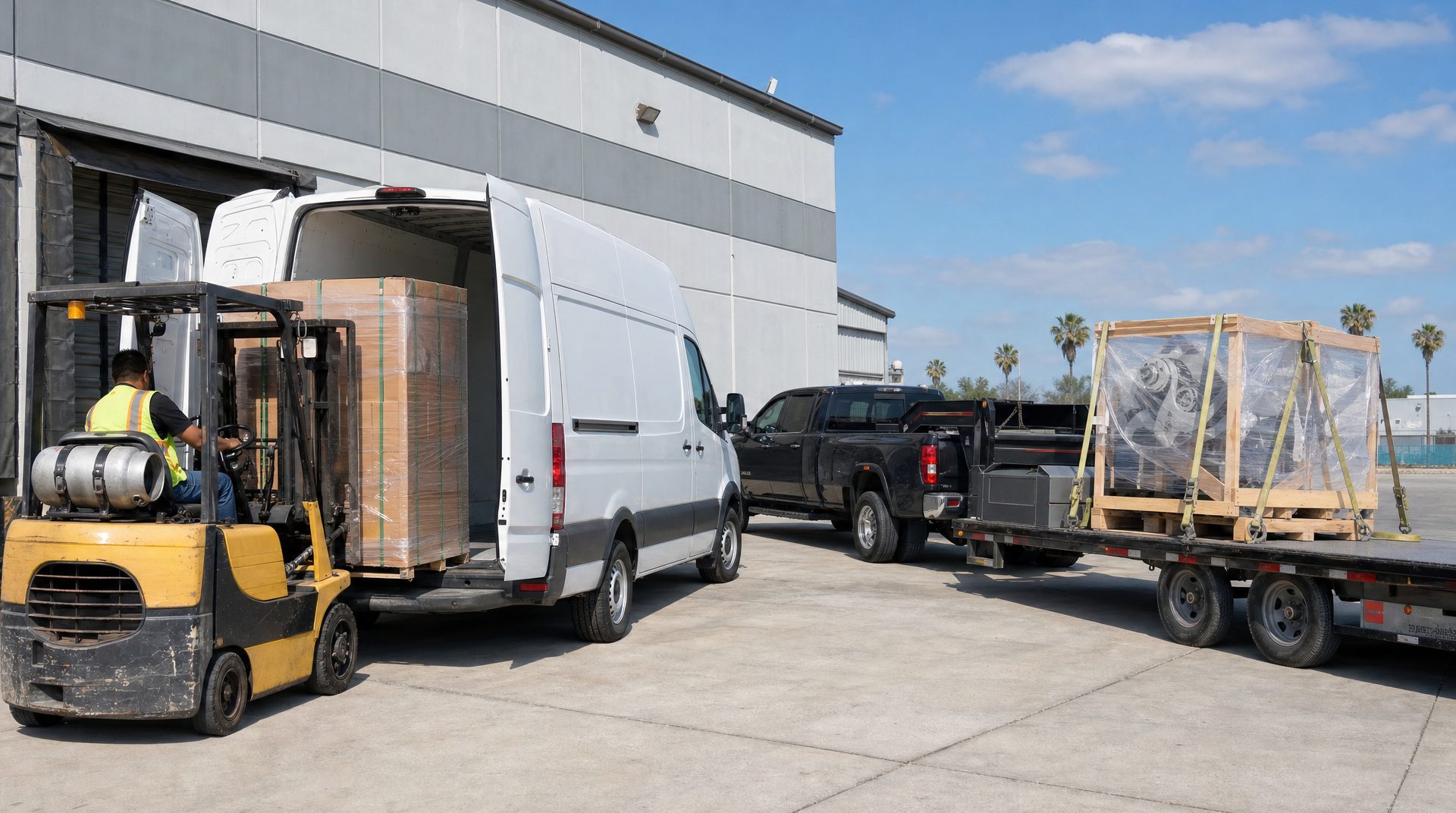
This is where specialty recoveries quietly lose their lead. The truck is booked, then it sits at the dock because the part is still on a bench, the crate is not built, or the export and dangerous-goods paperwork that lets it fly is still being chased. Before you call, pin down three things: weight and dimensions, whether it is packed and labeled, and any documentation it needs to cross a border or board an aircraft. For manufacturing and industrial shippers, that last item is the most common reason an otherwise fast move slips a full day. A ready part makes the next flight out. An “almost ready” part watches it leave.
Before you dial, have these in hand:
- Part location, weight, and dimensions.
- Whether it is packed, crated, and labeled, or still being prepared.
- Any export, customs, or dangerous-goods paperwork needed to cross a border or board a plane.
- The hard deadline: line restart time or customer ship date.
3. Know who can authorize the spend, and the ceiling
The most common reason a confirmed recovery stalls is not the truck. It is the approval. The mode is chosen, the driver is available, and then everyone waits while someone tracks down who can sign off on an emergency charter at 11 PM. Decide it before you need it: who can authorize an emergency move, up to what dollar figure, and who the backup is after hours and on weekends. When the quote lands, the answer should already be in hand. An approval that needs a signature the night shift cannot give is worth discovering in minute 20, not minute 90.
4. Call a recovery specialist, not a general carrier
A standard carrier prices a lane. A recovery operation prices against your clock, which is a different job. The right partner quotes the cost before the truck rolls, tells you plainly when ground beats air on a given distance, and will talk you out of a charter that would cost more than the downtime it prevents. The way expedited freight is priced reflects that: you are paying for certainty against a deadline, not for miles.
Which recovery mode fits the clock
Speed and cost move together, and the right mode depends on the distance and how hard the restart time is. As a rough guide:
| Mode | Typical speed | Relative cost | Best when |
|---|---|---|---|
| Ground / expedited van | Hours, regional | Lowest | Under ~300 miles and the deadline allows a drive |
| Hot shot | Same-day, dedicated | Moderate | Mid-range, or a load too big for a van |
| Next flight out | Same-day, cross-country | High | Long distance with a hard restart time |
| Charter | Fastest, on demand | Highest | No commercial lift fits the clock, or oversize/hazmat freight |
Air freight covers the next-flight-out and charter options when distance rules out the road.
Within any mode, a few things move the number: the distance and whether a driver has to deadhead to the pickup, how soon the next commercial flight departs and whether it has the lift for your dimensions, the time of day (after-hours and weekend coverage costs more because it is harder to staff), and whether the freight is oversize or hazardous, which narrows the aircraft and trucks that can legally carry it. A good desk walks you through which of these is driving your quote, so the price is a decision you understand rather than a number you are handed.
The math that makes the call easy
Put two numbers side by side. On one side, your downtime cost per hour. On the other, the cost of the fastest move that fits the part and the deadline. If a line running at $260,000 an hour is down, a same-day air recovery in the low thousands pays for itself in the first two or three minutes of avoided downtime. Even a five-figure charter clears that bar in well under half an hour. For most urgent recoveries the freight cost is a rounding error against the downtime it prevents, which is exactly why expedited recovery exists. The mistake is almost never spending on the recovery. It is losing the first hour deciding whether to.
If your line is down right now, calling operations is faster than a form. If you are building a recovery plan before you need one, that is the work to do now, while nobody is watching the clock.