The truck is at the dock and the paperwork doesn’t match
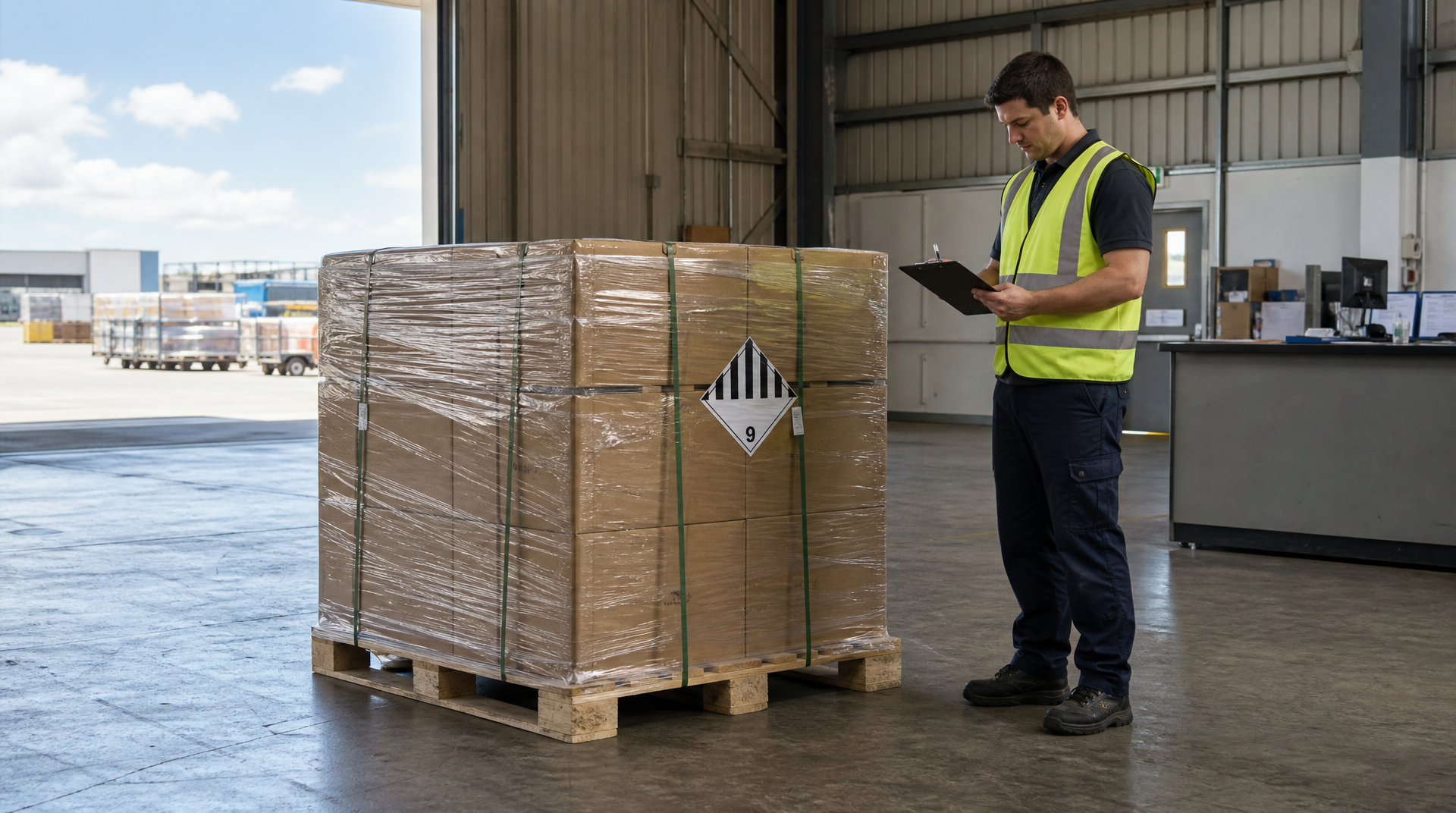
The shipment is class-9 lithium ion batteries, packaged for air transport under IATA Dangerous Goods Regulations, originating from an Asian supplier and arriving on a U.S. carrier into a major gateway airport. The freight cleared customs at 2:14 PM. The ground carrier’s driver presented at the air carrier’s warehouse counter at 2:38 PM with the consignee’s delivery authorization, the airway bill, and a bill of lading prepared for the ground move. The warehouse counter staff pulled the shipping paper that traveled with the freight on the air leg and started cross-referencing for the modal handoff.
The UN number on the air shipping paper is UN3480 — lithium ion batteries shipped on their own, not contained in or packed with equipment. The bill of lading the ground carrier is prepared to run is configured for UN3481 — lithium ion batteries packed with equipment, which is what the consignee’s purchase order and the destination receiving system are expecting. Both are class-9 hazardous materials. Both can be transported by ground under 49 CFR. Neither one matches the other.
The freight is at the dock. The driver is at the counter. The paperwork has a mismatch that can be resolved, but not in the next ten minutes.
What the mismatch actually is
UN3480 and UN3481 are different proper shipping names with different packing instructions, different marking requirements, different documentation, and different handling protocols. The packaging configuration the freight is currently in supports one of those classifications. The paperwork the ground carrier is set up to move it under documents the other one. The driver, looking at the discrepancy, has authority under 49 CFR § 177.817 to refuse the load — and a hazmat-trained driver is going to refuse it, because moving freight under shipping papers that don’t match the actual configuration is a regulatory exposure the driver is not going to absorb.
The consignee’s purchase order is one of the inputs that produced the bill of lading. If the consignee ordered batteries-with-equipment and what arrived is batteries-only, the question of which UN number applies is actually a question of what the freight is, not just a question of which paperwork to fix. That distinction matters because the resolution path is different.
If the freight is correctly packaged as UN3480 and the bill of lading was prepared incorrectly: the bill of lading needs to be revised. The shipper or their agent issues corrected documents. The driver runs against the corrected paperwork. Recovery time is hours.
If the freight is configured as UN3480 but should have been configured as UN3481: the freight needs to be repackaged before it can move under a UN3481 designation, or the consignee needs to accept it as UN3480 and adjust the receiving sequence. Recovery time is potentially days.
Who has to resolve this
Four parties are operationally implicated. The shipper or their U.S. agent has to clarify the original intended classification and either confirm the UN3480 paperwork is correct or provide documentation that the configuration was supposed to be UN3481. The air carrier’s warehouse desk holds the freight until the documentation is consistent — they’re not authorized to release it under mismatched papers. The ground carrier’s driver and dispatcher have to either reschedule against revised paperwork or refuse the load and clear the dock. The consignee has to accept that the receiving timeline is now uncertain and decide whether they can take the freight as-classified or whether they need a different configuration.
The forwarder is coordinating across all four. None of the parties can fix the situation unilaterally. The shipper isn’t on-site. The driver is on-site but has no authority to alter the documentation. The warehouse desk has authority over release but no authority over the paperwork content. The consignee is downstream and isn’t physically present at the airport.
The forwarder’s actual job in the next two hours isn’t to argue the classification — it’s to produce a documented resolution path that all four parties will accept and to keep the freight from accumulating storage charges while the resolution runs.
The compliance friction that doesn’t speed up
Hazmat documentation issues don’t resolve fast. The shipper’s hazmat compliance group, contacted at 2:50 PM Pacific equivalent on a Tuesday, is reviewing the original packaging configuration, the manufacturer’s safety data sheet, the test report supporting the air-mode classification, and the order documentation that produced the consignee’s expected configuration. That review takes time because the wrong answer creates a 49 CFR exposure for the shipper and a State Department or DOT exposure depending on the failure mode.
The air carrier’s warehouse desk, holding the freight, has its own internal process for documentation review. They’re not negotiating — they’re applying their compliance protocol, which requires consistent documentation before release. Forwarder calls asking for accommodation don’t speed the review. They confirm the carrier’s protocol is being followed.
The ground carrier’s dispatch, with a driver tied up at a dock waiting for documentation, is recalculating the cost of the dwell. Hazmat-authorized drivers are not freely interchangeable, and the driver currently waiting may be needed on a different load if the resolution timeline runs long. The dispatcher has a window beyond which the driver needs to be released regardless of whether the documentation is fixed.
The forwarder sits in the middle of these timelines. The shipper’s compliance review sets the pace — the forwarder’s coordination doesn’t.
What re-declaration actually requires
If the resolution path is a corrected bill of lading or revised shipping paper for the ground move, the documentation has to be issued by an authorized party with current 49 CFR training, has to reflect the actual configuration of the freight, has to include all required elements (proper shipping name, UN number, hazard class, packing group, technical name, total quantity, emergency contact, shipper certification), and has to be physically or electronically delivered to the warehouse desk in a form they will accept. Most warehouse desks will accept email of an executed document. Some will not. The forwarder’s relationship with the desk determines what counts as deliverable on the day.
If the resolution requires re-declaration of the air-side classification — meaning the original air shipping paper is incorrect, not just the ground bill of lading — the path is more complex. The air carrier’s hazmat compliance group has to review and reclassify, which involves the original consignor and potentially a re-application of test report evidence. That process can take several business days. Meanwhile the freight is in the air carrier’s warehouse generating storage charges and the consignee’s receiving plan is on hold.
Forwarders who work hazmat air freight regularly know which warehouse desks accept which document forms, which shippers’ compliance groups respond inside business hours versus next-day, what re-declaration takes at each major air carrier, and which ground carriers will hold a driver at the dock while documentation is resolved versus releasing at a defined dwell threshold. None of that knowledge moves the compliance review faster. It just keeps the forwarder from spending the review window discovering procedural facts that should have been settled before the dock call. The compliance group still works at compliance speed.
The piece LF actually moves
An airport-side recovery operator with hazmat-trained staff and active relationships with the major air carrier warehouse desks at the gateway airports is doing two things during this scenario. First: keeping the freight from sitting in storage longer than necessary by understanding which path the resolution is on and timing the pickup against documentation availability. Second: providing the forwarder with the operational picture from inside the warehouse — what the desk is reviewing, what they need, what timing they’re operating on — so the forwarder is making decisions on accurate information rather than assumed timelines.
The recovery operator does not resolve the documentation. That responsibility sits with the shipper and the forwarder. What the recovery operator provides is the on-airport coordination capacity that lets the forwarder act on resolution as soon as it’s available. Hazmat air freight recovery is specific work — counter relationships, driver authorization, procedural fluency, all built before the mismatch lands at the dock.
What the file looks like at close
The clean resolution has the shipper’s compliance group confirming UN3480 is the correct classification, the bill of lading getting reissued by 4:00 PM, the warehouse desk releasing the freight against the corrected documentation, and the driver running the move that afternoon. The dwell at the dock was 90 minutes. Storage charges accrued for one day of warehouse time. The consignee receives the freight on the original delivery date with a brief note about the documentation correction. The shipment closes inside the operational week.
The messy resolution has the freight requiring re-declaration on the air side, sitting in airport storage for 4 to 7 days while compliance review runs, and the consignee’s receiving operation absorbing the delay. The cost difference between the clean path and the messy one shows in the storage tariff. The cost that doesn’t show in storage is the relationship damage — what the forwarder absorbs while compliance review runs. Hand the airport-side coordination on hazmat mismatches to a recovery desk that already runs the warehouse counter and the carrier dispatch together.